Satay
sate · ساتي
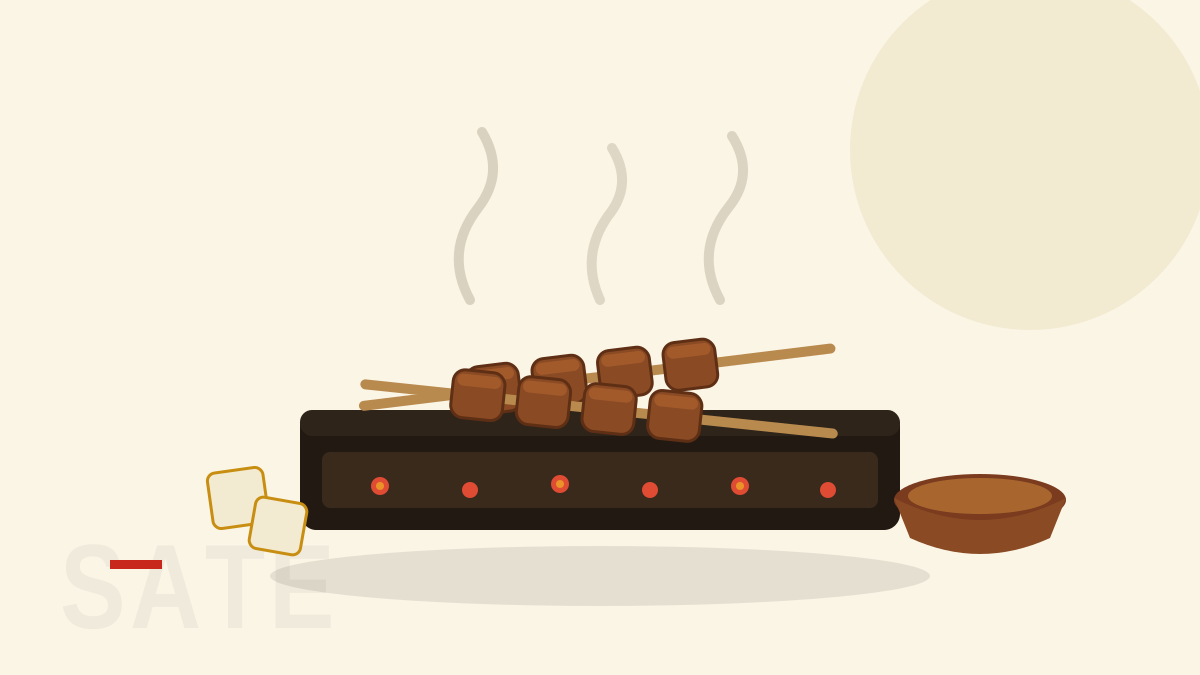
Charcoal-grilled skewers of turmeric-marinated chicken with a peanut sauce older than the island — a Javanese-Malay art Singapore made its own by the lagoon.
By The Singaporean Recipes Kitchen · World Cookbook Series · June 29, 2026
East CoastStreet hawkers & the kampong, 1900s–1942
No pork, no lard — as written.
 07
07- Prep
- 40 min
- Cook
- 20 min
- Serves
- 4
- Level
- Intermediate
Somewhere around dusk on the East Coast, the smoke starts. It rolls off a row of grills where men fan skewers over coals with a folded cardboard flap, and if you have never smelled a hundred satay cooking at once you have not smelled Singapore in the evening. But the dish on the plate is not a Singapore invention, and the first thing worth saying about it is exactly that. Satay is Javanese and Malay in its bones — spiced meat threaded small and grilled over fire, a technique that runs the length of the archipelago and has cousins from Sumatra to southern Thailand. Singapore did not make satay. Singapore made a place to eat it.
That place, for a couple of generations, was the Satay Club at Beach Road — a nighttime clearing of stalls and lamplight and shared tables that older Singaporeans still talk about the way people talk about a demolished cinema. It closed and moved and scattered, the way this island's food always eventually does, and its living descendant is the East Coast Lagoon, where the same smoke rises over the same skewers beside the water. Calling this a Singapore dish is like calling a great cover a new song — it is honest only if you name who wrote it.
The cooking itself is two crafts that meet on the plate. One is the marinade, a rempah of shallots and lemongrass and turmeric that stains the meat gold and seasons it from the surface in. The other is the sauce, a peanut gravy built on its own fried paste, sweet with palm sugar and soured with tamarind, thick enough to cling. Get both right and the grill almost cooks itself. The charcoal matters more than any single ingredient — the smoke is half the flavour, and an apartment grill pan, honest as it is, is always the compromise and never the equal.
Eat it the way it comes — skewers, a bowl of sauce, cold cucumber, raw onion, cubes of ketupat to sponge up what the meat leaves behind. It is a plate built for a table full of hands and no cutlery, which is to say it was built for exactly the kind of evening this island does best.
Singapore did not invent satay. It just built a lagoon to eat it beside, and lit the coals every night since.
Shiok (when it's exactly right) · A word from the kitchen
Ingredientsbahan-bahan
Serves
The marinade paste
- 80 gshallots, peeled (about 6)small Asian shallots, not banana shallots — they pound wetter and sweeter
- 4garlic cloves
- 2lemongrass stalks, tender bottom third only, sliced fine
- 20 gfresh turmeric, or 1 tsp ground turmeric (a thumb)the turmeric is what turns the meat gold and stains your fingers — that yellow is the tell of a real satay
- 15 ggalangal, sliced thin across the grain (a small thumb)
- 1 tbspground coriander
- 1 tspground cumin
- 2 tbspsugar
- 1 tspsalt
- 2 tbspneutral oil
The skewers
- 600 gboneless chicken thigh, cut into 2 cm strips (about 1.3 lb)thigh, not breast — breast on a charcoal grill goes to string in the time the char takes to build
- 20bamboo skewers, soaked in water 30 minutessoak them or the exposed ends burn through before the meat is done
The peanut sauce
- 200 groasted unsalted peanuts, ground to a coarse rubble (about 1.5 cups)coarse, not smooth — the sauce should have grip, not read like spread
- 4dried red chilies, soaked in hot water 15 minutes
- 60 gshallots, peeled (about 5)
- 2garlic cloves
- 1lemongrass stalk, tender bottom third, sliced fine
- 1 tbsptamarind pulp, loosened in 4 tbsp warm water and strainedthe sour that keeps the sauce from turning to sweet paste
- 30 ggula melaka, chopped, or dark palm sugar (2 tbsp)
- 3 tbspneutral oil
- 350 mlwater (1.5 cups)
To serve
- 1cucumber, cut into thick chunks
- 1red onion, cut into wedges
- 8ketupat or pressed rice cakes, cut into cubesthe compressed rice that soaks up the sauce — packet ketupat from the Malay grocer is the honest home answer
Methodcara masak
Step 1: Pound the marinade and set the meat
Pound or blend the shallots, garlic, lemongrass, turmeric, and galangal to a paste, then stir in the ground spices, sugar, salt, and oil. Toss it through the chicken strips until every piece is stained gold, cover, and leave it at least 2 hours, overnight if you can. The turmeric and salt are working on the surface the whole time — an underseasoned satay is almost always one that went straight from bowl to fire.
Step 2: Build the peanut sauce
Pound the soaked chilies, shallots, garlic, and lemongrass to a rough paste. Fry it in the oil over medium heat, stirring, 5 to 6 minutes until the raw shallot smell goes and the oil stains red. Add the ground peanuts, water, tamarind, and gula melaka, and simmer gently 15 to 20 minutes, stirring often so the peanuts don't catch. It is done when it coats a spoon and a slick of oil rises to the top — thin it with a splash of water if it tightens past that. Taste for the balance of hot, sweet, and sour.
Step 3: Thread the skewers
Thread three or four strips onto each skewer, pushing them close but not crushed, leaving the soaked end bare as a handle. Keep the meat toward the pointed end so it sits over the coals and the handle stays cool. Threaded loosely, the pieces cook evenly and turn as one when you flip them.
Step 4: Grill over charcoal — the real answer
Get a charcoal grill to a steady, ashed-over medium-high, the heat you can hold a hand over for three seconds. Grill the skewers 2 to 3 minutes a side, turning often and brushing with oil, until the edges char and the meat is opaque and springy with no pink at the centre of the thickest strip. Charcoal is not nostalgia here — the smoke is half the flavour, and it is the reason satay tastes like the lagoon and not like the kitchen. In an apartment, a ripping-hot cast-iron grill pan gets you most of the char and none of the smoke; that is the honest trade, and it still beats a limp oven bake.
Step 5: Serve the whole plate
Pile the skewers on a platter with the cucumber, onion wedges, and ketupat cubes, and put the warm peanut sauce in a bowl for dipping. The cold cucumber and raw onion are not garnish — they cut the char and the sugar between bites, which is why the plate has always come this way. Eat with your hands, pull the meat off with your teeth, and use the ketupat to chase the last of the sauce.
Perkakas · The tools
Equipment
Small charcoal grill
satay grillSatay is charcoal or it is something else. A narrow hibachi-style grill fans twenty sticks at once the way the stalls do.
Shop on Amazon →Granite mortar & pestle
lesung batuThe rempah tool. Pounding bruises and bleeds the aromatics in a way blades never do — the lesung is the sound of a Singapore kitchen starting dinner.
Shop on Amazon →Carbon-steel wok
chaoHalf this site happens in a wok, and carbon steel is the only honest choice at home — it heats fast, takes a season, and gets you the closest to wok hei your burner allows.
Shop on Amazon →
Equipment links are Amazon affiliate links. As an Amazon Associate we earn from qualifying purchases, at no cost to you. Disclosure.
Rate this recipe
Questions from the kitchen
Did Singapore invent satay?
No, and no one serious claims it did. Skewered, spiced, grilled meat with a dipping sauce is a Javanese and Malay tradition that travelled the whole archipelago long before Singapore was a city — you will find its cousins across Indonesia, Malaysia, and southern Thailand. What Singapore has is a chapter of that story — the old Satay Club at Beach Road under the lamplight, and now the East Coast lagoon, where the smoke of a hundred skewers is its own kind of landmark. We cook it with respect for where it came from, not a flag planted on it.
My peanut sauce split into oil and grit. What happened?
Usually the heat was too high or the simmer too long, and the peanuts squeezed out their oil and seized. A little oil rising to the top is correct and wanted; a broken, grainy sauce is not. Pull it off the heat, whisk in a few tablespoons of hot water a splash at a time, and it will come back together. Keep the simmer lazy next time and stir more than feels necessary.
Can I skip the skewers and just grill the marinated meat?
You can, and it will taste of the same marinade, but you will lose the thing that makes it satay — the small pieces mean more edges, more char, more surface for the smoke and the sauce to grab. If you go skewerless, cut the strips small and grill them in a single crowded layer so you still get char over comfort. Just know you have made grilled chicken, which is a fine dinner and a different dish.
Makan lagi · Cook next
Keep the burner on
 07
07Charcoal, Satay & Street·60 min·Intermediate
Sambal Stingraysambal pari · 三巴魔鬼鱼
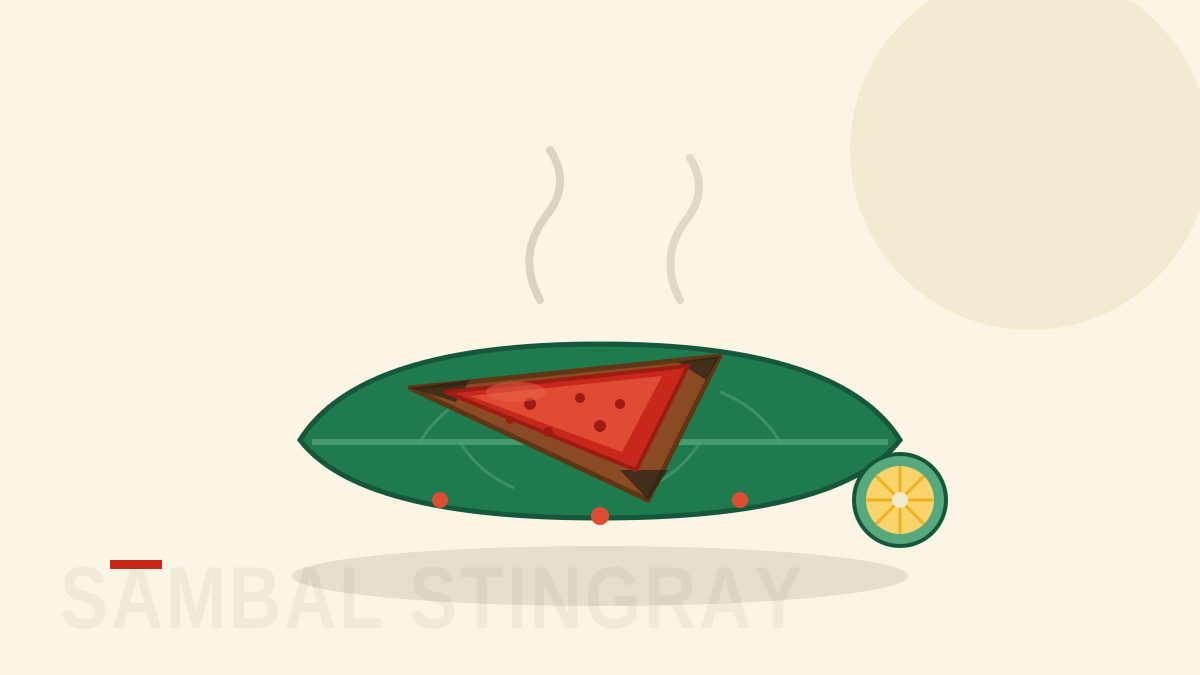
Stingray wing grilled on a banana leaf under a thick coat of sambal — the BBQ-seafood stall classic that turned a cheap fish into the pride of the coast.
 07
07Charcoal, Satay & Street·45 min·Beginner
BBQ Chicken Wings烤鸡翅
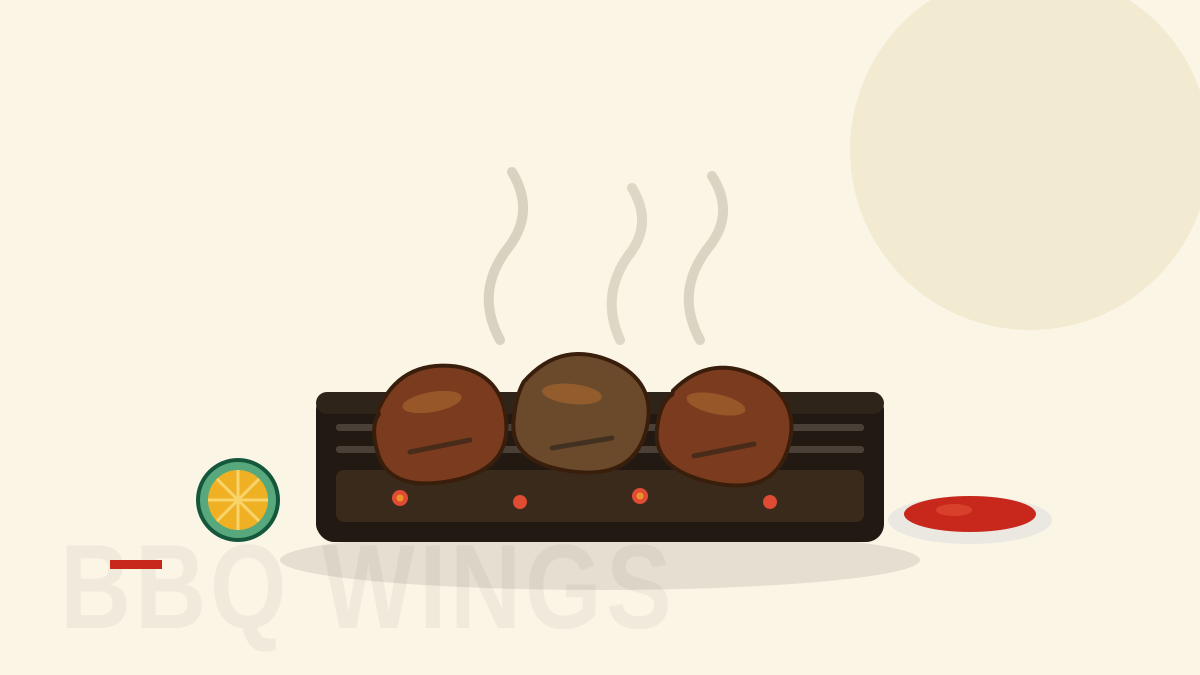
Charcoal-blistered wings lacquered in a sweet-savoury marinade, eaten by the lagoon with chili and a squeeze of calamansi — the hawker BBQ pit's easiest genius.
 07
07Charcoal, Satay & Street·40 min·Beginner
Rojakrojak · 罗惹
The word means mixture, and the plate agrees — fruit, jicama, and fritters tossed in black hae ko, tamarind, and chili, buried in crushed peanuts.