Sambal Stingray
sambal pari · 三巴魔鬼鱼
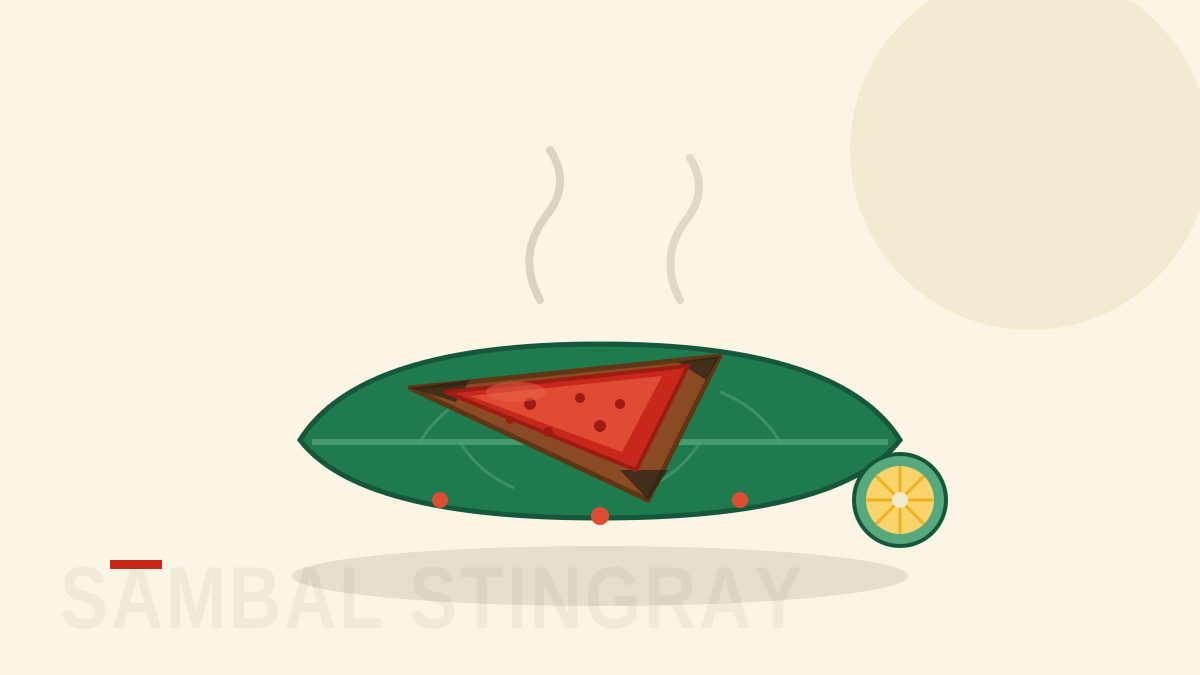
Stingray wing grilled on a banana leaf under a thick coat of sambal — the BBQ-seafood stall classic that turned a cheap fish into the pride of the coast.
By The Singaporean Recipes Kitchen · World Cookbook Series · June 29, 2026
East CoastThe hawker centres go up, 1971–1986
 07
07- Prep
- 35 min
- Cook
- 25 min
- Serves
- 4
- Level
- Intermediate
Sambal stingray is the great redemption story of Singapore's barbecue stalls. Ray was cheap fish — dense, cartilaginous, faintly unglamorous, the thing at the market that didn't sell first. Somewhere in the hawker-centre era, as the BBQ-seafood stalls found their form in the 1970s and 80s, cooks worked out what the fish actually wanted: a sambal thick enough to cling, a banana leaf to shield and perfume it, and charcoal doing the rest. No single stall can prove it was first, which is the surest sign a dish belongs to a whole trade rather than one genius. Within a generation, the leftover fish was the headliner.
The construction rewards a closer look, because every element is doing work. The leaf is not a plate — wilted over flame, it flexes around the fish, chars into a bitter-green smoke that seasons from below, and lets the cook move a delicate fillet without breaking it. The sambal is not a sauce — cooked down past pouring into something like chili jam, it insulates the fish's surface while it roasts, so the top gets flavor and the flesh underneath steams gently against the leaf. Fish, fire, leaf, paste: a complete cooking system that costs almost nothing and travels anywhere there's a grill.
On the East Coast the dish belongs to the open-air seafood-and-satay landscape by the lagoon — plates on melamine, calamansi halves rolling around, someone's uncle insisting the version further down the row is better. That scene is the dish's home turf and worth the trip. At home, the only real gap is the charcoal, and even that is honestly bridgeable: a hard oven and a broiler give you ninety percent of the result, and the leaf and sambal carry the rest. The fish stopped being cheap once the secret got out. The technique still is.
The stalls took the fish nobody wanted, hid it under sambal, set it over fire — and made the leaf itself part of the recipe.
Shiok (when it's exactly right) · A word from the kitchen
Ingredientsbahan-bahan
Serves
The fish
- 700 gstingray wing, cut into 2 portions (about 1.5 lb)ask the fishmonger for mid-cut wing pieces of even thickness; skate is the honest Western substitute
- 1 tspsalt
- 1 tbsplime juicea quick rub, then rinse — it brightens the fish and calms any ammonia edge ray can carry
- 2banana leaf sections, big enough to wrap each portionfrozen is fine — thaw, wipe, and pass over the flame until glossy
The sambal
- 20dried red chilies, soaked in hot water 15 minutesseed most of them; this sambal is thick and long-cooked, and full seeds make it bitter as it reduces
- 6fresh red chilies, roughly chopped
- 120 gshallots, peeled (about 8)
- 4garlic cloves
- 4candlenuts
- 15 gbelacan, toasted (1 tbsp packed)
- 1 tbsptamarind pulp, soaked in 60 ml hot water and strained
- 25 gsugar (5 tsp)
- 1 tspsalt
- 6 tbspneutral oil
To serve
- 4calamansi limes, halvedregular lime works; calamansi is the stall standard
- 1small red onion, sliced fine
- 2 tspcincalok (fermented krill), optionalmixed with the onion and a squeeze of lime it becomes the stall's sharp little side relish
Methodcara masak
Step 1: Prep the fish
Rub the stingray with the salt and lime juice, rest 10 minutes, then rinse and pat thoroughly dry. Ray and skate carry urea in their tissue that can read faintly of ammonia; fresh fish barely has it, and the lime rub takes care of the rest. If a wing smells strongly of ammonia raw, it isn't fresh enough — walk away, no sambal can fix that.
Step 2: Make a sambal thicker than you think you need
Blend or pound the chilies, shallots, garlic, candlenuts, and belacan to a paste. Fry it in the oil over medium heat 12 to 15 minutes, past pecah minyak, then add the tamarind water, sugar, and salt and keep cooking another 5 minutes until it darkens to brick and mounds on the spoon like jam. A laksa-loose sambal slides off the fish and burns on the leaf; this one has to be a paste that stays where you spread it. It should taste slightly too intense on its own — it is seasoning a thick piece of mild fish through its surface.
Step 3: Wilt the banana leaf
Pass each banana leaf section over the flame or a hot burner for a few seconds a side until it turns glossy and smells faintly of green tea. Wilting makes the leaf flexible instead of brittle, and the heat wakes the aroma the leaf will lend the fish. This is not packaging; the scorched leaf is an ingredient.
Step 4: Assemble
Lay each portion on its leaf, spread a thin layer of sambal underneath, and coat the top generously — a good 4 to 5 millimeters, using most of what you made. Fold the leaf edges loosely up around the sides so juices stay put but steam can escape. Sealed tight, the fish steams pale; open on top, the sambal roasts. You want the second.
Step 5: Grill over medium charcoal
Set the parcels leaf-down over medium coals — a hand held at grate level should force you out at 4 to 5 seconds — and grill 15 to 20 minutes without flipping. The leaf chars and shields the fish while the sambal on top roasts and catches at the edges. Doneness test comes from the stall: press a fork at the thickest cartilage line and twist gently — the flesh should lift off the cartilage in clean strands. If it clings, give it 3 more minutes. Indoors, a 250°C (480°F) oven with the final 2 minutes under the broiler is the honest apartment version; you lose the smoke and keep everything else.
Step 6: Serve on the leaf
Slide the whole parcel onto a plate — leaf, char, and all — with calamansi halves and the cincalok-onion relish alongside. Squeeze the lime over just before eating; the acid cuts the sambal's richness and makes the fish taste twice as fresh. Eat down to the cartilage. The strands closest to it are the best on the fish.
Perkakas · The tools
Equipment
Small charcoal grill
satay grillSatay is charcoal or it is something else. A narrow hibachi-style grill fans twenty sticks at once the way the stalls do.
Shop on Amazon →Granite mortar & pestle
lesung batuThe rempah tool. Pounding bruises and bleeds the aromatics in a way blades never do — the lesung is the sound of a Singapore kitchen starting dinner.
Shop on Amazon →Carbon-steel wok
chaoHalf this site happens in a wok, and carbon steel is the only honest choice at home — it heats fast, takes a season, and gets you the closest to wok hei your burner allows.
Shop on Amazon →
Equipment links are Amazon affiliate links. As an Amazon Associate we earn from qualifying purchases, at no cost to you. Disclosure.
Rate this recipe
Questions from the kitchen
How did stingray become a barbecue star?
By being cheap. For most of the 20th century ray was the fish left over when the good fish sold — until the BBQ-seafood stalls that flourished with the hawker centres of the 1970s and 80s figured out that a thick sambal and a banana leaf turn its dense, sweet flesh into something people queue for. Every telling names a different stall as first, which usually means no one was taking notes and everyone was borrowing. The dish belongs to the genre, not a founder.
My fish stuck to the leaf and fell apart. What went wrong?
Either the leaf wasn't wilted and oiled by its own waxes, or the fish moved too early. The sambal layer underneath acts as a barrier; make sure it's there, keep the parcel leaf-down the whole cook, and lift the entire leaf off the grate rather than prying the fish from it. If the leaf tears, a spatula under the leaf — never under the fish — saves the dish.
Can I use store-bought sambal?
A jar of sambal oelek is a different animal — raw-fried, loose, and one-dimensional — but it can be rehabilitated. Fry it 8 to 10 minutes with pounded shallots, toasted belacan, tamarind, and sugar until it thickens and darkens, and you're honestly close. Spreading it straight from the jar is the one version we'll talk you out of; it slides, scorches, and tastes of vinegar where the dish wants depth.
Makan lagi · Cook next
Keep the burner on
 07
07Charcoal, Satay & Street·60 min·Intermediate
Sataysate · ساتي
Charcoal-grilled skewers of turmeric-marinated chicken with a peanut sauce older than the island — a Javanese-Malay art Singapore made its own by the lagoon.
 07
07Charcoal, Satay & Street·45 min·Beginner
BBQ Chicken Wings烤鸡翅
Charcoal-blistered wings lacquered in a sweet-savoury marinade, eaten by the lagoon with chili and a squeeze of calamansi — the hawker BBQ pit's easiest genius.
 07
07Charcoal, Satay & Street·35 min·Intermediate
Orh Luak蚝烙
Small oysters folded into egg and a rice-and-tapioca batter, griddled hard so the edges shatter like lace while the centre stays molten — the Teochew oyster omelette.