BBQ Chicken Wings
烤鸡翅
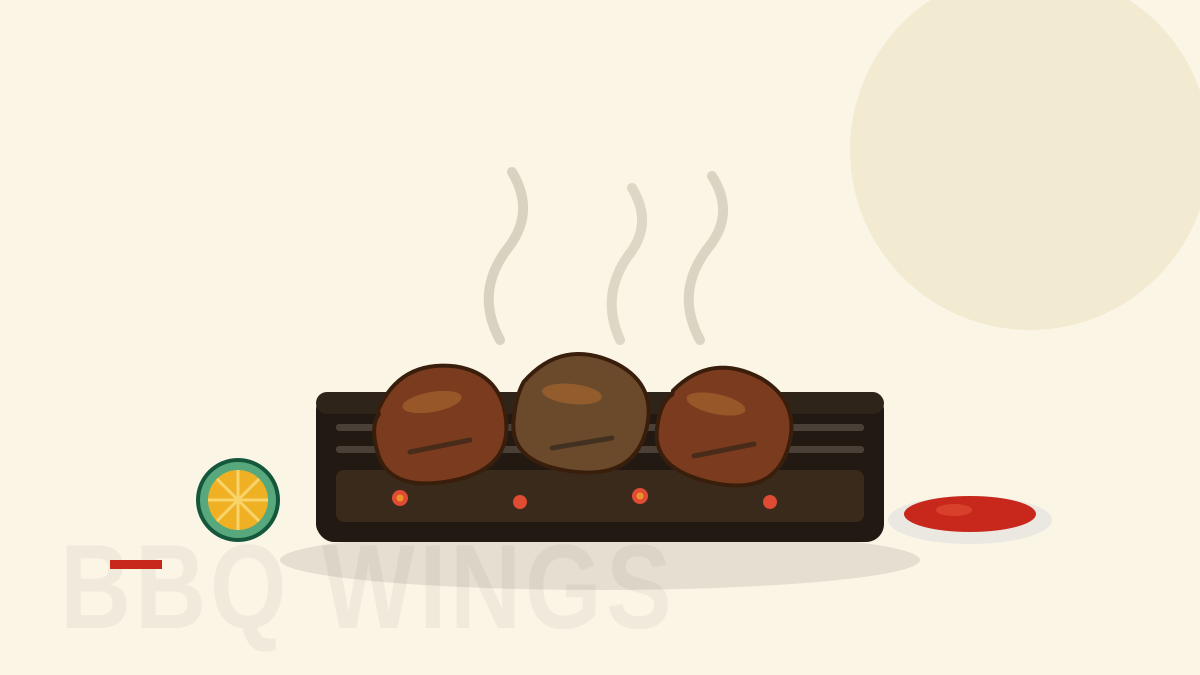
Charcoal-blistered wings lacquered in a sweet-savoury marinade, eaten by the lagoon with chili and a squeeze of calamansi — the hawker BBQ pit's easiest genius.
By The Singaporean Recipes Kitchen · World Cookbook Series · June 30, 2026
East CoastThe hawker centres go up, 1971–1986
 07
07- Prep
- 20 min
- Cook
- 25 min
- Serves
- 4
- Level
- Beginner
There is a category of Singapore food that no one thought to invent, that simply appeared because the ingredients and the fire were already there. The barbecue chicken wing is the patron saint of that category. It has no origin story worth telling, no contested lineage, no grandmother's secret — it grew up in the hawker centres and the BBQ-seafood stalls of the coast in the covered-food-centre decades, built from a bottle of oyster sauce, a jar of honey, and a bag of charcoal. That is not a knock. Some of the best things a cuisine makes are the ones it never bothered to mythologise.
What the wing has instead of history is consensus. Ask ten Singaporeans and they will describe the same platonic wing — skin gone mahogany and blistered over coals, flesh sweet and savoury to the bone, a rough chili dip on the side and a calamansi to squeeze. The marinade is barely a recipe, more a ratio everyone already carries in their head, and the technique is where the whole thing lives or dies. Sugar and smoke are a difficult marriage over fire, and the single mistake that ruins a wing is impatience — a hot blaze that carbonises the honey while the joint stays raw.
So the craft is restraint. A patient medium fire, constant turning, the extra marinade held back until the skin has set. Do that and the wing rewards you out of all proportion to its effort, which may be the real reason it endures. It asks for four hours of marinating you do while doing something else, and twenty-five minutes of tending you do with a beer in hand. Then the lime goes on, the sweet meets the sour, and you understand why the lagoon smells the way it does after dark.
No inventor, no sacred formula — just a bottle of oyster sauce, a jar of honey, and a fire by the sea.
Shiok (when it's exactly right) · A word from the kitchen
Ingredientsbahan-bahan
Serves
The wings
- 1 kgwhole chicken wings, tips left on (about 2.2 lb)whole wings, not split — the tip protects the joint and gives you a handle
The marinade
- 3 tbspoyster sauce
- 2 tbsplight soy sauce
- 2 tbsphoney or maltosethis is the lacquer — it is what turns the skin mahogany over coals, so don't cut it
- 1 tbspdark soy saucefor colour more than flavour — a little goes a long way
- 1 tbspShaoxing wine
- 3garlic cloves, grated
- 15 gginger, grated (a thumb)
- 1 tspfive-spice powder
- 1 tspwhite pepper
To serve
- 2red chilies, sliced, pounded with 2 garlic cloves and a pinch of salta rough cut chili dip — the sharp foil to all that sweet char
- 4calamansi limes, halved, or 1 regular lime in wedges
Methodcara masak
Step 1: Marinate, and give it time
Whisk all the marinade ingredients together, then toss the wings through until every one is coated and glossy. Cover and refrigerate at least 4 hours, ideally overnight. The salt and soy need time to work past the skin, and the sugars need to settle in — a wing marinated for twenty minutes tastes of the surface only and burns before it flavours.
Step 2: Bring the coals to a patient medium
Get a charcoal grill to a steady medium — ashed-over coals, the heat you can hold a hand over for four or five seconds, not the roaring high you would use for a steak. Wings are all skin and sugar, and high heat scorches the marinade black before the joint cooks through. If the flames lick up, bank the coals to one side and cook over the cooler edge.
Step 3: Grill low, turn often, brush late
Lay the wings over the coals and grill 20 to 25 minutes, turning every few minutes so no side sits still long enough to burn. Brush on the leftover marinade only in the last 5 minutes, once the skin has set — brush it early and the sugar just carbonises. They are done when the skin is mahogany and blistered, the juices at the joint run clear, and the meat pulls easily from the bone.
Step 4: Rest, then hit it with acid
Let the wings rest two minutes off the heat, then serve with the pounded chili dip and calamansi to squeeze over. The lime is not optional garnish — the sweet, smoky, salty wing needs that sour cut, which is exactly why the lagoon stalls have always put it on the plate. Eat with your hands, over paper, near the sea if you can manage it.
Perkakas · The tools
Equipment
Small charcoal grill
satay grillSatay is charcoal or it is something else. A narrow hibachi-style grill fans twenty sticks at once the way the stalls do.
Shop on Amazon →Granite mortar & pestle
lesung batuThe rempah tool. Pounding bruises and bleeds the aromatics in a way blades never do — the lesung is the sound of a Singapore kitchen starting dinner.
Shop on Amazon →Frying thermometer
The difference between shattering har cheong gai and greasy har cheong gai is oil held at temperature — stop guessing.
Shop on Amazon →
Equipment links are Amazon affiliate links. As an Amazon Associate we earn from qualifying purchases, at no cost to you. Disclosure.
Rate this recipe
Questions from the kitchen
Is there an original recipe for hawker BBQ wings?
Not really, and that is the honest charm of it. The barbecue wing is a hawker-centre creature — it rose with the covered food centres and the BBQ-seafood stalls of the coast, built from the same bottle of oyster sauce and jar of honey every stall already had. There is no single inventor and no sacred formula, just a shared idea of what a good wing over coals should taste like. That makes it forgiving to cook and impossible to get wrong for any noble reason.
My wings burned outside but were raw at the joint. What went wrong?
The heat was too high, almost always. Sugary marinades demand a patient medium fire, not a blaze — the skin colours in minutes but the joint needs twenty. Move the wings to a cooler part of the grill, cover if you can to trap some heat, and only brush on extra marinade in the final stretch. A thermometer at the thick joint should read 74°C (165°F).
No charcoal — can I do these in the oven?
You can, and they will be good, but call it what it is — roast wings, not barbecue. Set the oven to 200°C (400°F), roast on a rack 30 to 35 minutes turning once, and finish under a hot grill for the last few minutes to blister the skin. You get the lacquer and the char; you lose the smoke, which is the one thing an oven cannot fake.
Makan lagi · Cook next
Keep the burner on
 07
07Charcoal, Satay & Street·60 min·Intermediate
Sataysate · ساتي
Charcoal-grilled skewers of turmeric-marinated chicken with a peanut sauce older than the island — a Javanese-Malay art Singapore made its own by the lagoon.
 07
07Charcoal, Satay & Street·60 min·Intermediate
Sambal Stingraysambal pari · 三巴魔鬼鱼
Stingray wing grilled on a banana leaf under a thick coat of sambal — the BBQ-seafood stall classic that turned a cheap fish into the pride of the coast.
 07
07Charcoal, Satay & Street·40 min·Beginner
Rojakrojak · 罗惹
The word means mixture, and the plate agrees — fruit, jicama, and fritters tossed in black hae ko, tamarind, and chili, buried in crushed peanuts.