Rojak
rojak · 罗惹
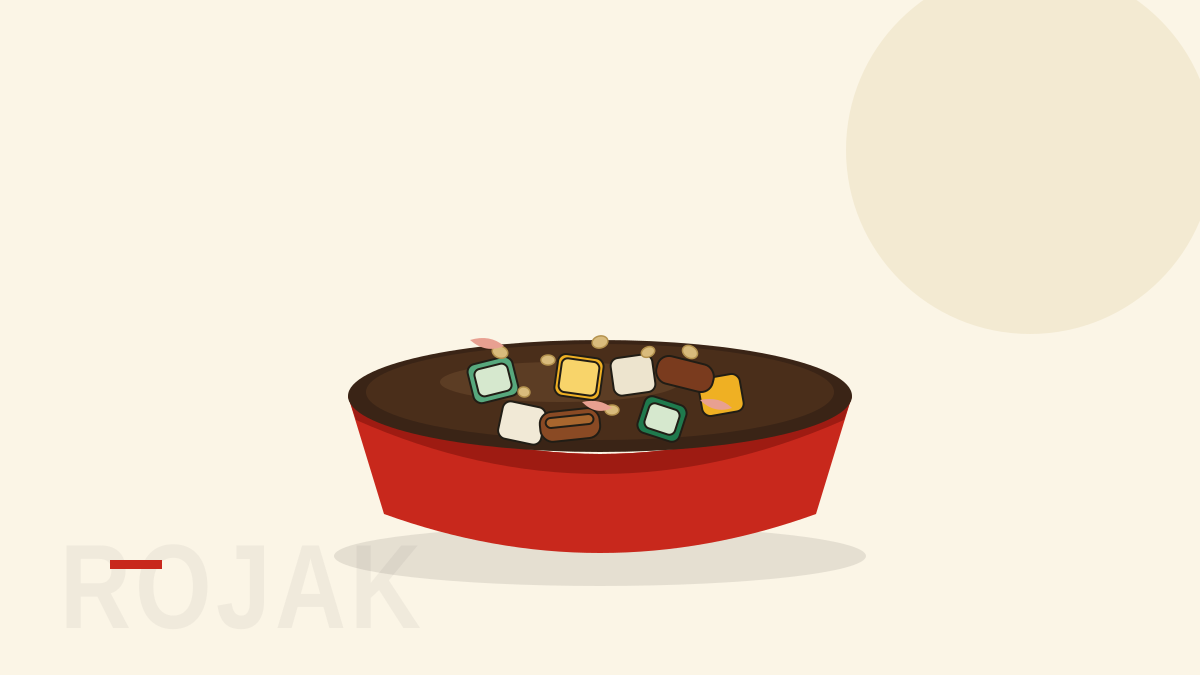
The word means mixture, and the plate agrees — fruit, jicama, and fritters tossed in black hae ko, tamarind, and chili, buried in crushed peanuts.
By The Singaporean Recipes Kitchen · World Cookbook Series · July 24, 2026
Old Airport Road & GeylangStreet hawkers & the kampong, 1900s–1942
 07
07- Prep
- 30 min
- Cook
- 10 min
- Serves
- 4
- Level
- Beginner
Rojak is Singapore explaining itself. The word means "mixture" in Malay, and the island uses it for everything — a rojak crowd, a rojak of dialects, a nation assembled from parts that had no business ending up on the same plate and somehow taste right together. As a dish it is exactly that: cucumber, jicama, pineapple, green mango, blanched greens, fried tofu puffs, and dough fritters, all tossed in a black, funky, sweet-sour dressing and buried under crushed peanuts. Nothing in the bowl belongs with anything else, and that is the entire idea.
The dressing is where the dish lives, and it runs on hae ko — a thick, molasses-dark prawn paste made specifically for rojak, sold in tubs, unmistakable and irreplaceable. Pounded together with tamarind, palm sugar, chili, and a squeeze of lime, it turns into a glossy black sauce that hits sweet, sour, salty, and deeply savoury in the same bite. This is the Chinese-style hawker rojak, and it is worth saying clearly that it is not Indian rojak — that is a separate Indian-Muslim dish entirely, fritters and prawn cakes dunked in a sweet chili-and-sweet-potato gravy. Same word, same mixing spirit, two different plates. Anyone insisting one is the authentic rojak has missed that the word was never that precise to begin with.
There is no real technique to master here, only timing to respect, which is why it is a beginner's dish that a lot of people still get wrong. Everything crisp — the toasted tau pok, the fried dough, the fresh fruit — is on a timer the instant it meets the wet dressing. Toast the fritters properly, blanch the greens just enough to keep their snap, pound a dressing that tastes of all four corners at once, and then dress and serve almost in the same motion. A rojak eaten the minute it comes together crackles and floods and crunches; a rojak left to sit becomes a soft, sweet puddle that still tastes good and has entirely lost the point. Make it fast, eat it faster.
Rojak means mixture, which is the most Singaporean word there is. The dish is just the island describing itself on a plate.
Shiok (when it's exactly right) · A word from the kitchen
Ingredientsbahan-bahan
Serves
The dark dressing
- 3 tbsphae ko (thick prawn/shrimp paste for rojak) (about 60 g)this is the black, molasses-thick petis sold specifically for rojak — not belacan, not fish sauce; it is the entire identity of the sauce
- 2 tbsptamarind (assam) pulp, loosened in 3 tbsp warm water and strained
- 2 tbspgula melaka or palm sugar, chopped
- 1 tbsptoasted belacan, optionala small knob deepens the funk — toast it first or leave it out; the hae ko already carries the load
- 2fresh red chilies (or 1 tbsp sambal), to taste
- 1 tsplime juice, plus more to finish
The mixture
- 1cucumber, seeded and cut into thick bite-size chunks
- 200 gbangkwang (jicama / yam bean), peeled and cut into chunks (about 7 oz)
- 1/2firm-ripe pineapple, in chunks
- 1firm green mango or green apple, in chunks, optional
- 100 gkangkong (water spinach) or bean sprouts, blanched 20 seconds and cooled (about 3 1/2 oz)
- 4tau pok (fried beancurd puffs), toasted and cut in half
- 2you char kway (fried dough fritter / youtiao), toasted and slicedtoast the tau pok and you char kway until crisp — they are there for crunch and they turn to sponge if you skip it
To finish
- 80 groasted peanuts, coarsely crushed (about 2/3 cup)
- 1bunga kantan (torch ginger bud), very finely sliced, optionalthe pink shaved torch ginger is the smell of a proper rojak — floral and sharp; if you find it, use it
Methodcara masak
Step 1: Prep the crunch before anything gets wet
Toast the tau pok and you char kway in a dry pan or oven until crisp and dry, then cut them up and set aside. This matters because both go limp fast once dressed, so they wait until the last minute. Blanch the kangkong or bean sprouts for 20 seconds and cool them under cold water to hold their snap — overcooked greens go slimy and drag the whole bowl down.
Step 2: Pound the dressing to a glossy paste
In a lesung or a sturdy bowl, pound the chili and belacan first, then work in the hae ko, palm sugar, and strained tamarind water until you have a thick, glossy, black-brown sauce. Taste and steer it — rojak dressing should hit sweet, sour, salty, and funky all at once, with the hae ko as the dark savoury floor. Add lime for lift and a splash of water only if it is too stiff to coat. It should ribbon slowly off the spoon.
Step 3: Toss the sturdy fruit first
In a wide bowl, combine the cucumber, bangkwang, pineapple, and green mango, then spoon over enough dressing to coat every piece in glossy black. Toss until each chunk is slicked and the juices from the fruit have loosened the sauce slightly. Do this first because these firm pieces can take a minute in the dressing without suffering, and they help thin it to the right clinging consistency.
Step 4: Fold in the fragile things last
Add the crisp tau pok, you char kway, and the blanched greens and fold them through quickly, just to coat — seconds, not minutes. Everything crunchy is on a timer now; the longer it sits in the wet dressing the softer it gets, so the goal is to dress and serve almost in one motion.
Step 5: Bury it in peanuts and serve at once
Tip it onto a plate and shower it with the crushed peanuts and the shaved torch ginger, with a final squeeze of lime. Serve immediately, while the fritters still crackle against the soft fruit and the peanuts are dry. Rojak does not wait — a bowl left standing turns into a sweet, soggy, still-tasty mess, but the version worth eating is the one that just came together.
Rate this recipe
Questions from the kitchen
Why is it called rojak, and is this the same as Indian rojak?
Rojak means "mixture" in Malay, and Singaporeans use the word for far more than the dish — a rojak crowd, a rojak of ideas, the island itself as a happy jumble. As a name for food it is almost too honest. But it is not one dish. This recipe is the Chinese-style fruit rojak, bound in dark hae ko prawn paste. Indian rojak is a completely different plate — an Indian-Muslim spread of battered fritters, prawn cakes, and boiled egg dunked in a sweet-spicy chili-and-sweet-potato gravy. Same word, same spirit of mixture, two unrelated dishes. Do not let anyone tell you one is the "real" rojak.
My rojak turned into a wet, soggy heap. What did I do?
You dressed it too early, or all at once. Rojak is an à-la-minute dish — the crisp tau pok, you char kway, and fresh fruit start softening the moment they meet the wet dressing. Toast your fritters until genuinely crisp, keep them separate until the end, and toss the whole thing together only just before it goes to the table. And go easy on the dressing at first; the fruit releases its own juice and loosens the sauce as you toss.
Can I skip the hae ko or use something else?
You can make a fruit salad. You cannot make rojak. The thick black hae ko prawn paste is the entire character of this dish — funky, sweet, savoury, unmistakable — and there is no honest substitute for it. It is not the same as belacan or fish sauce, though a little toasted belacan can support it. If you cannot find hae ko, wait until you can; a rojak without it is a different and lesser thing pretending to be this one.
Makan lagi · Cook next
Keep the burner on
 07
07Charcoal, Satay & Street·70 min·Intermediate
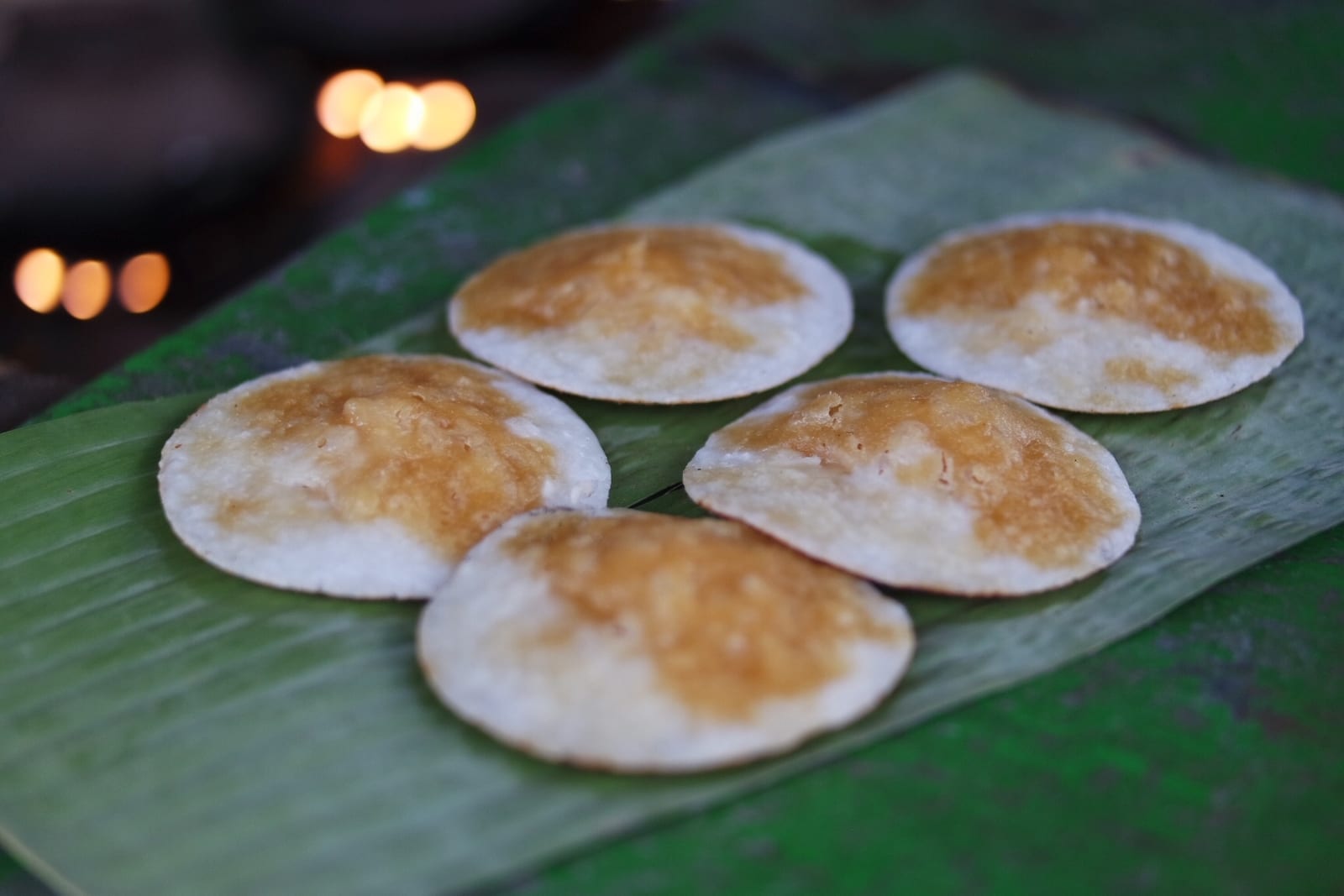
Chwee Kueh水粿
Teochew steamed rice cakes with the tremble of just-set custard, buried under dark chai poh fried slow in more oil than you want to know about.
 07
07Charcoal, Satay & Street·60 min·Intermediate
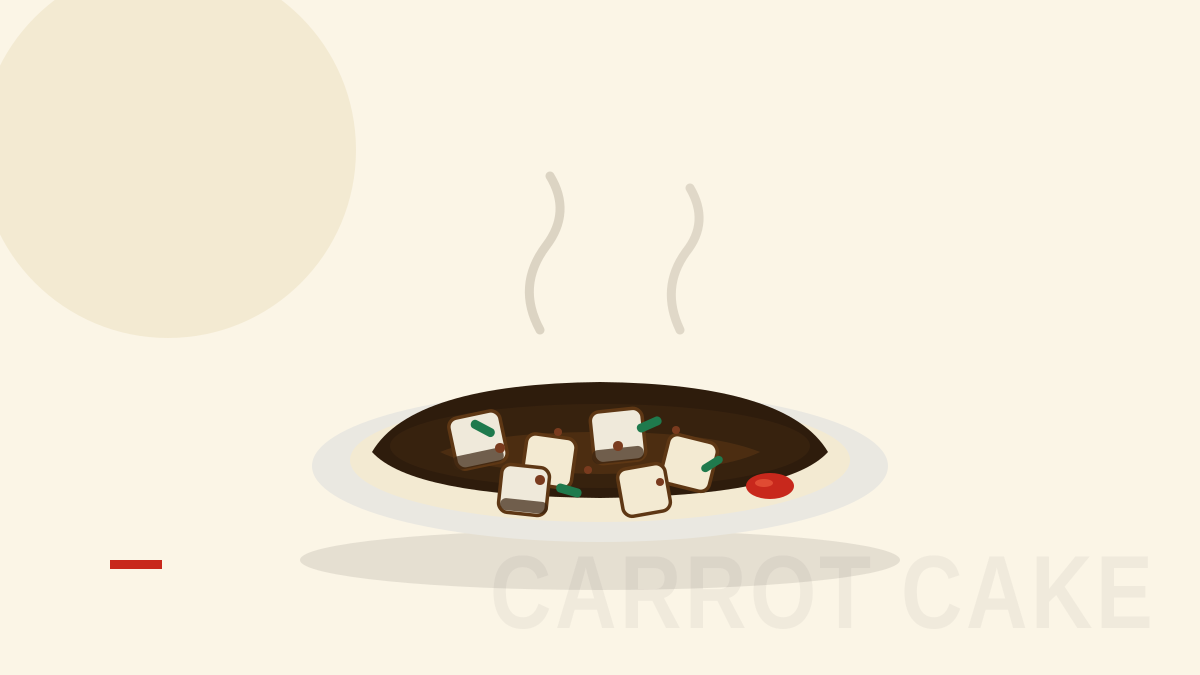
Chai Tow Kway菜头粿
Steamed radish cake cut into cubes and fried hard with egg, garlic, and salty preserved radish — the hawker carrot cake that comes two ways, white or black, and neither is wrong.
 07
07Charcoal, Satay & Street·60 min·Intermediate
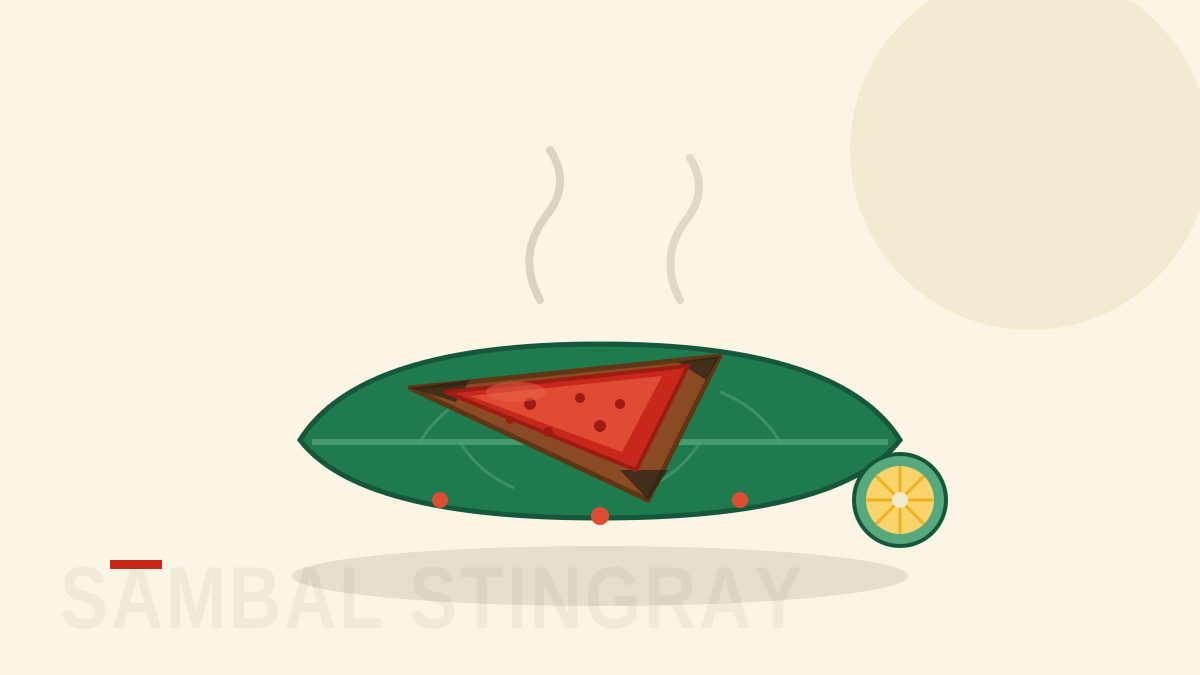
Sambal Stingraysambal pari · 三巴魔鬼鱼
Stingray wing grilled on a banana leaf under a thick coat of sambal — the BBQ-seafood stall classic that turned a cheap fish into the pride of the coast.