Nonya Chap Chye
chap chye
The everyday Peranakan braise — Chinese cabbage cooked soft in taucheo with lily buds, wood ear, and glass noodles, the quiet side that steals a feast.
By The Singaporean Recipes Kitchen · World Cookbook Series · July 20, 2026
Katong–Joo ChiatCrown Colony & coolie kitchens, 1867–1900s
 04
04- Prep
- 30 min
- Cook
- 40 min
- Serves
- 6
- Level
- Beginner
There is a particular kind of dish that never headlines the menu and never leaves the table, and in the Peranakan kitchen that dish is chap chye. The name is plain Hokkien for "mixed vegetables," which undersells it the way calling a symphony "some notes" would. It is cabbage braised into submission with fermented soybean paste, dried prawns, lily buds, wood ear, and glass noodles — a pot built entirely from the dry-goods drawer and one head of cabbage, which is exactly why it survived. Every community that came through the Straits had a version; the Nyonyas made theirs sing with taucheo.
To understand chap chye you have to understand the tok panjang — the "long table," the Peranakan feast where dishes were laid end to end and eaten across hours. Chap chye was always there, and not by accident. At Chinese New Year its long noodles and its overflowing abundance were read as omens of a long life and a full year, food as quiet superstition. It belongs to the crown-colony decades, when the Straits-Chinese households of Katong and Joo Chiat had cooks with time and a pantry stocked from the provision shops, and when a good braise was a measure of a household's standards.
The technique is nothing and everything. Cook the taucheo in oil before the liquid ever arrives, or it stays raw and sharp. Braise the cabbage far past the point where a stir-fry cook would panic — this is not a dish that respects crunch, it wants collapse, the leaves dissolving into a glossy tan sauce. And hold the glass noodles until the very end, because they will drink whatever you give them and pay you back with paste if you let them braise. Get those three beats right and you have the thing itself.
It is humble food, and humble food is where a kitchen's honesty lives. Anyone can make a chili crab impressive. Making a pot of braised cabbage that people fight over the next morning is the harder, quieter skill, and it is the one the Nyonyas prized.
Chap chye is patience disguised as vegetables. You cook the cabbage until it stops being cabbage and starts being the sauce.
Shiok (when it's exactly right) · A word from the kitchen
Ingredientsbahan-bahan
Serves
The soak (start here)
- 20 gdried lily buds (kim chiam), soaked 20 minutes (a small handful)pinch off the hard woody tip of each, then knot it in the middle — the knot keeps it from disintegrating in the braise
- 15 gblack wood ear fungus, soaked until it unfurls (about 1/2 oz dried)it triples in size and turns silky — tear out any gritty stem base
- 6dried shiitake mushrooms, soaked until softkeep the soaking water — strained, it is half the braising liquid and all of the backbone
- 30 gglass noodles (tang hoon), soaked 10 minutes and cut into spans (about 1 oz dried)add these last — they drink liquid greedily and turn to paste if they braise from the start
The aromatics and paste
- 4shallots, sliced
- 3garlic cloves, minced
- 2 tbsptaucheo (fermented soybean paste), lightly mashedthis is the whole flavour of the dish — a salty, funky ferment; taste yours first, some brands are saltier than others
- 30 gdried prawns (hae bee), soaked and roughly chopped (about 3 tbsp)leave them out for a meatless pot, but know the braise loses its low savoury hum
- 3 tbspneutral oil
The braise
- 500 gChinese cabbage (wombok), cut into wide ribbons (about 1 lb)keep the firm stem parts and leafy parts separate — the stems go in first
- 8fu chuk (dried beancurd skin), snapped into pieces and soaked briefly
- 2fresh red chilies, halved lengthwise
- 1 tspsugar
- 1 tspsesame oil, to finish
- to tastewhite pepper and salt
Methodcara masak
Step 1: Build the base
Warm the oil over medium and soften the shallots and garlic until translucent and just turning gold, about 3 minutes. Add the dried prawns and fry until they smell toasty, then stir in the taucheo and let it sizzle for a minute — cooking the paste here, before any liquid, is what turns it from raw and sharp into round and savoury. It should smell deeply of the sea and the ferment.
Step 2: Layer in the soaked things
Add the shiitake, wood ear, and knotted lily buds, turning them through the paste for two minutes so each one takes on colour. Then go in with the firm cabbage stems first — they need the longest — followed by the strained mushroom water and enough hot water to come halfway up. Bring it to a simmer.
Step 3: Braise until the cabbage surrenders
Cover and simmer gently for 20 to 25 minutes, adding the leafy cabbage and the fu chuk halfway through. You are cooking the cabbage well past bright and crisp — chap chye is meant to be meltingly soft, the leaves collapsing into the sauce. It is done when a stem piece gives with no resistance and the liquid has gone glossy and tan.
Step 4: Finish with the noodles
Stir in the soaked glass noodles and the fresh chili, and cook 3 to 4 minutes more, just until the noodles turn clear and slippery and have soaked up most of the loose liquid. Add them any earlier and they bloat into mush; the pot should end saucy, not soupy, the strands glistening rather than swimming.
Step 5: Season and rest
Season with sugar, white pepper, and only as much salt as it needs — the taucheo and dried prawns have done most of that work already. Finish with sesame oil off the heat. Like most braises it tastes better after twenty minutes standing, and better still tomorrow, when the flavours have stopped arguing and settled.
Perkakas · The tools
Equipment
Carbon-steel wok
chaoHalf this site happens in a wok, and carbon steel is the only honest choice at home — it heats fast, takes a season, and gets you the closest to wok hei your burner allows.
Shop on Amazon →Claypot
sha baoFor claypot rice the pot IS the recipe — clay holds gentle heat, builds the crust, and comes to the table still ticking.
Shop on Amazon →Chinese cleaver
chai daoChops through a whole chicken for chicken rice, smashes ginger with the flat, scoops the lot into the wok. One blade, most of the canon.
Shop on Amazon →
Equipment links are Amazon affiliate links. As an Amazon Associate we earn from qualifying purchases, at no cost to you. Disclosure.
Rate this recipe
Questions from the kitchen
Is chap chye a Chinese dish or a Peranakan one?
Both, and the answer is the whole story of this island. The name is Hokkien — "chap chye" means mixed vegetables, and versions exist wherever Hokkien people settled. What the Nyonya kitchen did was make it its own the way it made everything its own, by leaning on taucheo, dried prawns, and lily buds until it tasted like a Straits-Chinese table rather than a mainland one. It became a fixture of the tok panjang, the long-table feast, and of Chinese New Year, where its length and abundance were read as good fortune. We credit both halves; flattening it to one is missing the point of Peranakan food entirely.
My cabbage went watery and the sauce tasted thin. What happened?
Two usual causes. Either you added too much water at the braise stage — the cabbage itself releases a surprising amount as it cooks down, so start with less and top up only if it threatens to catch — or you pulled it off the heat while the cabbage was still firm, before it had cooked down enough to thicken the pot on its own. Give it the full time, keep the lid on, and let the glass noodles at the end drink up whatever loose liquid remains.
Can I make it ahead?
You should. Chap chye is one of those braises that is frankly better on day two, once the taucheo has worked its way into every piece and the whole thing has settled into one flavour rather than several. Make it up to the point before the glass noodles, refrigerate, then reheat gently and add the noodles fresh when you serve — that keeps them from turning to paste overnight.
Makan lagi · Cook next
Keep the burner on
 04
04The Peranakan Table·90 min·Intermediate
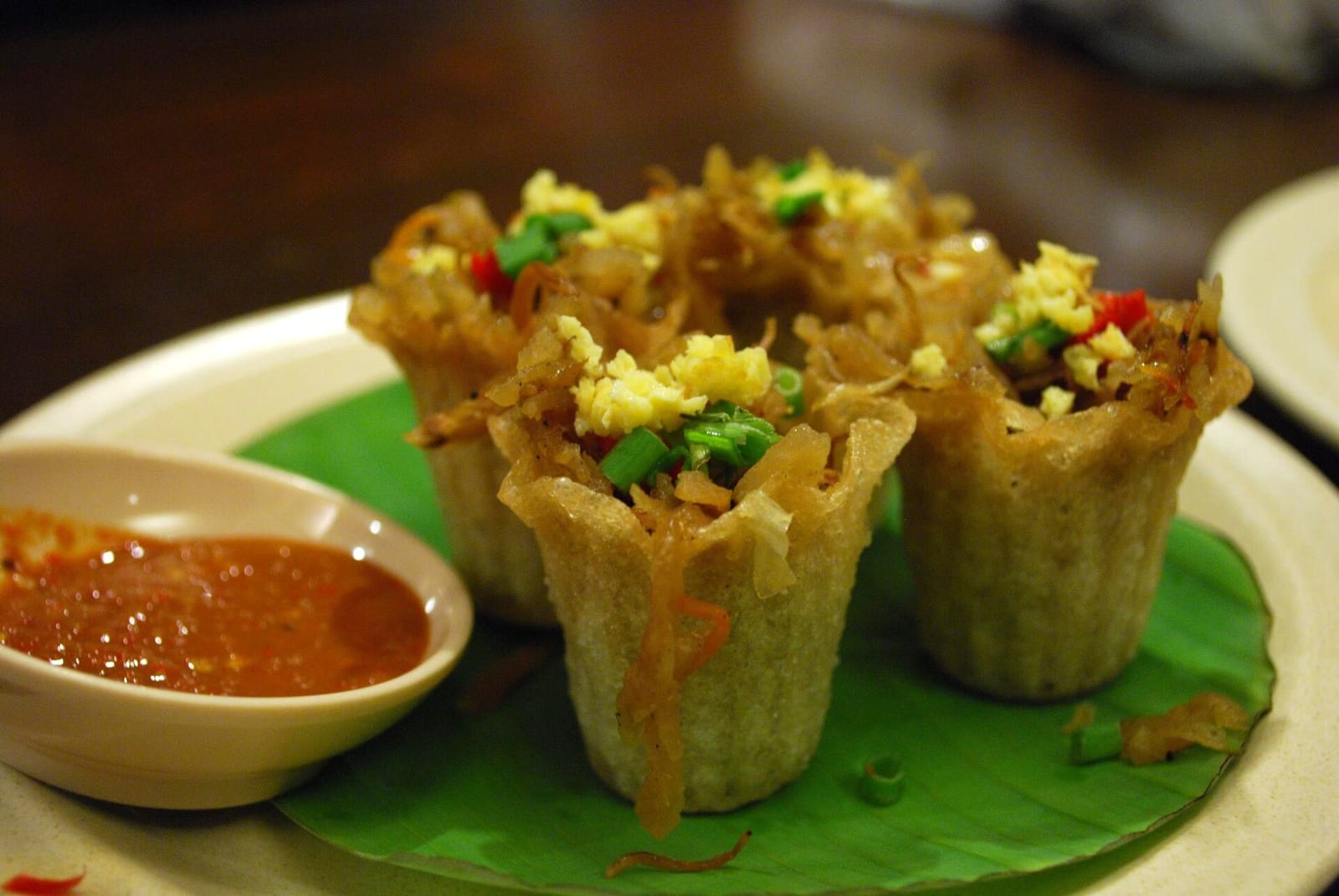
Kueh Pie Teekueh pie tee
Nyonya top hats — crisp fried cups filled with braised bangkwang and bamboo shoot, crowned with prawn and chili, gone in one bite at every party.
 04
04The Peranakan Table·135 min·Intermediate
Babi Pongtehbabi pongteh
Pork shoulder and shiitake braised slow with taucheo and gula melaka — the brown, bubbling everyday stew at the heart of the Straits-Chinese kitchen.
 04
04The Peranakan Table·210 min·Advanced
Ayam Buah Keluakayam buah keluak
The Peranakan benchmark — chicken braised in tamarind gravy with buah keluak, the toxic nut that three days of soaking turns into black, truffle-dark gold.