Ayam Buah Keluak
ayam buah keluak
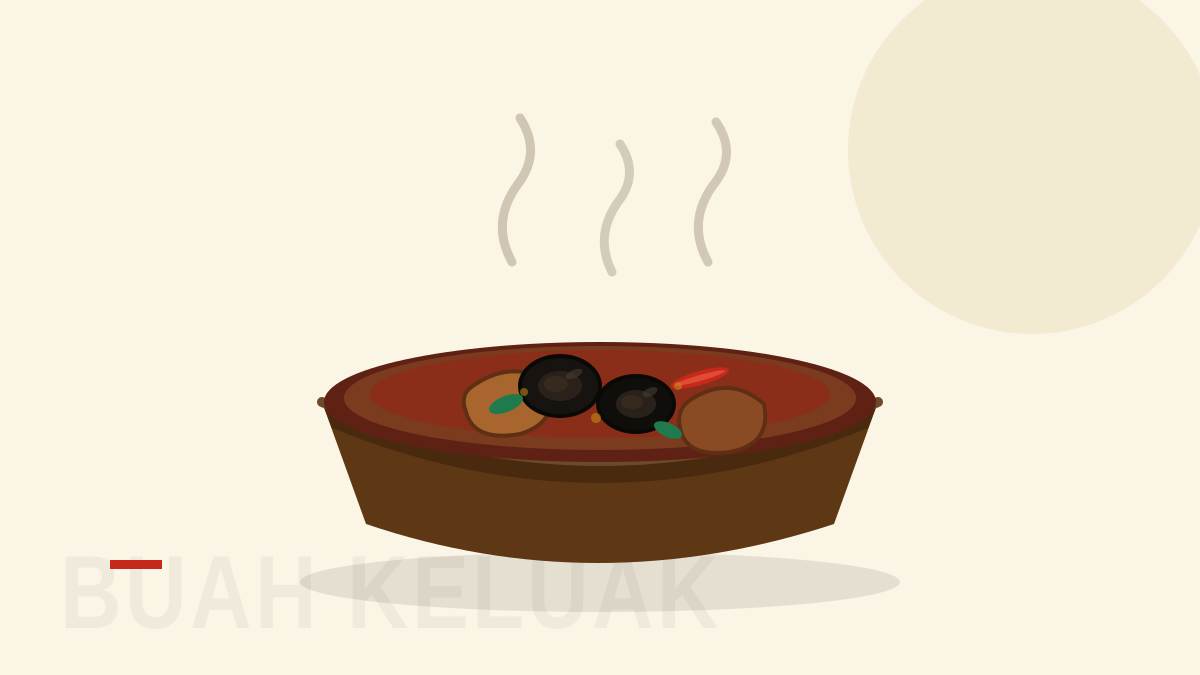
The Peranakan benchmark — chicken braised in tamarind gravy with buah keluak, the toxic nut that three days of soaking turns into black, truffle-dark gold.
By The Singaporean Recipes Kitchen · World Cookbook Series · June 25, 2026
Katong–Joo ChiatRaffles & the colonial port, 1819–1867
 04
04- Prep
- 120 min
- Cook
- 90 min
- Serves
- 6
- Level
- Advanced
Buah keluak is the seed of the kepayang tree, and in its raw state it contains hydrogen cyanide — enough to make eating one a genuinely bad afternoon. The communities of the Malay archipelago solved this centuries ago with a patience that borders on the devotional: the seeds are boiled, then buried in ash and earth for about forty days, fermenting into something entirely new — a kernel the color of tar with the flavor people reach for truffles, black olives, and dark chocolate to describe, always ending with "but not really." There is no shortcut through this chemistry and no substitute for its result. Every nut sold for cooking has been through it; every cook still soaks for three days and scrubs, because that is the covenant with this ingredient.
The dish itself is the great flex of Peranakan cooking — the Straits Chinese community that grew from Chinese traders settling and marrying into the Malay world of Malacca, Penang, and early-port Singapore. Ayam buah keluak is the whole marriage in one claypot: a Malay-Indonesian ingredient and tamarind sourness, a Chinese instinct for the long braise, and the Nyonya insistence that the two become inseparable. In the Katong and Joo Chiat households where Peranakan Singapore concentrated, this was the dish by which a kitchen was measured. It shows up at weddings, at Chinese New Year, at any table where a family wants to say this is who we are.
Understand what you are managing and the recipe is not complicated — it is just long. Three days of soaking. An honest fry of the rempah. A low braise until the gravy goes black and the oil returns. The chicken, frankly, is the supporting act; the nuts are the reason everyone came, and the correct way to eat them is to dig the black flesh out with a small spoon and fold it into hot rice like the treasure it is. Make it a day ahead. It knows.
Every cuisine has a dish that is really an exam. For the Peranakans it is this one — and the examiners are grandmothers, and they do not grade on a curve.
Shiok (when it's exactly right) · A word from the kitchen
Ingredientsbahan-bahan
Serves
The nuts (start 3 days ahead)
- 20buah keluak nuts, sold prepared (fermented and boiled)buy only from a trusted Asian grocer or Peranakan supplier — the raw nut is poisonous, and everything sold for cooking has already been fermented and boiled to draw the toxin out. You still soak. No exceptions.
- 3 dayswater for soaking, changed every day
The rempah
- 10dried red chilies, soaked and drained
- 150 gshallots, peeled (about 5 oz)
- 4garlic cloves
- 4candlenuts
- 25 ggalangal, sliced (a fat thumb)
- 15 gfresh turmeric, peeled (a smaller thumb)
- 2lemongrass stalks, tender bottom third, sliced
- 15 gbelacan, toasted (1 tbsp packed)
The braise
- 1.4 kgchicken, cut into 10–12 bone-in pieces (about 3 lb)bone-in thighs and drumsticks braise best; a whole cut bird is traditional
- 6 tbspneutral oil
- 50 gtamarind pulp, soaked in 500 ml warm water and strained (a golf ball)assam — the sour spine that keeps the black gravy from turning heavy
- 500 mlwater (about 2 cups)
- 1 tbspgula melaka, chopped
- 1.5 tspsalt, or to taste
Methodcara masak
Step 1: Soak the nuts for three days
Scrub the nuts under running water with a stiff brush, then submerge them in a big bowl of water. Change the water and scrub again every day for three days. This is not ritual. Buah keluak contains hydrogen cyanide in its raw state; fermentation and boiling by the processor do most of the work, and the long soak finishes it while softening the kernel. Never taste an unsoaked kernel, and never buy nuts that are not sold specifically as prepared for cooking.
Step 2: Crack and check every nut
Each nut has one smooth, slightly flattened face — that is the door. Crack it open along that face with the back of a cleaver or a mortar pestle, making an opening about the size of a thumbnail. The kernel inside should be glossy, black-brown, and smell deep and fermented, like tamarind crossed with black olive and forest floor. Discard any nut that is grey, dry, moldy, or smells sharp and wrong — with keluak you judge every single nut, and a bad one will poison the pot's flavor even though it can no longer poison you. Some cooks dig out the kernels, mash them with a little sugar and salt, and pack them back into the shells; do this if you want, it makes the treasure easier to reach at the table.
Step 3: Pound and fry the rempah
Pound the rempah in the usual order — galangal, turmeric, lemongrass first, then candlenuts and garlic, chilies, shallots, belacan last. Fry it in the oil over medium heat, 12 to 15 minutes, stirring, until it darkens and the oil breaks back out at the edges. The gravy is only ever as good as this fry.
Step 4: Braise the chicken
Add the chicken pieces and turn them through the paste until coated and sealed, about 5 minutes. Pour in the strained tamarind water and the plain water, add the gula melaka and salt, and bring to a simmer.
Step 5: Add the nuts and take it low
Slide in the cracked nuts, opening-side up so the gravy can get in and the kernel stays put. Cover partially and braise at a low simmer for 60 to 75 minutes, until the chicken is falling from the bone, the gravy has darkened toward black, and a slick of stained oil rides the surface. Taste and balance — it should land sour first, then earthy-bitter, then a low sweetness. Like most braises with a fermented heart, it is better tomorrow; Peranakan cooks routinely make it a day ahead.
Step 6: Serve with rice and a small spoon
Serve over white rice, and give each person a small spoon or the handle-end of a teaspoon for digging the kernel out of its shell. The black flesh is the point of the entire dish — spread it into the rice with a bit of gravy. Anyone who leaves their nuts untouched forfeits them, in every Peranakan household, forever.
Perkakas · The tools
Equipment
Granite mortar & pestle
lesung batuThe rempah tool. Pounding bruises and bleeds the aromatics in a way blades never do — the lesung is the sound of a Singapore kitchen starting dinner.
Shop on Amazon →Carbon-steel wok
chaoHalf this site happens in a wok, and carbon steel is the only honest choice at home — it heats fast, takes a season, and gets you the closest to wok hei your burner allows.
Shop on Amazon →Claypot
sha baoFor claypot rice the pot IS the recipe — clay holds gentle heat, builds the crust, and comes to the table still ticking.
Shop on Amazon →Chinese cleaver
chai daoChops through a whole chicken for chicken rice, smashes ginger with the flat, scoops the lot into the wok. One blade, most of the canon.
Shop on Amazon →
Equipment links are Amazon affiliate links. As an Amazon Associate we earn from qualifying purchases, at no cost to you. Disclosure.
Rate this recipe
Questions from the kitchen
Who looked at a poisonous nut and decided to ferment it for forty days?
Nobody wrote the name down, which is how you know the story is old. The kepayang tree grows across the Malay archipelago, and Indonesian and Malay communities worked out the detox — burying the seeds in ash and earth for weeks — long before the Peranakans of Malacca and Singapore made the nut the crown of their cuisine. The Straits Chinese families of the early port years married Chinese braising to this Malay-Indonesian ingredient and claimed the result as their benchmark. Legend says a Nyonya could be judged by her buah keluak alone; the legend was probably written by a mother-in-law.
My gravy tastes bitter and one note. What went wrong?
Almost always a bad nut or a rushed fry. One rancid kernel taints the pot, which is why you smell every nut at the cracking stage and discard without mercy — budget a couple of spares. If the nuts were sound, the rempah likely went in underfried, so the gravy has raw-spice harshness with nothing underneath. The dish should be sour and earthy with bitterness as a background instrument, not the melody. More tamarind and a longer simmer can partially rescue it.
Is there any honest shortcut here?
One. Some wet-market vendors and Peranakan suppliers sell keluak kernels already dug out and cleaned, or nuts pre-soaked and ready to crack — paying for that is buying days, not corners, and no reasonable person will judge you. What you cannot shortcut is the braise itself or the checking of each nut. And if the whole project defeats you, the correct move is a restaurant that does it well, not a version that pretends black olive tapenade is the same thing. It is not.
Makan lagi · Cook next
Keep the burner on
 04
04The Peranakan Table·135 min·Intermediate
Babi Pongtehbabi pongteh
Pork shoulder and shiitake braised slow with taucheo and gula melaka — the brown, bubbling everyday stew at the heart of the Straits-Chinese kitchen.
 04
04The Peranakan Table·70 min·Beginner
Nonya Chap Chyechap chye
The everyday Peranakan braise — Chinese cabbage cooked soft in taucheo with lily buds, wood ear, and glass noodles, the quiet side that steals a feast.
 04
04The Peranakan Table·90 min·Intermediate
Kueh Pie Teekueh pie tee
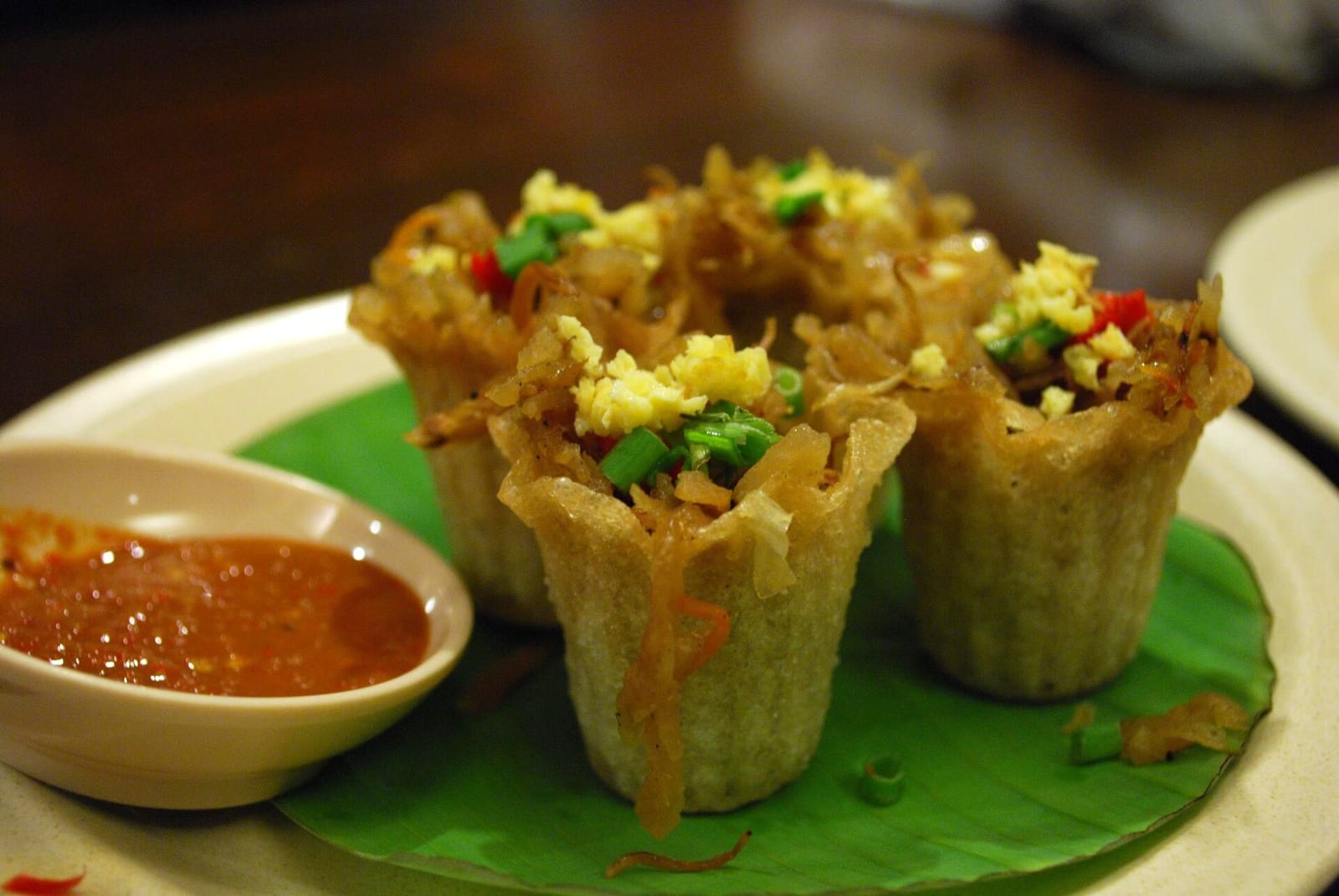
Nyonya top hats — crisp fried cups filled with braised bangkwang and bamboo shoot, crowned with prawn and chili, gone in one bite at every party.