Teochew Porridge
潮州糜 · muay
Loose Teochew rice porridge — grains swimming in cloudy water, ringed by salty dishes. It came with migration, and it carried the island through leaner years.
By The Singaporean Recipes Kitchen · World Cookbook Series · July 10, 2026
The HeartlandsOccupation & scarcity, 1942–1945
 03
03- Prep
- 10 min
- Cook
- 30 min
- Serves
- 4
- Level
- Beginner
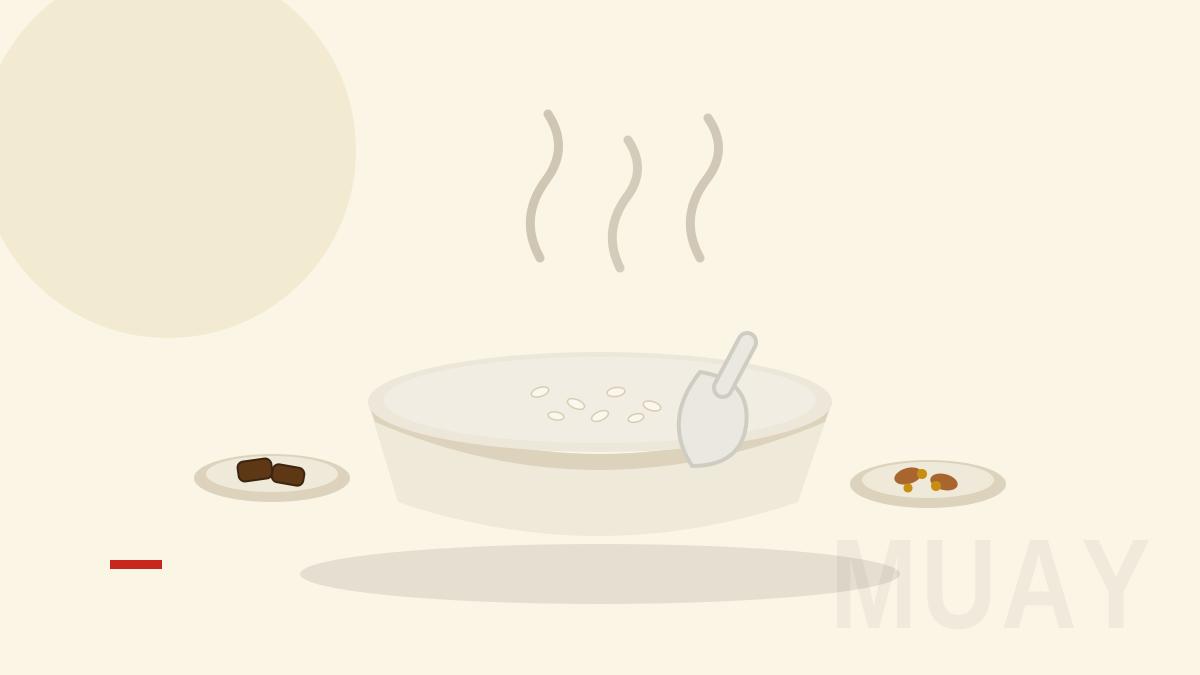
Teochew porridge is the plainest dish on this site, and one of the most quietly loved. It is not congee, whatever a menu might tell you — Cantonese congee is cooked down to a smooth, thick cream, while Teochew muay stops well short of that, the rice grains left whole and separate, swimming in a cloudy broth that is still, recognisably, water. It came to Singapore the way most of the island's food came, in the memory of migrants. Teochew people from the Chaoshan coast of southern China brought it with them, and with it a whole way of eating: a bowl of near-neutral porridge, surrounded by small, sharp, salty dishes eaten in tiny amounts. The muay is the calm centre; the sides do the talking.
The genius of the format is economy, and this is where the dish and the island's history touch. A thin porridge stretches a handful of rice across a whole family, and a few intense sides — preserved radish fried with egg, a halved salted duck egg, braised peanuts, a little steamed fish — season a lot of plain grain with very little. In ordinary times that is thrift by preference, the everyday cooking of people who did not waste. It is worth being clear that muay predates any particular hardship; it was already the daily food of Teochew households long before Singapore was Singapore.
But it would be dishonest to write about this porridge and the years it belongs to without naming what those years were. Under the Japanese Occupation, from 1942 to 1945, rice was rationed and scarce, and the island's kitchens stretched what they had with tapioca and sweet potato, made small salty sides last, and thinned the pot when there was not enough to thicken it. A porridge built to make a little rice feed many people is, in that light, more than a preference. Many who lived through those years kept eating muay long after, not out of nostalgia but because it was the food of getting through. We serve it here with that in mind — plainly, and with respect for what plain once meant.
Today Teochew muay endures as comfort food and as late-night food, ordered at porridge stalls with a spread of sides picked from a glass case. Made well it is genuinely restful eating: warm, loose, mild, the sides carrying the flavour and the porridge carrying you. It asks almost nothing of the cook and gives back a full table. That has always been the point.
Teochew muay is mostly water and restraint — a bowl built to make a little rice, and a little else, go a long way.
Shiok (when it's exactly right) · A word from the kitchen
Ingredientsbahan-bahan
Serves
The muay
- 200 gshort or medium-grain rice (about 1 cup)rinsed once, not scrubbed pale — you want the surface starch that clouds the water
- 2 litreswater (about 8 cups)the ratio is deliberately loose; Teochew muay is thin, the grains swimming, not the thick paste of Cantonese congee
Small salty sides (a few, not all)
- 3 tbsppreserved radish (chai poh), rinsedfried with a beaten egg until the edges crisp — the classic everyday side
- 1salted duck egg, steamed and halved
- 1 handfulbraised peanuts, canned or home-cooked
- 1 blocksilken tofu, chilledtopped with a spoon of light soy and a little sesame oil
- 1 portionsteamed fish or minced pork, optionala small piece of white fish steamed with ginger, or seasoned pork — a little protein, not a centrepiece
Methodcara masak
Step 1: Cook the rice loose and cloudy
Bring the rice and water to a boil, then simmer, stirring now and then so nothing sticks, for twenty-five to thirty minutes. You are cooking until the grains bloom open but stay separate, suspended in a milky, souplike broth. This is the whole distinction from Cantonese congee — that porridge is cooked down to a smooth paste, while Teochew muay stops well before, the grains still whole and the water still water.
Step 2: Let it settle to the right thinness
Take it off the heat and let it sit a few minutes. It thickens as it rests and the starch settles, so a muay that looks perfectly loose in the pot will tighten in the bowl. It should stay spoonable and soupy, with a slightly clearer liquid on top that you stir back through. If it turns to porridge-paste, you have gone too far; next time pull it earlier or add a little hot water to loosen.
Step 3: Set out the small dishes
The muay itself is deliberately plain, and the meal lives in the ring of small, intense sides around it. Fry the rinsed chai poh with a beaten egg until the edges catch and crisp, steam and halve the salted egg, warm the braised peanuts, and dress the cold tofu with soy and sesame oil. None of these is a large portion — they are salty, sharp punctuation for spoonfuls of near-neutral rice.
Step 4: Eat it together, warm not scalding
Serve the muay warm in bowls with the sides in the middle of the table, and eat them in alternation — a spoon of loose, plain rice, then a pinch of something salty or a flake of fish. The pleasure is in the contrast between the mild, comforting porridge and the concentrated sides, and in how little of each you need. Nothing here should burn the mouth; muay is meant to be quiet food.
Perkakas · The tools
Equipment
Tall stockpot (10 qt+)
Prawn broth, bak kut teh, laksa gravy — the deep pot keeps a lazy simmer lazy and your kitchen unsplattered.
Shop on Amazon →Rice cooker
Rice worth queuing for starts with rice cooked without drama. First appliance bought, last surrendered.
Shop on Amazon →
Equipment links are Amazon affiliate links. As an Amazon Associate we earn from qualifying purchases, at no cost to you. Disclosure.
Rate this recipe
Questions from the kitchen
Is Teochew porridge a war food?
It is older than the war, and it is honest to say so. Teochew muay came to Singapore with Teochew migration from the Chaoshan region of southern China, where thin rice porridge with small salted sides was already everyday eating. What the war did was make its thrift a matter of survival rather than habit. Under the Japanese Occupation from 1942 to 1945, rice was scarce and rationed, and households stretched what little they had — muay, watery by design, made a small amount of rice feed more people. The dish predates that hardship; it also helped the island through it.
My porridge turned into a thick paste. What happened?
You cooked it like congee. Teochew muay wants a high water-to-rice ratio and a shorter cook — the grains should stay whole and separate in a loose broth, not break down into a smooth cream. Over-stirring speeds the breakdown too. Use plenty of water, pull it off the heat while the grains are still distinct, and remember it thickens as it rests.
Can I use a rice cooker or canned sides?
Yes. A rice cooker on a porridge or congee setting handles the muay with almost no attention, though watch it does not reduce too far. And the sides are forgiving by nature — canned braised peanuts, jarred preserved radish, shop-bought salted eggs and a block of silken tofu make a complete table in minutes. The muay was never a dish about elaborate cooking; it was a dish about making a little go far.
Makan lagi · Cook next
Keep the burner on
 03
03Rice & Chicken Rice·90 min·Beginner
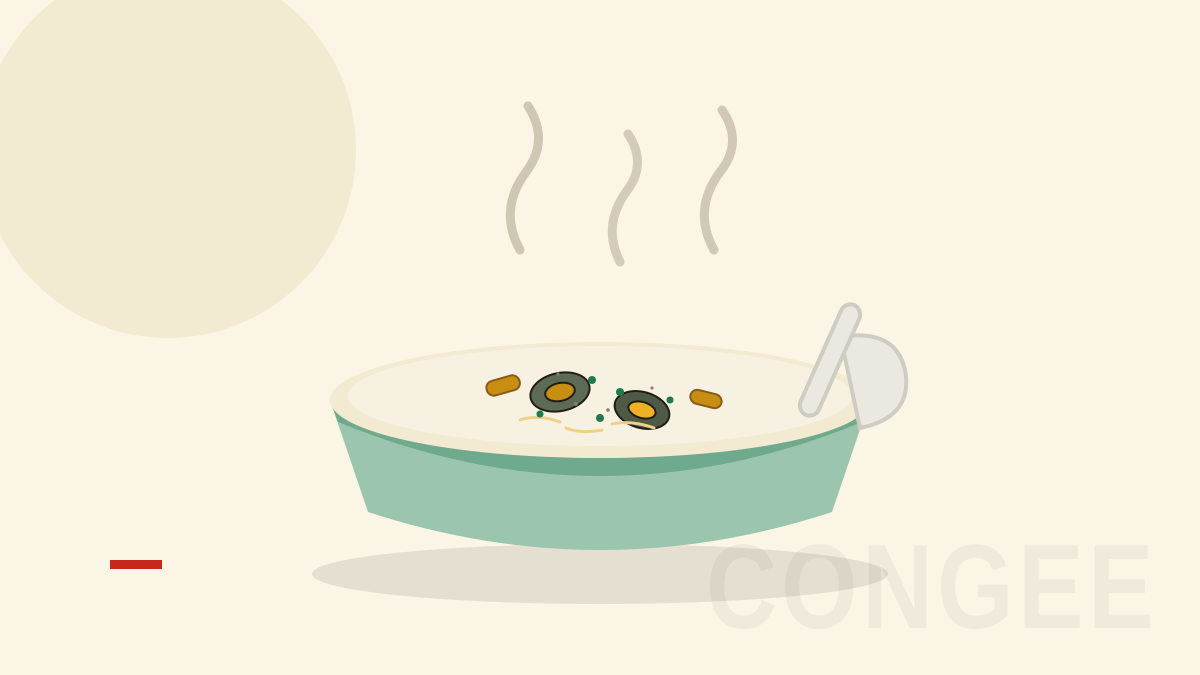
Cantonese Congee广东粥
Rice broken down over an hour into a silken, bowl-clinging porridge, seasoned with century egg and slivered lean pork, ginger and white pepper — Chinatown's cure for everything.
 03
03Rice & Chicken Rice·180 min·Advanced
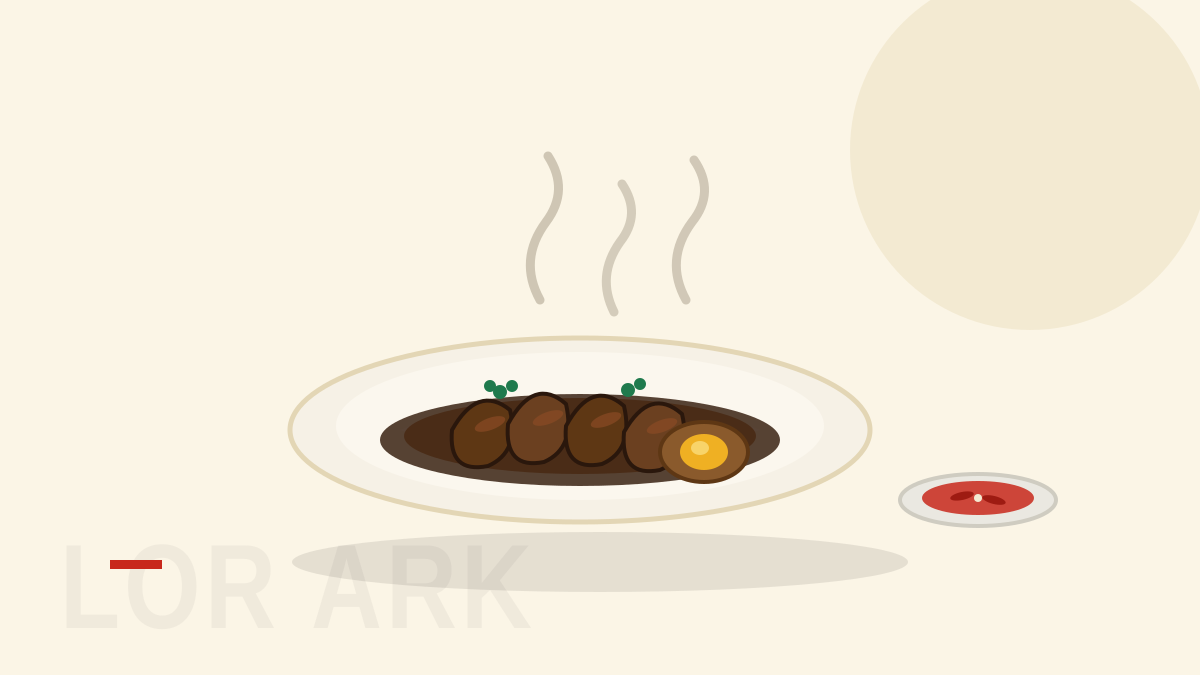
Teochew Braised Duck Rice卤鸭饭 · lor ark
A whole duck simmered in a Teochew master braise of galangal, dark soy, and five-spice, sliced over rice in its own gravy — an heirloom pot you keep alive.
 03
03Rice & Chicken Rice·80 min·Intermediate
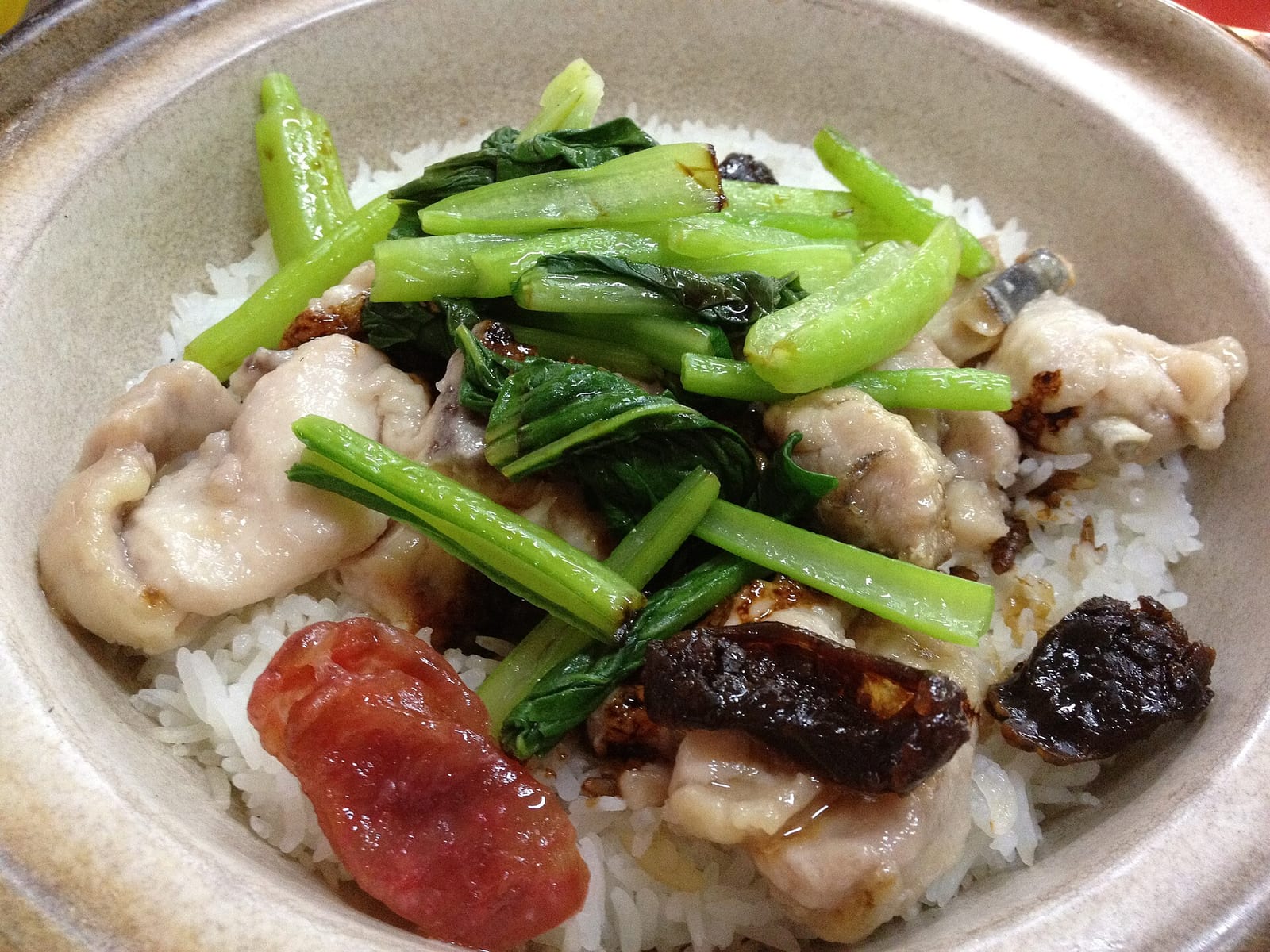
Claypot Rice砂煲饭
Rice cooked in the pot it is served in, lap cheong and salted fish laid on top, dark soy over everything — and the bottom crust is the whole point.