Claypot Rice
砂煲饭
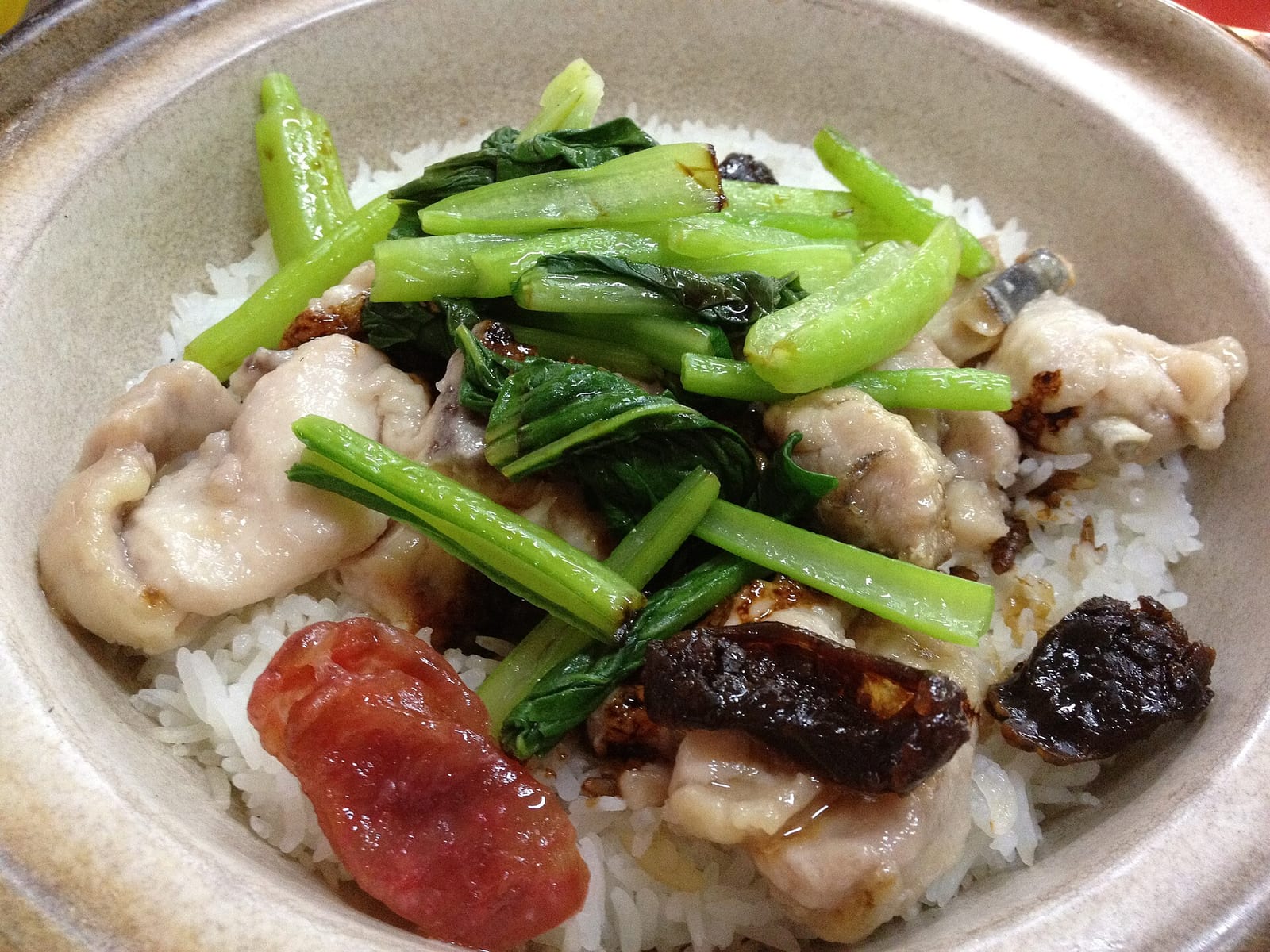
Rice cooked in the pot it is served in, lap cheong and salted fish laid on top, dark soy over everything — and the bottom crust is the whole point.
By The Singaporean Recipes Kitchen · World Cookbook Series · June 22, 2026
Chinatown & MaxwellThe hawker centres go up, 1971–1986

- Prep
- 40 min
- Cook
- 40 min
- Serves
- 2
- Level
- Intermediate
Claypot rice is the hawker centre's argument against convenience. Everything else at the market can be assembled in ninety seconds from pots already simmering; this dish makes you wait half an hour, standing there holding your number, because your rice went into your pot raw when you ordered. At the old-guard stalls in Chinatown Complex — where a few holdouts still run banks of claypots over charcoal, shuffling them across the coals like a dealer working a table — the wait is understood as part of the price. Nobody complains. The people in that queue know exactly what they are waiting for, and it is the bottom of the pot.
The dish is Cantonese, bou zai fan, a cool-weather comfort of Guangzhou and Hong Kong that immigrated south along with the roast-meat shops and congee stalls, then settled into Singapore's hawker centres during the great resettlement era, when street cooks moved indoors and charcoal met regulation. The grammar is fixed even where the toppings drift — rice cooked in the serving vessel, cured things on top so their fat drips down through the grains, dark sweet soy poured over at the end, and a crust, fan jiu, formed where rice meets hot clay. The lap cheong matters more than the chicken. It is a candied, wine-scented pork sausage, and as it steams its fat becomes the actual seasoning of the rice below. This is also the honest place to say it plainly — between the pork sausage and the lard-adjacent everything, this dish is not halal and no amount of substitution produces the same thing; it is what it is.
Then there is the salted fish, the ingredient most likely to make a newcomer flinch and the one the regulars would riot over losing. Good mui heong salted fish is soft, funky, and closer to anchovy-meets-blue-cheese than to anything sold as "fish." Fried first, it scatters through the pot as small saline detonations. Between the sweet sausage, the salt fish, and the bitter-edged crust dragged through dark soy, claypot rice runs the full keyboard — which is a lot of range for a dish whose ingredient list reads like a pantry clean-out.
Make it at home and you trade the charcoal for a knob on your stove, which costs you romance and buys you control. The skills are real but learnable: reading steam craters, trusting a lid you cannot see through, and hearing the difference between crackle and scorch. Rice you can hear is rice that is almost ready.
The crust is not a mistake you scrape off. The crust is the reason the queue exists.
Shiok (when it's exactly right) · A word from the kitchen
Ingredientsbahan-bahan
Serves
The rice
- 300 gjasmine rice, rinsed and soaked 30 minutes, then drained (about 1.5 cups)the soak is not fussiness — soaked grains cook through before the bottom layer crosses from crust into carbon
- 360 mlchicken stock or water (about 1.5 cups)
- 1 tbspneutral oil, plus more for brushing the pot
The chicken
- 350 gboneless chicken thighs, cut into large bite-size pieces (about 12 oz)thighs only — breast turns to chalk in the steam
- 1 tbsplight soy sauce
- 1 tbspoyster sauce
- 1 tspsesame oil
- 1 tspcornstarch
- 0.5 tspwhite pepper
- 1 tspShaoxing wineoptional, and skippable without grief
- 15 gginger, cut into fine slivers
The toppings
- 2lap cheong (Chinese sausage), sliced thin on the biasthis is cured pork sausage, sweet with rose wine — there is no halal path through this dish as written
- 30 gsalted fish, mui heong style if you can get it, torn into small pieces (about 1 oz)the funky, soft-cured kind; a little crisped in oil first goes from pungent to persuasive
- 2scallions, sliced
- 1 handfulbaby kai lan or choy sum, blanchedsomething green, mostly for your conscience
The dark drizzle
- 2 tbspdark soy sauce
- 1 tbsplight soy sauce
- 1 tspsugar
- 1 tspsesame oil
Methodcara masak
Step 1: Marinate the chicken
Toss the chicken with the soy, oyster sauce, sesame oil, cornstarch, white pepper, wine if using, and ginger slivers. Rest it 20 minutes while the rice soaks. The cornstarch is doing real work — it holds a slip of moisture against the meat so the chicken steams tender in the pot instead of drying out over the rice.
Step 2: Crisp the salted fish
In a small pan with a film of oil, fry the salted fish pieces over medium heat for a minute or two until golden at the edges. Raw salted fish dropped on rice tastes like an accident; fried, it becomes the deep saline backbone the dish is named for in every Cantonese kitchen. Drain on paper and keep the fragrant oil to brush the claypot.
Step 3: Start the rice
Brush the inside of the claypot with oil, add the drained rice and the stock, and bring it to a boil uncovered over medium heat. Let it bubble until the surface water has been absorbed and the rice is pocked with little steam craters — 6 to 8 minutes. Those craters are your signal that the surface is firm enough to carry the toppings without them sinking.
Step 4: Lay on the toppings and steam
Working fast, arrange the marinated chicken, lap cheong, and salted fish over the rice in one layer. Lid on, heat to the lowest flame, and leave it 15–18 minutes. No peeking before 15 — every lift of the lid bleeds steam the chicken needs. It is done when the chicken is cooked through with juices running clear and the lap cheong has gone translucent and lacquered, its fat melted down into the grains below.
Step 5: Build the crust
Now the move that makes the dish — raise the heat to medium-high for a final 2–3 minutes, rotating the pot a quarter turn every 30 seconds or so, so the bottom crisps evenly. Listen rather than look, because you cannot look. A dry, faint crackle means crust forming; the smell of toast means done; the smell of smoke means you have sailed past it. The Cantonese call this crust fan jiu — at a good stall it is fought over.
Step 6: Sauce and toss at the table
Off the heat, tuck in the greens, scatter the scallions, and pour the dark drizzle over everything. Bring the pot to the table whole, lift the lid for the audience, and toss hard with a spoon, scraping up shards of crust and dragging them through the sauce and sausage fat. The tossing is not presentation — the top of the pot is seasoned and the bottom is crisp, and only violence unites them.
Perkakas · The tools
Equipment
Claypot
sha baoFor claypot rice the pot IS the recipe — clay holds gentle heat, builds the crust, and comes to the table still ticking.
Shop on Amazon →Chinese cleaver
chai daoChops through a whole chicken for chicken rice, smashes ginger with the flat, scoops the lot into the wok. One blade, most of the canon.
Shop on Amazon →Rice cooker
Rice worth queuing for starts with rice cooked without drama. First appliance bought, last surrendered.
Shop on Amazon →
Equipment links are Amazon affiliate links. As an Amazon Associate we earn from qualifying purchases, at no cost to you. Disclosure.
Rate this recipe
Questions from the kitchen
Why does claypot rice take 30 minutes at a hawker stall when everything else takes 3?
Because they are cooking your order from raw rice, in your pot, one flame per pot — at the famous charcoal stalls in Chinatown Complex, over actual coals. The waiting time is not inefficiency; it is the product. Bou zai fan, the Cantonese original, has always worked this way — the pot is the oven, the plate, and the timer all at once. Legend around the charcoal stalls says you can taste the difference the coals make; more measurably, you can taste that nothing was pre-cooked.
My crust went straight from nothing to burnt. What went wrong?
Almost always heat too high, too early, or a pot too thin. The crust stage is 2–3 minutes at medium-high after the rice is fully cooked — if you chase crust during the steaming stage, the bottom carbonizes while the top is still raw. Rotate the pot constantly; a stationary claypot on a home burner has one hot spot and it will find it. And if you are using a new claypot, season it first and never take it from cold to screaming — thermal shock is how claypots die, loudly.
No claypot. Can I still make this?
Yes — a small cast-iron pot or dutch oven makes a shameless and frankly excellent version, and its bottom crust is easier to control than clay. You lose the faint earthenware breath the clay lends the steam, which is real but subtle. What you cannot do is make this dish in a rice cooker alone; the machine is engineered to prevent the exact crust you are trying to build. Cook the rice in the machine if you must, then finish everything in a hot oiled pan for the crust. It is a cheat. It works.
Makan lagi · Cook next
Keep the burner on
 03
03Rice & Chicken Rice·100 min·Intermediate
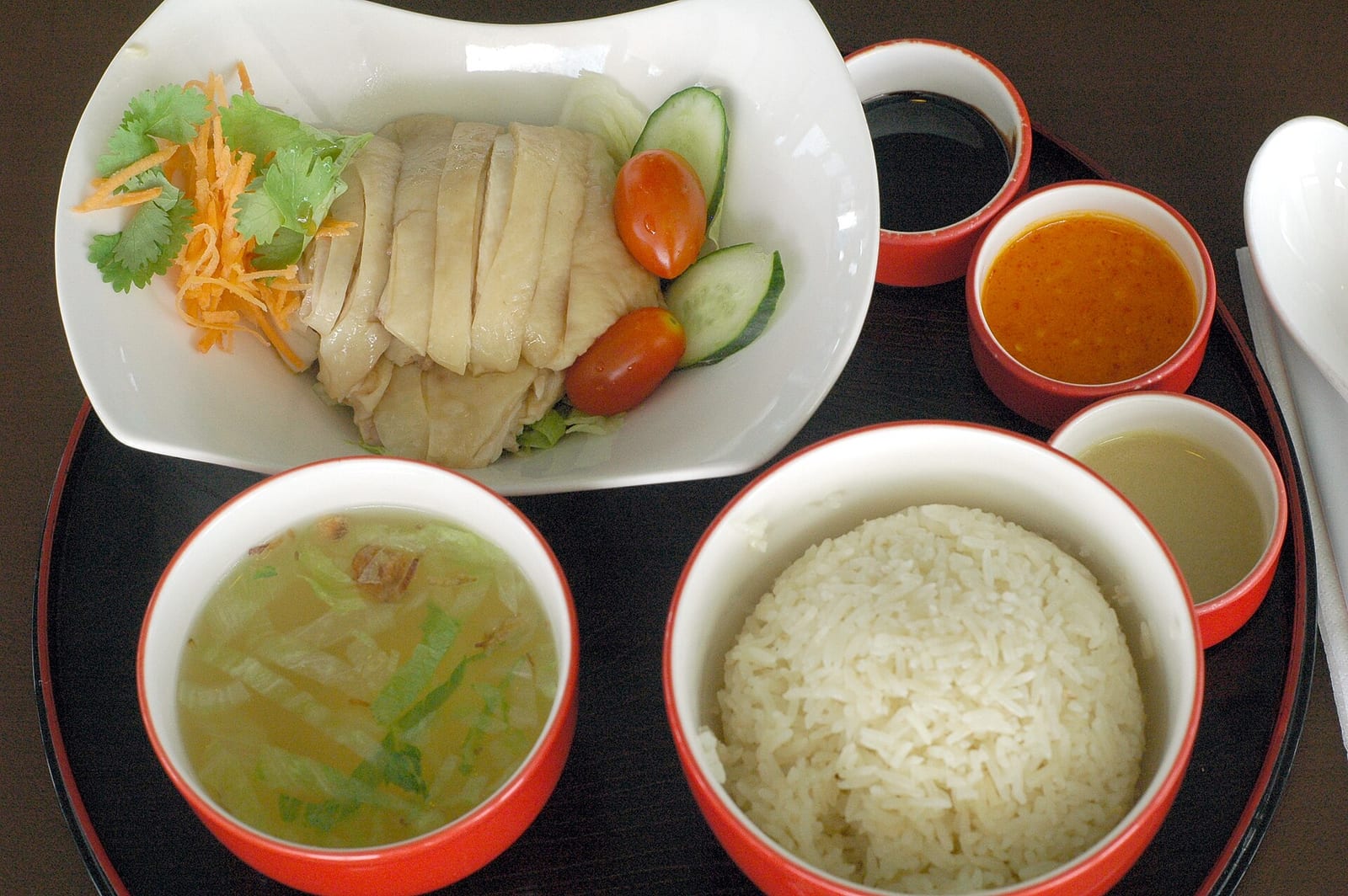
Hainanese Chicken Rice海南鸡饭
A whole bird poached to silk at a sub-boil, rice fried in its fat and cooked in its stock, three sauces standing by — the island's quietest masterpiece.
 03
03Rice & Chicken Rice·180 min·Advanced
Teochew Braised Duck Rice卤鸭饭 · lor ark
A whole duck simmered in a Teochew master braise of galangal, dark soy, and five-spice, sliced over rice in its own gravy — an heirloom pot you keep alive.
 03
03Rice & Chicken Rice·90 min·Intermediate
Soya Sauce Chicken Rice豉油鸡饭
Cantonese master-stock chicken lacquered mahogany in dark soy and rock sugar, carved over chicken-fat rice — the hawker plate the world started queuing for after 2016.