Soya Sauce Chicken Rice
豉油鸡饭
Cantonese master-stock chicken lacquered mahogany in dark soy and rock sugar, carved over chicken-fat rice — the hawker plate the world started queuing for after 2016.
By The Singaporean Recipes Kitchen · World Cookbook Series · July 6, 2026
Chinatown & MaxwellMichelin comes to the stall, 2004–2016
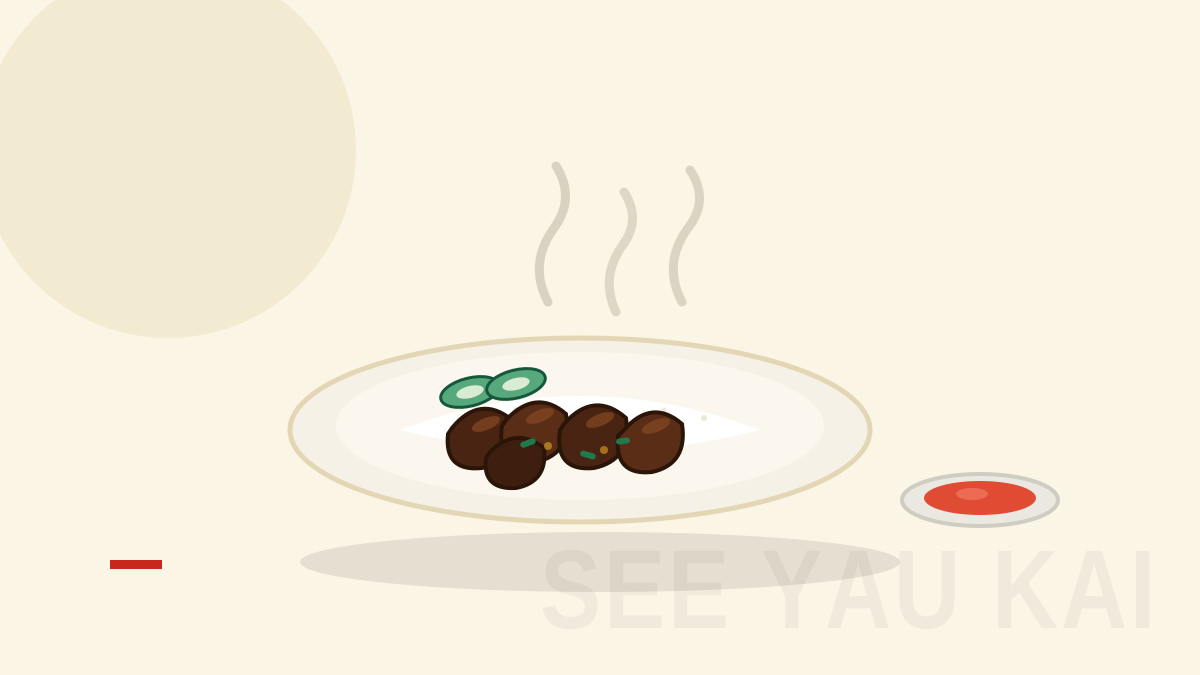 03
03- Prep
- 30 min
- Cook
- 60 min
- Serves
- 4
- Level
- Intermediate
There is a version of the Singapore food story where a plate of chicken and rice costs two dollars, is cooked in a stall smaller than a parking space, and wins a Michelin star. That happened in 2016, in Chinatown, when a soya-sauce-chicken-rice stall became one of the first hawkers in the world to get one — and the queue that formed the next morning has, in some form, never really left. It is worth being clear-eyed about what the star measured: not a secret recipe, but the quiet mastery of a Cantonese technique that thousands of stalls across the island have been running for generations.
That technique is the master stock — lou soi, the perpetual braise that Cantonese cooks keep alive for years, skimming and re-boiling and topping up, so that every bird poached in it leaves a little of itself behind for the next. The soy, the rock sugar, the star anise and tangerine peel are just the starting conditions. What you are really cooking is time, and the honest truth is that your first pot will be good and your twentieth will be extraordinary, and there is no shortcut across that gap. This is a dish that rewards the cook who keeps the pot.
The chicken itself is an exercise in restraint. You poach it barely, steep it off the heat, and shock it cold so the skin sets glassy and the meat stays just this side of blush at the bone — the same low-and-slow logic as Hainanese chicken rice, dressed in a darker coat. Chop it, glaze it, and lay it over rice cooked in chicken fat and its own stock, and you have the plate that a whole city decided was worth standing in line for. No mysticism required. Just a good bird, a patient pot, and the discipline to never let it boil.
The chicken is only ever as good as the pot it was poached in — and the pot gets better every time you use it.
Shiok (when it's exactly right) · A word from the kitchen
Ingredientsbahan-bahan
Serves
The master stock (lou soi)
- 2 Lwater (about 8 cups)
- 300 mllight soy sauce (1 1/4 cups)the salt and savor; light soy, not dark — dark alone would be bitter and one-note
- 100 mldark soy sauce (about 6 tbsp)this is the color, the mahogany lacquer — add it for looks, the light soy for taste
- 120 grock sugar (about 2/3 cup)rock sugar dissolves slower and gives a rounder shine than white sugar; crush it first
- 80 mlShaoxing wine (1/3 cup)
- 50 gginger, sliced thick and bruised (a large thumb)
- 4spring onions, knotted
- 1garlic head, halved across the equator
- 2star anise
- 1cinnamon stick
- 3cloves
- 2dried tangerine peel pieceschen pi — it lifts the whole braise; skip it and the stock tastes flat and heavy
The chicken
- 1.6 kgwhole chicken, at room temperature (about 3.5 lb)room-temp goes in; a fridge-cold bird drops the stock off the boil and cooks unevenly
The rice
- 2 tbspchicken fat, chopped, or neutral oil
- 4garlic cloves, minced
- 15 gginger, minced (a thumb)
- 2pandan leaves, knotted
- 400 glong-grain rice, rinsed until the water runs clear and drained (2 cups)
- 460 mlchicken stock, plus 2 tbsp of the master stock for color (about 2 cups)
To serve
- 1cucumber, sliced on the bias
- 1 handfulcoriander
- ginger-garlic-chili sauce and dark sweet soy, alongside
Methodcara masak
Step 1: Build and simmer the master stock
Combine everything in the master-stock group in a pot just wide enough to hold the chicken, bring to a boil, then drop to the barest simmer and cook 20 minutes. Taste it — it should read distinctly too salty and too sweet on its own, because the chicken will drink a lot of it back to neutral. Adjust soy for salt and rock sugar for balance now; you cannot fix it once the bird is in.
Step 2: Poach the chicken low and slow
Lower the whole chicken in breast-up, ladle stock into the cavity so it fills, and bring back to a bare simmer — a lazy blip at the surface, never a rolling boil, which would tear the skin and toughen the breast. Simmer 8 minutes, then kill the heat, cover, and let it steep in the hot stock 30 minutes. It is done when a skewer in the thickest thigh runs clear and an instant thermometer reads 72C; if it reads under, back on low heat five minutes and test again.
Step 3: Cook the rice while the chicken steeps
In a separate pot, fry the chopped chicken fat over medium until it renders and the solids gild, then add the garlic, ginger, and pandan and cook 1 minute to the smell of a hawker stall at 8am. Stir in the drained rice and toast 2 minutes until the grains turn translucent at the edges, then add the chicken stock plus the 2 tablespoons of dark master stock, bring to a boil, cover, and cook on the lowest heat 12 minutes. Rest it covered another 10 off the heat — the grains firm up and separate in that rest, so don't lift the lid early.
Step 4: Cold-shock the bird for taut skin
Lift the chicken out and plunge it into a bowl of iced water for 3 minutes. This is the trick behind that glassy, gelatinous skin — the cold contracts it tight against the meat and stops the carryover cooking dead. Pat dry, then brush the whole bird with a ladle of the warm master stock so it glows mahogany.
Step 5: Reduce a glaze and carve
Simmer 200ml of the master stock hard until it thickens to a pourable glaze that coats a spoon, about 5 minutes. Chop the chicken through the bone into hawker-style pieces with a heavy cleaver, or carve it off the bone if that fights you less. Fan it over a plate of the rice, spoon the glaze across, and serve with cucumber, coriander, and the sauces on the side. Keep the leftover master stock — strained, boiled, and frozen, it becomes a perpetual stock that gets deeper every time you cook a bird in it.
Perkakas · The tools
Equipment
Tall stockpot (10 qt+)
Prawn broth, bak kut teh, laksa gravy — the deep pot keeps a lazy simmer lazy and your kitchen unsplattered.
Shop on Amazon →Chinese cleaver
chai daoChops through a whole chicken for chicken rice, smashes ginger with the flat, scoops the lot into the wok. One blade, most of the canon.
Shop on Amazon →Frying thermometer
The difference between shattering har cheong gai and greasy har cheong gai is oil held at temperature — stop guessing.
Shop on Amazon →Rice cooker
Rice worth queuing for starts with rice cooked without drama. First appliance bought, last surrendered.
Shop on Amazon →
Equipment links are Amazon affiliate links. As an Amazon Associate we earn from qualifying purchases, at no cost to you. Disclosure.
Rate this recipe
Questions from the kitchen
Is this the Michelin hawker chicken?
No — and anyone selling you a stall's exact master stock is selling you a story. What's true and documented is that in 2016 a Chinatown soya-sauce-chicken-rice stall became one of the first hawker stalls anywhere to earn a Michelin star, which sent queues around the block and put a two-dollar plate on the world's radar. The recipe here is the honest Cantonese method behind that whole family of stalls, not a leaked formula. A good lou soi is built over years of re-boiling, not bought in a single afternoon.
My skin tore and the breast came out dry. What happened?
The stock was boiling, not steeping. Soya sauce chicken is poached gently and then finished off the heat in hot stock — a hard simmer wrecks the skin and squeezes the breast dry before the thigh is even done. Keep it to a bare blip, trust the 30-minute off-heat steep, and check with a thermometer instead of the clock; birds vary by a few hundred grams and so does their timing.
Can I skip building the whole master stock and use bottled sauce?
You can poach a chicken in shop-bought soy-braise sauce and it will be edible, but it tastes exactly like what it is — flat, oversweet, and missing the tangerine-peel and spiced backbone that makes the real thing hum. If you're short on time, the honest compromise is to build the stock but skip the rice, serving the chicken over plain steamed rice with the glaze doing the heavy lifting. The stock is the dish; the rice is where you're allowed to economize.
Makan lagi · Cook next
Keep the burner on
 03
03Rice & Chicken Rice·100 min·Intermediate
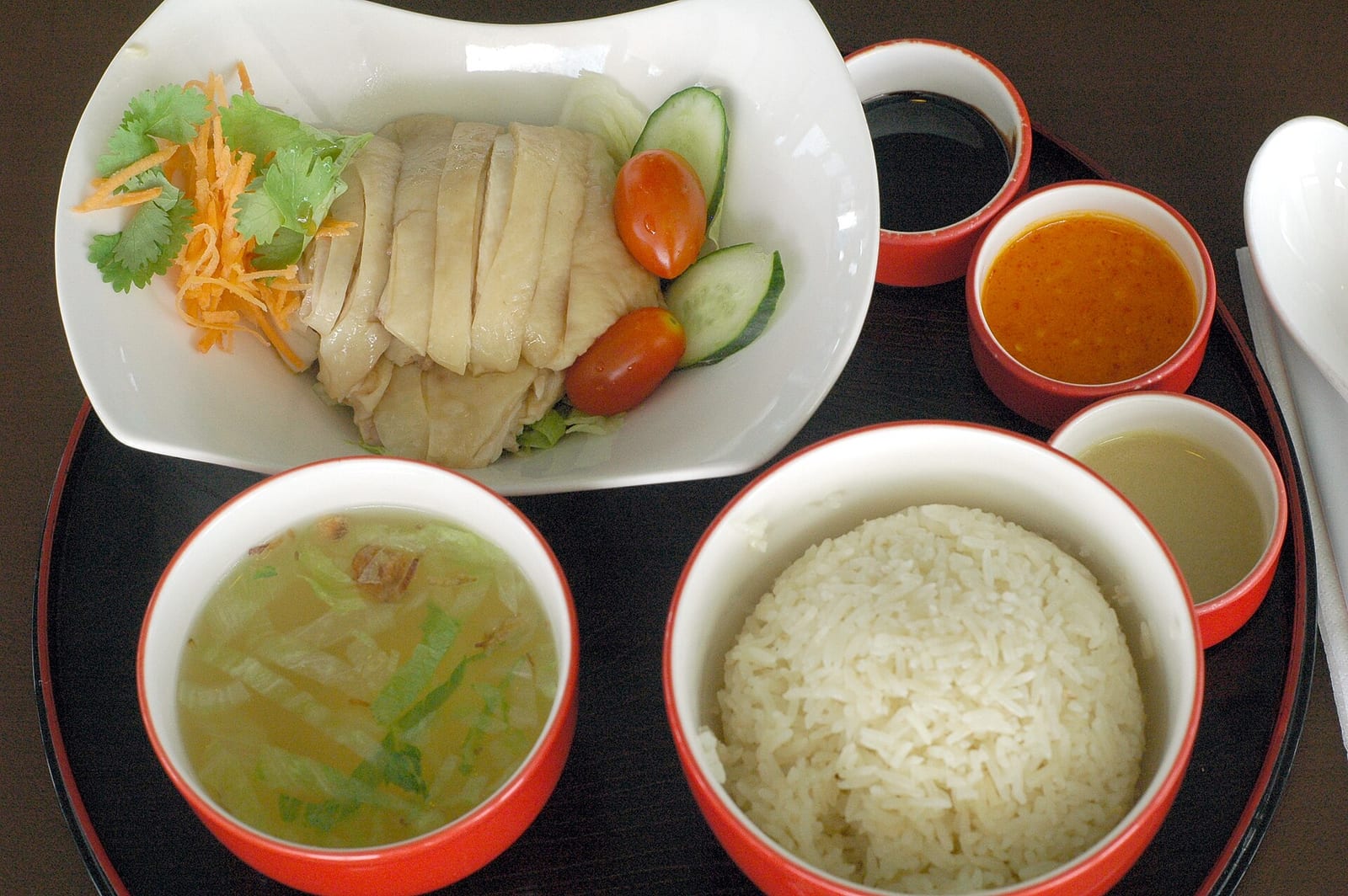
Hainanese Chicken Rice海南鸡饭
A whole bird poached to silk at a sub-boil, rice fried in its fat and cooked in its stock, three sauces standing by — the island's quietest masterpiece.
 03
03Rice & Chicken Rice·80 min·Intermediate
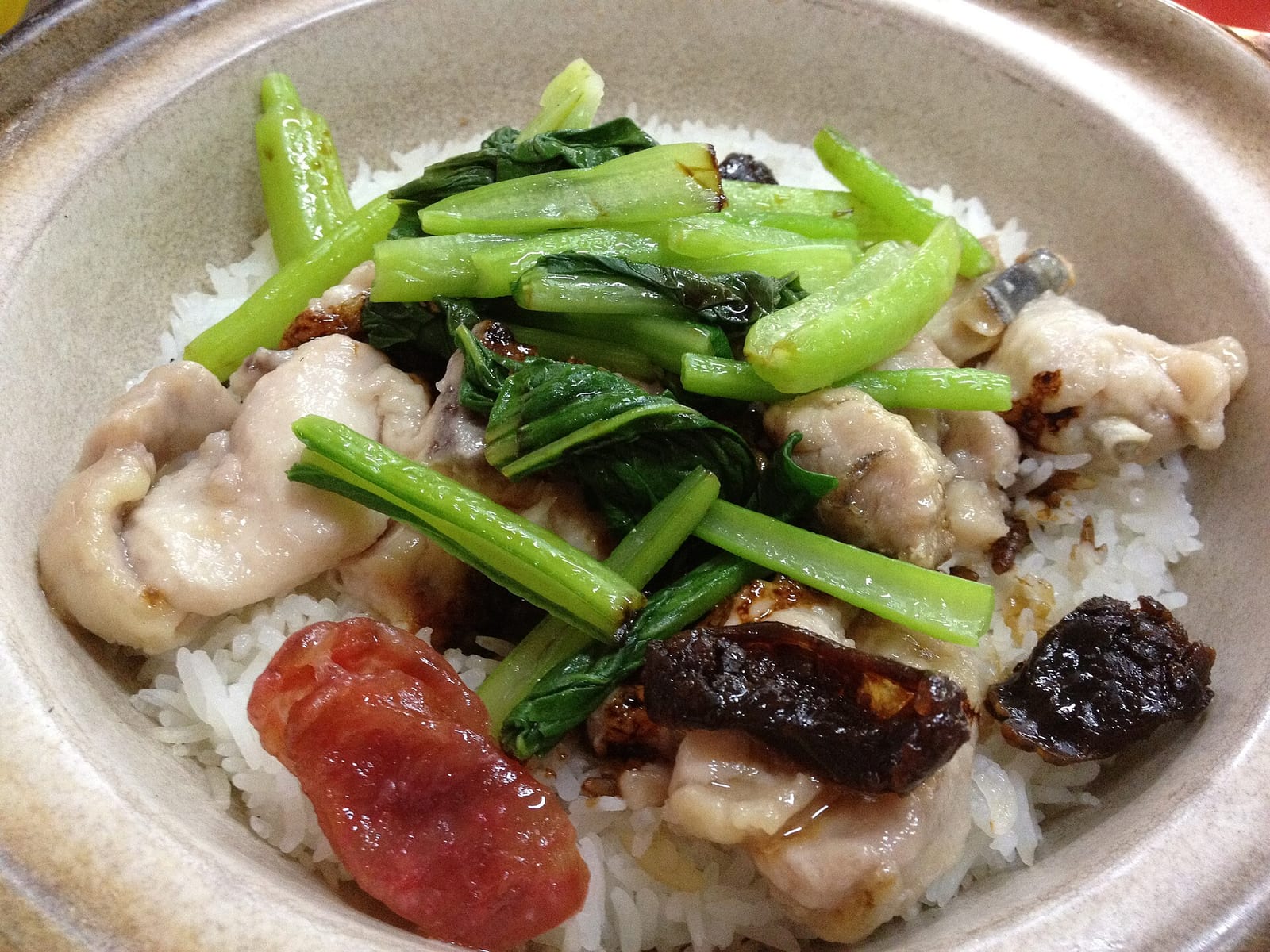
Claypot Rice砂煲饭
Rice cooked in the pot it is served in, lap cheong and salted fish laid on top, dark soy over everything — and the bottom crust is the whole point.
 03
03Rice & Chicken Rice·90 min·Beginner
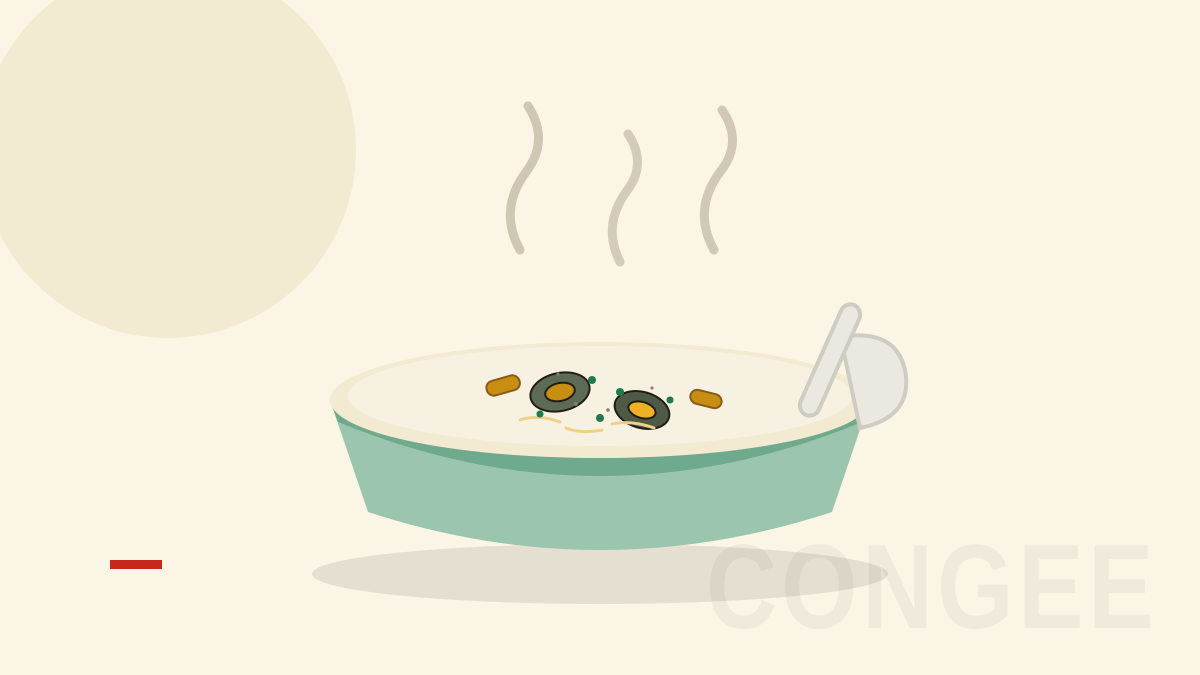
Cantonese Congee广东粥
Rice broken down over an hour into a silken, bowl-clinging porridge, seasoned with century egg and slivered lean pork, ginger and white pepper — Chinatown's cure for everything.