Sambal Belacan
sambal belacan
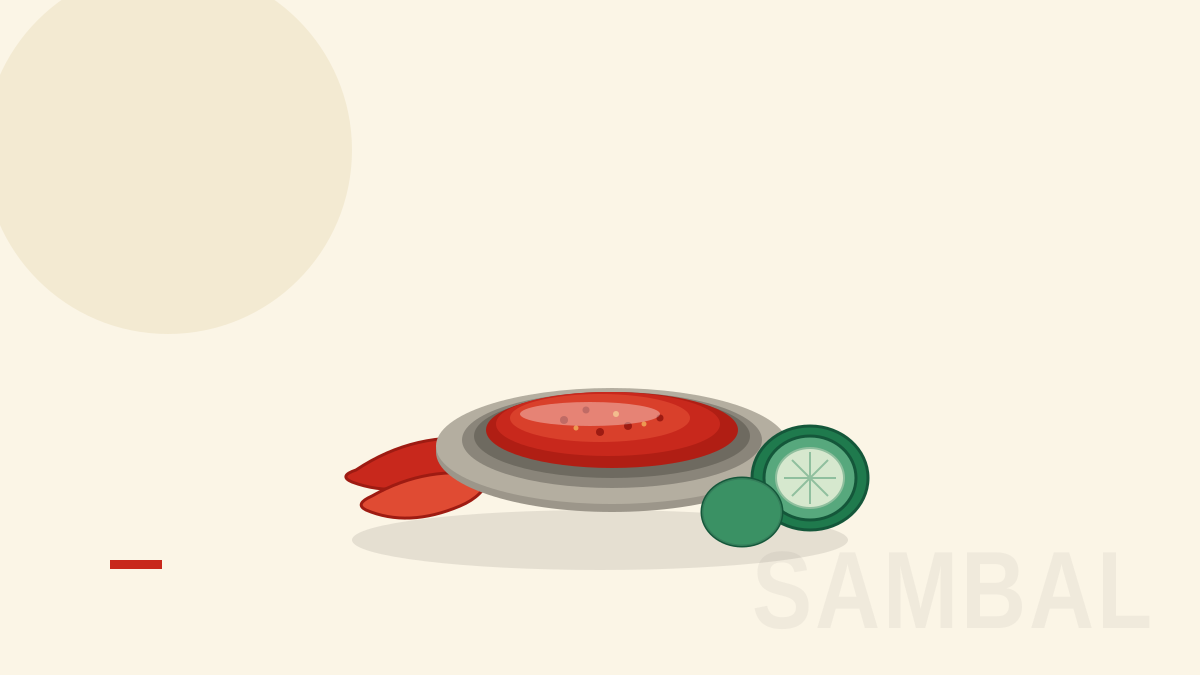
Fresh red chilies pounded with toasted belacan and finished with calamansi — the live condiment of the Malay world, made new every day it's eaten.
By The Singaporean Recipes Kitchen · World Cookbook Series · June 29, 2026
The HeartlandsTemasek & the old port, pre-1819
No pork, no lard — as written.
 01
01- Prep
- 15 min
- Cook
- 5 min
- Serves
- 8
- Level
- Beginner
Before there was a port, there was this. Chilies arrived in Southeast Asia with the Portuguese trade in the sixteenth century, but the fermented shrimp paste they landed next to — belacan, terasi, the whole pungent family — belongs to a coastline that had been curing seafood in the sun for far longer. Sambal belacan is what happened when the two met in a stone mortar, and it happened across the entire Malay world at once. Singapore did not invent it. Singapore inherited it, along with the strait it sits in, and then did what the island does with everything it inherits — put it on every table, in every kind of household, next to every kind of food.
Today it lives everywhere on the island. It arrives unbidden beside economy rice, gets pounded fresh in HDB kitchens on Sunday mornings, sits in a small saucer at zi char tables waiting for the kangkong. It is less a recipe than a daily practice, which is why the recipe is so short and the opinions about it so long. Every household has a ratio — more padi, less sugar, peel in the lime or juice only — and every household is correct, in the way that only condiment arguments allow.
Two things are not negotiable. The belacan gets toasted until it crumbles, because raw shrimp paste tastes like a low tide and toasted shrimp paste tastes like the reason this condiment conquered a region. And the calamansi goes in at the end, at the table, because its perfume is the shortest-lived thing in the kitchen and the whole point of the exercise. Master those two moments and you have not just a sambal — you have the flavor key that unlocks half the savory cooking on this site.
Sambal belacan is not made ahead. It is made today, for today — the one dish on the island where freshness is the entire recipe.
Shiok (when it's exactly right) · A word from the kitchen
Ingredientsbahan-bahan
Serves
The sambal
- 8fresh red chilies, stems removed, roughly chopped (about 120 g)the long finger chilies, not bird's eye — they carry the color and the body
- 4chili padi (bird's eye chilies), optionalthis is the heat dial; four is a Singapore table, zero is still sambal belacan
- 15 gbelacan, toasted (1 tbsp packed)wrap flat in foil, dry-toast 2 minutes a side until it crumbles — untoasted belacan is the number-one reason homemade sambal tastes muddy
- 1 tspsugarwhite sugar, or shaved gula melaka for a rounder, darker edge
- 1/2 tspsalt
To finish
- 3calamansi limes, halved (or 1 regular lime)squeezed in at the table, not in the lesung — the perfume dies within the hour
Methodcara masak
Step 1: Toast the belacan
Wrap the belacan flat in a foil parcel and toast it in a dry pan over medium heat, about two minutes a side, until it darkens, dries, and crumbles when pressed. The smell will fill the kitchen and possibly the corridor. That smell is fermented shrimp doing exactly what it should — raw belacan tastes flat and vaguely of the sea floor, while toasted belacan is deep, savory, almost roasted-nut. There is no version of this recipe where you skip the toast.
Step 2: Pound, don't purée
In the lesung, pound the fresh chilies and chili padi with the salt until you have a coarse, glistening rubble — five minutes of relaxed work. You want visible flecks of chili skin and seed, not a smooth paste; the texture is the difference between sambal belacan and a bottled sauce. Crumble in the toasted belacan and the sugar and pound another minute, just until the belacan disappears into the red.
Step 3: Taste and balance
Taste a rice-grain amount on the tip of a spoon. It should hit in this order — heat, then salt, then the low savory hum of the belacan, with the sugar only rounding the edges, never announcing itself. Too harsh means more sugar, a quarter teaspoon at a time. Tastes like a wet beach means the belacan needed longer in the pan; there is no fixing that in the mortar, only next time.
Step 4: Finish with calamansi, at the table
Spoon the sambal into a small dish and squeeze the calamansi over it just before eating — juice, and if you're from a household that does it, a little of the torn peel too. The lime is not garnish; it is the ignition. Sambal belacan keeps three days covered in the fridge, but the calamansi does not, which is why it is added fresh every single time, and why the version made an hour ago always beats the version made yesterday.
Perkakas · The tools
Equipment
Granite mortar & pestle
lesung batuThe rempah tool. Pounding bruises and bleeds the aromatics in a way blades never do — the lesung is the sound of a Singapore kitchen starting dinner.
Shop on Amazon →Carbon-steel wok
chaoHalf this site happens in a wok, and carbon steel is the only honest choice at home — it heats fast, takes a season, and gets you the closest to wok hei your burner allows.
Shop on Amazon →
Equipment links are Amazon affiliate links. As an Amazon Associate we earn from qualifying purchases, at no cost to you. Disclosure.
Rate this recipe
Questions from the kitchen
Is sambal belacan Singaporean?
No, and any table on the island will tell you so between mouthfuls. This is the live condiment of the whole Malay world — Malaysia has it, Indonesia has its close cousin sambal terasi, and the technique is older than any border on the map. What Singapore can claim is total adoption. It sits beside nasi lemak, beside zi char, beside things it has no historical business accompanying, in every kind of kitchen on the island. Credit where due; devotion where earned.
My sambal tastes fishy in a bad way. What happened?
Almost always an under-toasted belacan. The toast is a real cooking step, not a warm-up — the block must dry out, darken, and crumble, which transforms raw fermented sharpness into roasted depth. Two minutes a side in a dry pan, and if the middle is still soft and clay-like, keep going. The other culprit is old belacan that has spent a year open in the fridge absorbing everything around it. Buy a fresh block; it costs very little.
Can I make a big jar for the month?
You can, and it will be fine, and fine is the problem. Sambal belacan is at its best within hours of pounding, when the chili is still bright and the calamansi hasn't been near it. If you must batch, pound the chili-belacan base and refrigerate it up to three days — but add the lime only to the portion you're eating now. A jarred, pre-limed sambal belacan is a different, sleepier condiment, and every makcik on the island knows it.
Makan lagi · Cook next
Keep the burner on
 01
01Foundations·40 min·Beginner
Basic Rempahrempah
The pounded spice paste underneath half the Singapore canon — shallots, chilies, candlenuts, belacan — built in the right order and fried until the oil returns.
 01
01Foundations·80 min·Intermediate
Pandan Kayakaya · 咖椰
Coconut-and-egg jam cooked low over a double boiler, perfumed with real pandan — the green Nyonya school and the brown Hainanese one, told straight.
 06
06Zi Char & the Wok·20 min·Beginner
Sambal Kangkongsambal kangkung
Water spinach seared in belacan sambal over the hottest wok you own — thirty seconds of fire, stems still snapping, the zi char vegetable that earns its place.