Sambal Kangkong
sambal kangkung
Water spinach seared in belacan sambal over the hottest wok you own — thirty seconds of fire, stems still snapping, the zi char vegetable that earns its place.
By The Singaporean Recipes Kitchen · World Cookbook Series · July 5, 2026
The HeartlandsThe hawker centres go up, 1971–1986
 06
06- Prep
- 15 min
- Cook
- 5 min
- Serves
- 4
- Level
- Beginner
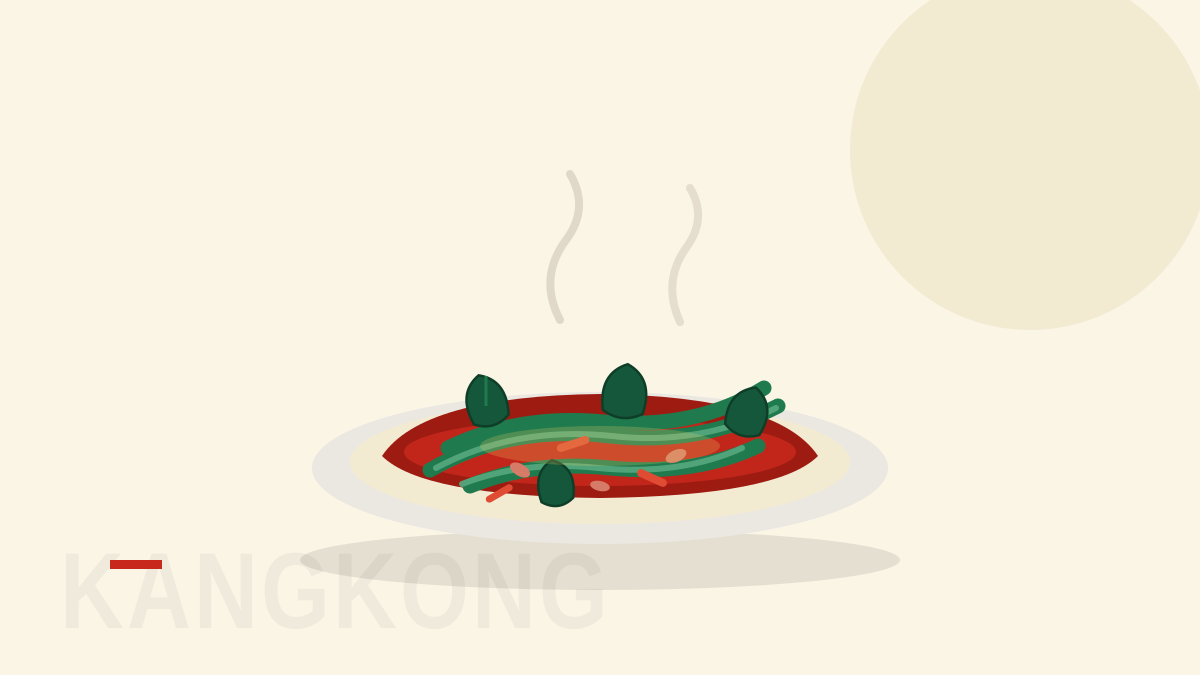
Order at a zi char stall and, somewhere between the fish and the tofu, someone will call for sambal kangkong. It is the vegetable dish that anchors the table — cheap, fast, and fierce, a plate of water spinach seared in belacan sambal that exists to cut the richness of everything around it. Nobody travels across the island for it and nobody needs to, because a good one takes under a minute to cook and belongs to no stall in particular. It is simply what a competent wok does with a bunch of greens and a spoon of sambal, which is to say it is one of the truest tests of a kitchen there is.
The dish is a study in contrast, and the contrast is fragile. The stem should snap and the leaf should wilt, the belacan should burn low and savoury under the chili heat, and all of it should happen so fast that the greens never have time to weep their water and turn grey. That is the whole game. There is no long technique to learn here, no braise to nurse — just a sambal fried until its oil splits and then a burst of the hottest heat you can summon, over and done before you have quite registered it started.
Which is exactly where home cooking meets its honest limit. Stall woks roar at a temperature a domestic burner cannot touch, and this dish, more than most, feels that gap — the difference between a stall's blistered, glossy kangkong and a home cook's slightly softer version is mostly the fire. The fixes are real but modest — smaller batches, a wok pushed until it smokes, a sambal made ahead so nothing slows the cook. You will not fully close the gap. You will get close enough to remember why you ordered it in the first place.
Make the sambal in advance and keep it in the fridge, and sambal kangkong becomes the fastest good thing you can put on a table — thirty seconds of fire, stems still snapping, a plate that asks almost nothing and gives back a lot. It is the humble genius of zi char in a single dish, and it earns its place on the table every time.
Thirty seconds of the hottest fire you own, and not one second more. Kangkong overcooks between one breath and the next.
Shiok (when it's exactly right) · A word from the kitchen
Ingredientsbahan-bahan
Serves
The greens
- 400 gkangkong (water spinach), washed (about 0.9 lb)separate the thick lower stems from the leaves — they need a head start in the wok
The sambal
- 6dried red chilies, soaked in hot water 15 minutes
- 4fresh red chilies, roughly choppedadjust up or down for heat — the dish is meant to have real fire behind it
- 60 gshallots, peeled (about 5)
- 3garlic cloves
- 15 gbelacan, toasted (1 tbsp packed)wrap in foil, dry-toast 2 minutes a side until crumbly and loud-smelling — raw belacan tastes of nothing good
- 1 tbspdried shrimp, soaked and roughly choppedhae bee — the savoury depth that separates a stall sambal from a home one
To finish
- 3 tbspneutral oil
- 1 tspsugar
- 1 tbspwater, if the sambal tightens
- 1 tspfish sauce, to taste
Methodcara masak
Step 1: Pound the sambal
Pound or blend the soaked and fresh chilies, shallots, garlic, toasted belacan, and dried shrimp to a rough paste. It does not need to be silk — a little texture reads well against the greens. Have it ready in a bowl beside the stove before you touch the wok, because once the fire is going this dish moves in seconds and there is no time to stop and blend.
Step 2: Get the wok truly screaming
Heat your wok over the highest flame you have until it is genuinely smoking, then add the oil and swirl it. This is the one demand the dish makes — kangkong cooked over anything less than fierce heat weeps water and stews into a grey, limp tangle. A ripping-hot wok sears it before it can release its water, which is the entire difference between a good sambal kangkong and a sad one. Home burners struggle here, so work in one batch no larger than your wok can keep hot.
Step 3: Fry the sambal until the oil splits
Add the sambal and stir-fry 2 to 3 minutes until it darkens, smells cooked rather than raw, and the oil starts to bead out at the edges. Stir in the sugar. This is the only part of the dish with any patience in it — everything after happens fast.
Step 4: Stems first, then leaves, then out
Throw in the thick stems first and toss hard for 30 seconds, then the leaves, fish sauce, and a splash of water if it looks dry. Toss constantly over the highest heat for another 30 to 45 seconds — no longer — until the leaves have just wilted but the stems still snap and the greens are glossy with sambal. The instant the leaves collapse, it is done. Kangkong overcooks between one breath and the next, so pull it while it still has life in it.
Step 5: Plate immediately
Tip it straight onto a plate — do not let it sit in the hot wok, where it keeps cooking and softening. Sambal kangkong is a dish of contrasts held for only a minute — the bite of the stem, the wilt of the leaf, the belacan heat over all of it — and every second on the plate is a second those contrasts fade. Serve it now, as one of several dishes over rice.
Perkakas · The tools
Equipment
Carbon-steel wok
chaoHalf this site happens in a wok, and carbon steel is the only honest choice at home — it heats fast, takes a season, and gets you the closest to wok hei your burner allows.
Shop on Amazon →Granite mortar & pestle
lesung batuThe rempah tool. Pounding bruises and bleeds the aromatics in a way blades never do — the lesung is the sound of a Singapore kitchen starting dinner.
Shop on Amazon →
Equipment links are Amazon affiliate links. As an Amazon Associate we earn from qualifying purchases, at no cost to you. Disclosure.
Rate this recipe
Questions from the kitchen
What actually is kangkong, and can I use regular spinach?
Kangkong is water spinach, or water convolvulus — a hollow-stemmed tropical green that grows in and beside water across Southeast Asia, prized for the way the crunchy stem contrasts with the tender leaf. That contrast is the whole texture of the dish, so regular spinach is a poor stand-in; it has no stem to snap and collapses to mush the moment it hits the wok. If you cannot find kangkong, ong choy at a Chinese grocer is the same plant, and morning glory on a Thai menu is too. Reach for those before English spinach.
My kangkong came out watery and grey. What went wrong?
The wok was not hot enough — the single most common failure. Kangkong holds a surprising amount of water, and only fierce, fast heat sears it off before the greens can stew in it. Get the wok smoking before anything goes in, cook one modest batch rather than a mountain, and keep everything moving. If your burner simply cannot get there, cook it in two small batches rather than one crowded soggy one.
Can I make the sambal ahead?
Yes, and you should — it is the sensible move. Fry a bigger batch of the sambal until the oil splits, cool it, and keep it in the fridge under its own oil for a week or freeze it for months. Then the dish becomes a ninety-second stir-fry on a weeknight — screaming wok, a spoon of ready sambal, the greens, and out. A pre-made sambal is exactly how the stalls keep the fire moving during a rush, and it works just as well at home.
Makan lagi · Cook next
Keep the burner on
 06
06Zi Char & the Wok·80 min·Intermediate
Singapore Curry Chicken咖喱鸡 · kari ayam
The HDB kitchen's Sunday pot — chicken and potatoes in a coconut curry where every community's spice box met, mopped up with baguette or rice, both correct.
 06
06Zi Char & the Wok·35 min·Intermediate
Cereal Prawns麦片虾
Crisp-fried prawns tossed in a sandstorm of buttery, curry-leaf cereal — a 1990s zi char invention no one asked permission to make, and everyone is glad of it.
 06
06Zi Char & the Wok·40 min·Intermediate
Har Cheong Gai虾酱鸡
Chicken wings marinated overnight in fermented prawn paste, then twice-fried until the crust shatters and your whole kitchen smells like the sea.