Basic Rempah
rempah
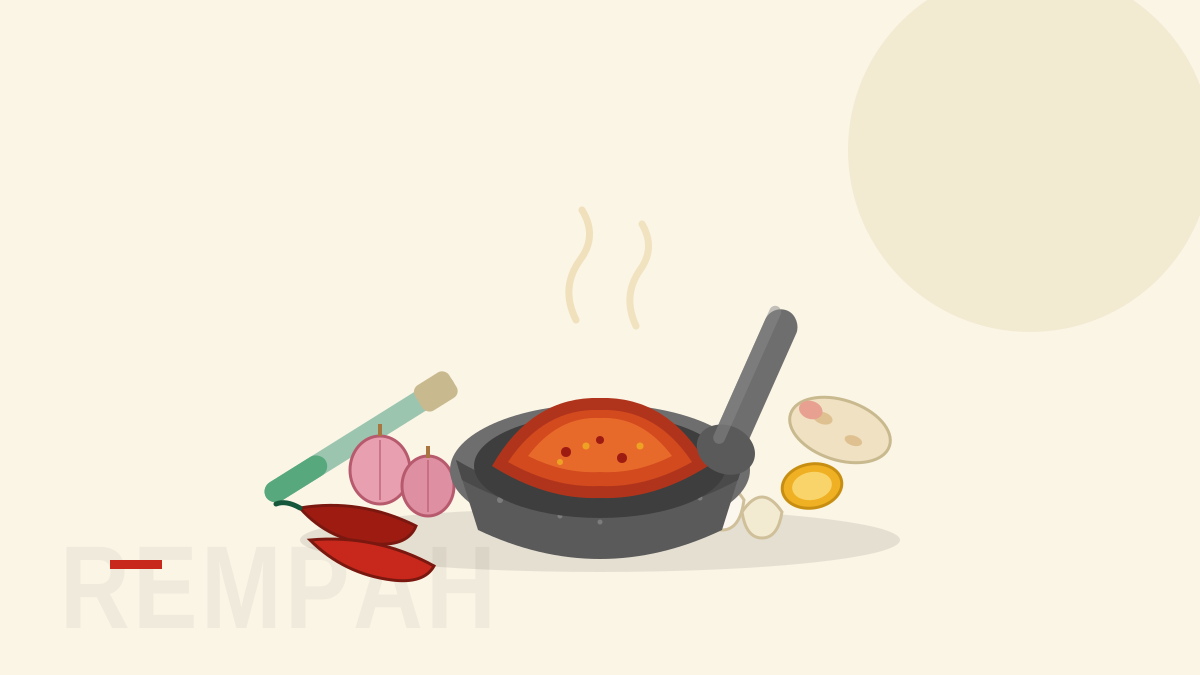
The pounded spice paste underneath half the Singapore canon — shallots, chilies, candlenuts, belacan — built in the right order and fried until the oil returns.
By The Singaporean Recipes Kitchen · World Cookbook Series · June 20, 2026
The HeartlandsTemasek & the old port, pre-1819
No pork, no lard — as written.
 01
01- Prep
- 25 min
- Cook
- 15 min
- Serves
- 8
- Level
- Beginner
Every cuisine has a secret that isn't secret at all, and in Singapore it's this: the dishes people queue for are mostly the same eight aromatics, pounded and fried in different proportions. The word rempah just means "spices" in Malay, but in a Singapore kitchen it means the finished thing — the paste of shallots, chilies, candlenuts, and belacan that starts the laksa, the curry, the sambal goreng, the rendang. It is the kitchen's opening move, older than the island's British history by centuries; the spice grammar it belongs to was being traded through this strait when Temasek was a Malay port town and Raffles was not yet born.
The technique is the recipe. Hard things get pounded before soft things, because a pestle can only concentrate on one texture at a time — galangal surrenders slowly, shallots instantly, and a paste built in the wrong order is chunky where it should be silk and watery where it should be dense. Then comes the part no one warns you about: the fry. A rempah must be fried until it "breaks," until the oil you put in comes back out around the edges, carrying the color of the chilies with it. Malay cooks call it pecah minyak. Stop five minutes early and the finished curry tastes muddy and raw no matter how long it simmers, which is the single most common reason a home laksa disappoints.
About the blender: use it if you need to. Every hawker whose rempah you admire has weighed the same trade between a morning of pounding and a machine that does it before the kettle boils. But know what you're trading — blades cut, pestles bruise, and a bruised cell releases oils a cut one keeps. Our honest advice is the middle path most Singapore grandmothers actually take now: blend the wet bulk, then finish the belacan and the fibrous things in the lesung, where ten strokes cost you nothing and buy the perfume back.
Make this once a month, freeze it flat, and half this site becomes a weeknight proposition. That is not a shortcut. That is how the island has always cooked.
A rempah is done when the oil comes back out. Everything before that moment is just wet spices; everything after is Singapore.
Shiok (when it's exactly right) · A word from the kitchen
Ingredientsbahan-bahan
Serves
The paste
- 150 gshallots, peeled and halved (about 5 oz)small Asian shallots, not banana shallots — they pound wetter and sweeter
- 6dried red chilies, soaked in hot water 15 minutessnip them open and shake out the seeds first if you want the color without the full heat
- 4fresh red chilies, roughly chopped
- 4candlenutsbuah keras — macadamias substitute honestly; they're there for body, not flavor
- 3garlic cloves
- 20 ggalangal, sliced thin across the grain (a thumb)it's woodier than ginger — thin slices or the pestle fights you
- 2lemongrass stalks, tender bottom third only, sliced fine
- 15 gbelacan, toasted (1 tbsp packed)wrap in foil, dry-toast 2 minutes a side until crumbly and loud-smelling
To fry
- 6 tbspneutral oilmore than feels right — the paste needs to swim, and the excess becomes flavored oil you keep
Methodcara masak
Step 1: Toast the belacan
Wrap the belacan flat in foil and toast it in a dry pan, two minutes a side, until it darkens and crumbles. The smell is enormous; open a window and stand your ground. Raw belacan tastes like a punishment — toasted, it becomes the deep savory floor the whole paste stands on.
Step 2: Pound in order, hardest first
Lesung work has a sequence — galangal and lemongrass first, because they're the most fibrous and need the pestle's full attention; then candlenuts and garlic; then the soaked and fresh chilies; shallots last, because they're mostly water and would turn everything to soup too early. Pound each addition until it disappears before adding the next. Ten unhurried minutes.
Step 3: Or blend, honestly
A blender makes rempah in ninety seconds and makes it slightly worse — blades slice where the pestle bruises, so less oil and perfume are released. If you blend, add the oil to the jug to get it moving instead of water, and accept a wetter paste that needs longer frying. This is a real trade every Singapore kitchen makes on a weeknight; we just won't pretend it's identical.
Step 4: Fry until the oil returns
Heat the oil over medium and add the paste — it should sizzle at the edge, not spit. Fry, stirring, 10 to 15 minutes. It will slump, darken from scarlet to brick, and finally release the oil back out around its edges — pecah minyak, the oil breaks. That shine of red oil around a darkened paste is the only doneness test that matters; a rempah stopped early tastes raw in the finished dish, and no amount of simmering later fixes it.
Perkakas · The tools
Equipment
Granite mortar & pestle
lesung batuThe rempah tool. Pounding bruises and bleeds the aromatics in a way blades never do — the lesung is the sound of a Singapore kitchen starting dinner.
Shop on Amazon →Carbon-steel wok
chaoHalf this site happens in a wok, and carbon steel is the only honest choice at home — it heats fast, takes a season, and gets you the closest to wok hei your burner allows.
Shop on Amazon →
Equipment links are Amazon affiliate links. As an Amazon Associate we earn from qualifying purchases, at no cost to you. Disclosure.
Rate this recipe
Questions from the kitchen
Why do some rempah recipes have ten ingredients and some have four?
Because rempah is a grammar, not a recipe. This is the base sentence — shallot, chili, candlenut, belacan, aromatics. A laksa adds dried prawns; a rendang adds more galangal and turmeric; a fish curry swaps in fresh turmeric. Learn this one until the frying stage is instinct, and every variant on this site becomes a one-line edit.
My paste burned before it darkened. What went wrong?
Almost always too little oil or too much heat. The paste has to fry IN oil, not steam on a dry pan — six tablespoons is not a typo. Medium heat, constant scraping, and if it catches on the bottom, a splash of water buys you time without resetting the fry.
Can I make a big batch and freeze it?
Yes, and you should — this is the whole point of a foundation. Fry the full recipe, cool it, and freeze flat in a zip bag, snapping off what you need. Fried rempah keeps three months frozen and two weeks refrigerated under its own oil. Raw paste freezes too, but then you owe the frying stage on the day.
Makan lagi · Cook next
Keep the burner on
 01
01Foundations·20 min·Beginner
Sambal Belacansambal belacan
Fresh red chilies pounded with toasted belacan and finished with calamansi — the live condiment of the Malay world, made new every day it's eaten.
 01
01Foundations·80 min·Intermediate
Pandan Kayakaya · 咖椰
Coconut-and-egg jam cooked low over a double boiler, perfumed with real pandan — the green Nyonya school and the brown Hainanese one, told straight.
 06
06Zi Char & the Wok·80 min·Intermediate
Singapore Curry Chicken咖喱鸡 · kari ayam
The HDB kitchen's Sunday pot — chicken and potatoes in a coconut curry where every community's spice box met, mopped up with baguette or rice, both correct.