Pandan Kaya
kaya · 咖椰
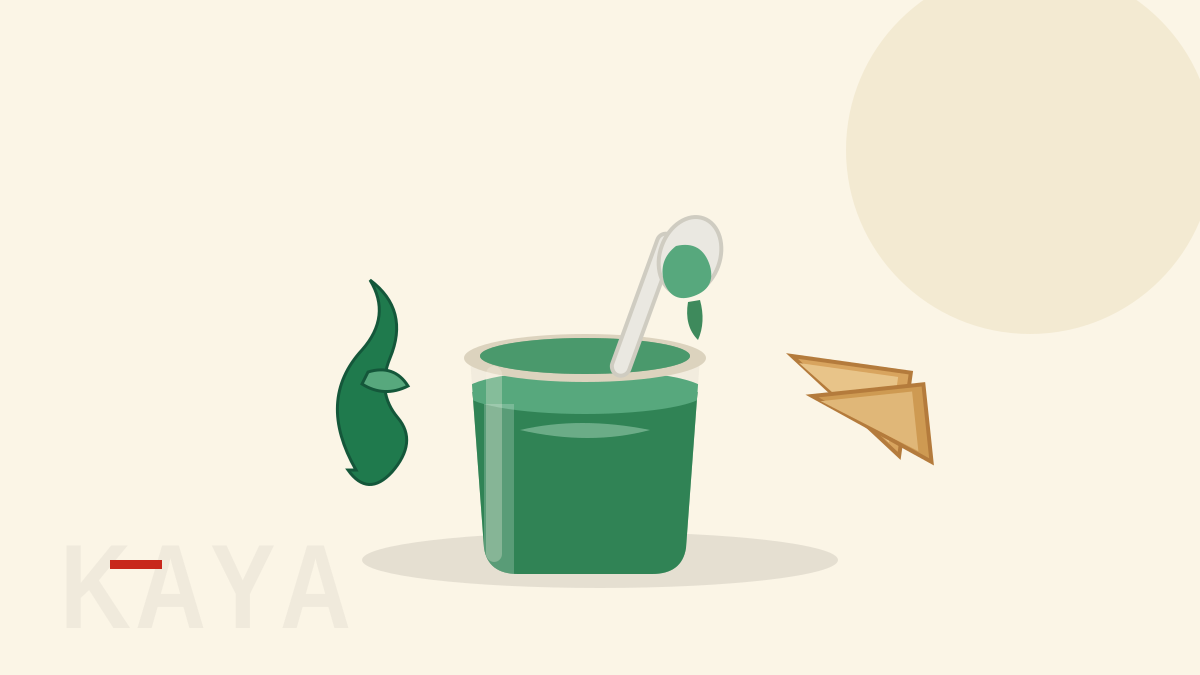
Coconut-and-egg jam cooked low over a double boiler, perfumed with real pandan — the green Nyonya school and the brown Hainanese one, told straight.
By The Singaporean Recipes Kitchen · World Cookbook Series · July 2, 2026
The HeartlandsCrown Colony & coolie kitchens, 1867–1900s
 01
01- Prep
- 20 min
- Cook
- 60 min
- Serves
- 12
- Level
- Intermediate
Kaya is the sweet foundation of the Singapore morning, and like most foundations it is quietly demanding in a way its humble jar never advertises. It is nothing more than eggs, coconut milk, sugar, and pandan — a custard, really, cooked so slowly and stirred so patiently that it thickens into a spreadable jam. But that slowness is the whole art. There is no clever technique here to master, only the willingness to stand over a double boiler for an hour and refuse to rush, which turns out to be the hardest technique of all.
The perfume comes from pandan, and this is the one place the recipe will not bend — real leaves, pounded and squeezed for their deep green juice, doing work that no bottle of green essence has ever managed. That synthetic drop gives you the colour and a chemical ghost of the smell; the leaves give you a grassy, vanilla-adjacent perfume that is half the reason to make kaya at home rather than buy it. If you take one instruction from this page, let it be that the pandan is worth the squeezing.
There are two kaya, and an honest recipe has to name both. The green one is the Nyonya school, jade and pandan-forward. The brown one is Hainanese, darkened with caramelised sugar by the cooks who ran the island's colonial kitchens and, later, the kopitiams whose kaya toast became a national habit. People argue about which is correct the way they argue about everything on this island — warmly, endlessly, and without any real stake. The truth is that both are old, both are Singaporean, and the right one is whichever your neighbourhood coffee shop made when you were small.
Make either, cool it, jar it, and you have built the sweet half of the kopitiam breakfast — the jam that goes thick on charcoal-toasted bread with a cold slab of butter, beside two eggs barely set and a cup of kopi. That is not a small thing to have in your fridge. It is the taste of every Singapore morning, waiting on a spoon.
Green or brown, pandan or caramel — this island never made you choose. It just kept both jars on the shelf.
Shiok (when it's exactly right) · A word from the kitchen
Ingredientsbahan-bahan
Serves
The pandan extract
- 10fresh pandan leaves, snipped into short lengthsreal leaves, not a bottle of green essence — the extract is doing colour and a grassy vanilla perfume that no synthetic drop matches
- 60 mlwater (1/4 cup)
The custard
- 5eggs
- 3egg yolksthe extra yolks are what carry the custard from loose to spoonable
- 250 mlcoconut milk, first-press if you can get it (1 cup)
- 180 gsugar (3/4 cup plus 1 tbsp)
- 1pinch of salt
For the Hainanese caramel school (optional)
- 60 gsugar, for caramelising (1/4 cup)this is the fork in the road — caramelise it dark and stir it in for the brown kaya of the kopitiam; leave it out for the green Nyonya jam
Methodcara masak
Step 1: Extract the pandan
Pound or blend the pandan leaves with the water into a rough green pulp, then squeeze it hard through a muslin or fine sieve into a bowl. You want the deep green juice, not the fibre. For the truest colour, some cooks let the juice stand an hour and use only the thick sediment that settles at the bottom — that concentrate is where the perfume hides. This is the step a bottle of essence can never replace, and the whole reason to make kaya at home instead of buying a jar.
Step 2: Whisk the custard base, then strain
Whisk the eggs, extra yolks, coconut milk, sugar, salt, and the pandan extract until fully smooth and the sugar has begun to dissolve. Pass the whole thing through a sieve into your double-boiler bowl — straining now catches any stringy egg white, and a custard cooked with those strands in it never comes out silk.
Step 3: Cook low over a double boiler — slowly
Set the bowl over barely simmering water, not boiling, so the base never touches direct heat. Now stir. And keep stirring, for 45 minutes to an hour, scraping the bottom and sides constantly with a spatula as the custard slowly thickens from thin liquid to a jam that coats the back of a spoon and holds a drawn line. This is not a step you can walk away from — kaya scrambles the instant it gets too hot, and the only insurance is a low flame and a patient hand. When it mounds softly on the spoon, it is done; it will set firmer as it cools.
Step 4: Choose your school — green or brown
For the green Nyonya kaya, stop here — you have a jade, pandan-forward jam. For the browner Hainanese kaya of the old kopitiams, melt the extra 60 g of sugar in a dry pan to a dark amber caramel, then whisk it into the finished custard off the heat until smooth. Neither is more correct than the other — they are two honest lineages, one leaning on pandan and one on caramelised sugar, and Singapore has always kept both jars on the shelf.
Step 5: Cool, jar, and keep
Cool the kaya to room temperature, stirring now and then so no skin forms, then jar it and refrigerate. It keeps about two weeks. The reward is obvious the next morning — spread thick on charcoal-toasted bread with a cold slab of butter, alongside soft-boiled eggs, it is the breakfast this whole island runs on.
Perkakas · The tools
Equipment
Double boiler
Kaya curdles over direct heat and forgives over water. A bowl on a saucepan works; a real double boiler works quietly.
Shop on Amazon →Granite mortar & pestle
lesung batuThe rempah tool. Pounding bruises and bleeds the aromatics in a way blades never do — the lesung is the sound of a Singapore kitchen starting dinner.
Shop on Amazon →Frying thermometer
The difference between shattering har cheong gai and greasy har cheong gai is oil held at temperature — stop guessing.
Shop on Amazon →
Equipment links are Amazon affiliate links. As an Amazon Associate we earn from qualifying purchases, at no cost to you. Disclosure.
Rate this recipe
Questions from the kitchen
Why are some kaya green and some brown — is one the real one?
Neither, and anyone who tells you otherwise is picking a side in a fight that does not need a winner. The green kaya is the Nyonya school, leaning hard on pandan for colour and perfume. The brown kaya is the Hainanese one, where cooks who ran the colonial kitchens and later the kopitiams stirred caramelised sugar in for a darker, more toffee-ish jam. Both are old, both are Singaporean, and most people simply grew up on whichever one their neighbourhood coffee shop made. Keep both.
My kaya scrambled into sweet egg curds. Can I save it?
If it is only lightly grainy, blend it smooth and forgive yourself — no one will know. If it has fully scrambled, it is gone, and the cause was heat almost every time. The water under the bowl was boiling instead of shivering, or the flame was too high, or the stirring stopped. Kaya asks for a genuinely low double boiler and constant motion; treat it like a hollandaise that takes an hour, not a jam you can leave to bubble.
Can I speed it up in a saucepan over direct heat?
You can, and experienced cooks do, but it is the difference between defusing a bomb and juggling one. Direct heat cooks kaya in fifteen minutes instead of an hour, and it curdles in seconds if your attention wanders. The double boiler exists precisely to buy you margin for error. If you go direct, keep the flame at its lowest, never stop stirring, and pull it off the heat the moment it thickens — the residual heat will carry it the rest of the way.
Makan lagi · Cook next
Keep the burner on
 01
01Foundations·40 min·Beginner
Basic Rempahrempah
The pounded spice paste underneath half the Singapore canon — shallots, chilies, candlenuts, belacan — built in the right order and fried until the oil returns.
 01
01Foundations·20 min·Beginner
Sambal Belacansambal belacan
Fresh red chilies pounded with toasted belacan and finished with calamansi — the live condiment of the Malay world, made new every day it's eaten.
 09
09Kopitiam & Drinks·20 min·Beginner
Kaya Toast & Soft Eggs咖椰吐司
The kopitiam breakfast built at home — charcoal-thin toast, a cold slab of butter, pandan kaya, and eggs steeped barely set under dark soy and white pepper.