Roti Prata
ரொட்டி பிராட்டா
The Indian-Muslim griddle bread Singapore eats at 2 a.m. — ghee-rested dough stretched to tissue, folded, and fried until it shatters at the edges.
By The Singaporean Recipes Kitchen · World Cookbook Series · June 22, 2026
Little India & TekkaStreet hawkers & the kampong, 1900s–1942
No pork, no lard — as written.

- Prep
- 270 min
- Cook
- 30 min
- Serves
- 4
- Level
- Advanced
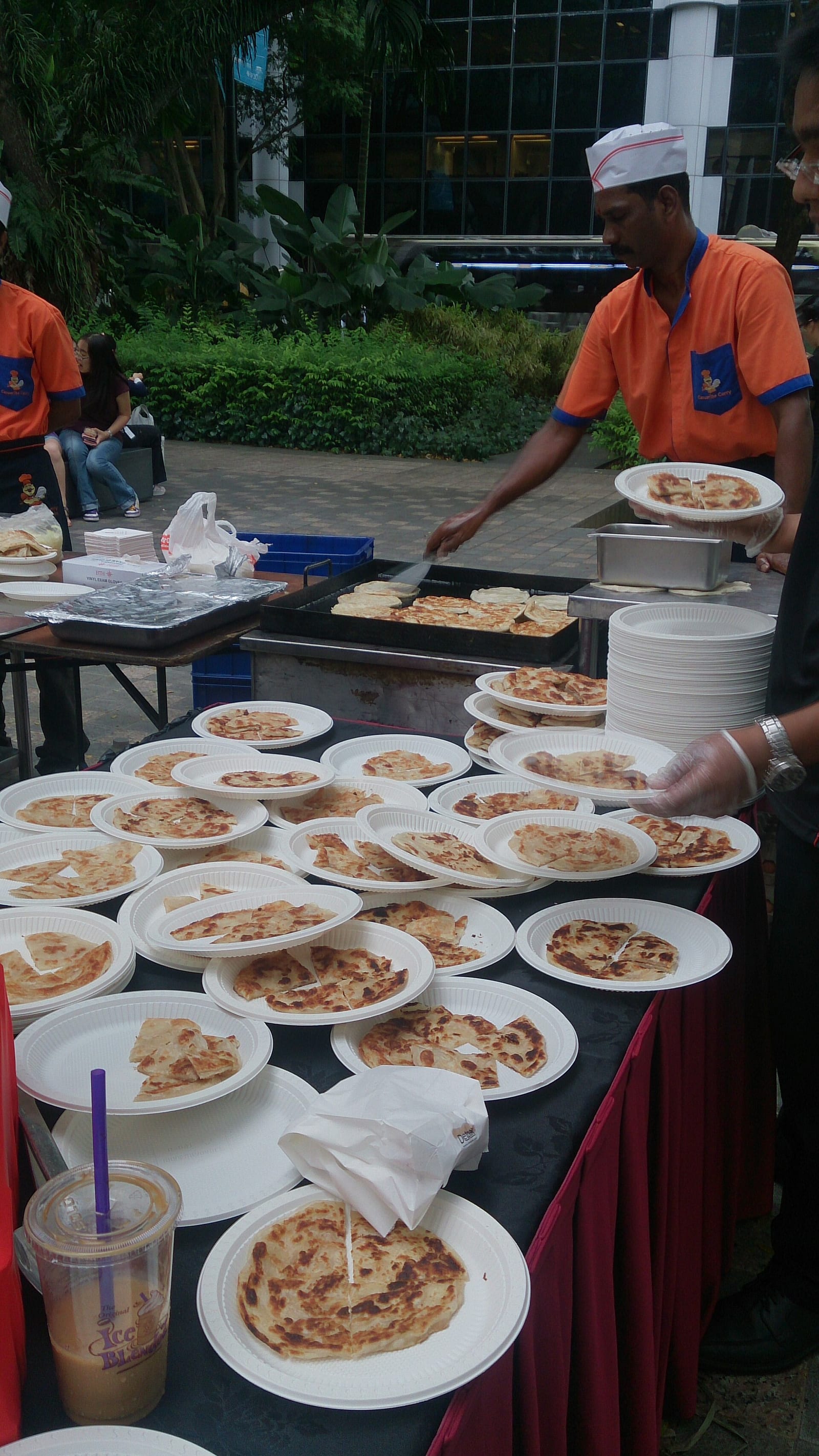
Prata is what Singapore eats when the argument, the shift, or the night runs long. By the early 1900s, Indian-Muslim vendors — men from the Tamil and Malabar coasts who came through this port with griddles and not much else — were selling this bread on the street, and the island has never once considered stopping. The name drifted from the Indian paratha, the technique stayed, and somewhere along the way the dish became its own citizen: thinner, crispier, flipped higher, eaten at hours no respectable paratha keeps.
The flip is the famous part, and it is not decoration. Swinging the dough thins it by centrifugal force faster and more evenly than any rolling pin, and the showmanship — the slap of dough on steel, the blur of it in the air — built the queues that built the trade. But here is what the performance hides: it takes months to learn, and the vendors doing it carelessly at midnight have made tens of thousands of them. This recipe gives you both doors. The oiled-counter stretch produces a sheet every bit as thin on your first attempt; the flip is there when you want the tuition. A prata stretched on a counter and a prata flipped in the air fry up identical, and anyone who tells you otherwise is selling tickets.
Then there is the schism no plate settles — curry or sugar. The fish-curry faction dips with the gravity of people conducting due diligence; the sugar faction folds crystals into hot ghee-crisped dough and calls it breakfast, dessert, and heritage in one. Order it kosong — plain, the word means "empty" — and the bread stands entirely on its own laminated architecture. All three camps are correct, which is the most Singaporean possible outcome.
One practical word — this is ghee cooking from start to finish, no pork, no lard, as the mamak tradition it comes from requires. And the four-hour rest in the ingredient list is not ceremony. Prata dough is nearly all patience; the twenty minutes of actual work is bracketed by hours of the gluten quietly doing your job for you. Plan it the way the stalls do — dough in the afternoon, supper after dark.
Nobody flips a decent prata in the first week. The dough forgives, the griddle forgives — your ego is the only real casualty.
Shiok (when it's exactly right) · A word from the kitchen
Ingredientsbahan-bahan
Serves
The dough
- 500 gplain flour (about 4 cups)plain, not bread flour — high protein makes a dough that fights the stretch instead of surrendering to it
- 10 gfine salt (2 tsp)
- 30 gsugar (2½ tbsp)partly for flavor, mostly for the deep gold blister on the griddle
- 1eggthe old coffeeshop enrichment — it makes the sheet stretch further before tearing
- 30 gsweetened condensed milk (1½ tbsp)another vendor trick; tenderness and browning in one spoonful
- 300 mlwater, room temperature (about 1¼ cups)
- 30 gghee, melted (2 tbsp)
For coating and the griddle
- 120 gghee (about ½ cup)this is a ghee dish through and through — no lard, ever; the balls sleep in it and the griddle runs on it
Methodcara masak
Step 1: Make a soft, slightly tacky dough
Whisk the flour, salt, and sugar, then add the egg, condensed milk, water, and melted ghee and bring it together. Knead 10 minutes until smooth — it should feel softer than bread dough, almost lazy, and stick faintly to a dry palm. That softness is the whole game; a stiff dough will never stretch thin enough to read a newspaper through. Rest 15 minutes under a cloth, then knead 2 minutes more and feel how much silkier it turned.
Step 2: Ball them, drown them in ghee, and wait
Divide into 8 balls of about 110 g each and roll each one tight and seamless. Sit them in a ghee-slicked tray, brush the tops generously, and cover. Now the honest part — they need a minimum of 4 hours at room temperature, and overnight in the fridge is genuinely better (bring them back to room temperature before stretching, about an hour). Gluten relaxes on its own schedule, not yours. A beginner who rests the dough overnight will out-stretch an impatient expert every time.
Step 3: The stretch — the beginner path that works
Oil a metre of clean counter and your hands. Flatten a ball into a disc, then work from the centre outward with fingertips and the heels of your hands, coaxing the dough wider and thinner until it is a ragged translucent sheet the size of a large pizza — you should see the counter through it. Small tears do not matter; they disappear in the fold. This is exactly how strudel bakers work, and it makes a prata indistinguishable from a flipped one.
Step 4: The flip — the hawker path, eventually
The stall move is to hold an edge of the disc and swing it in a circle so centrifugal force does the thinning in mid-air. Drape the dough over the backs of your fingers, throw with a flat wrist, catch, repeat. Your first dozen will land on the counter, your ears, the dog. That is the normal tuition — hawkers put in months before it looks careless. Practice with one sacrificial ball per session and stretch the rest.
Step 5: Fold in the air and the ghee
Brush the sheet with ghee, then fold the sides in to make a layered square, or coil it into a rope and snail it flat. Either way you are trapping films of fat and air between sheets of gluten — that laminate is what separates into flaky leaves on the heat. Folded pratas can sit 15 minutes while you finish the batch.
Step 6: Griddle hot, then applaud
Get the griddle to a confident medium-high — a drop of water should skitter and vanish in 2 seconds. Ghee down, prata down, about 2 minutes a side until blistered and gold in patches. The finishing move is non-negotiable — clap the hot prata sharply between both palms from the edges inward. The scrunch shatters the laminate so it eats as flakes and ribbons instead of a flat pancake. Serve with fish curry for dipping, or sugar if you were raised right and refuse to apologise for it.
Perkakas · The tools
Equipment
Flat cast-iron griddle
tawaPrata wants wide, even, patient heat and room to flip. A tawa or any flat cast iron plate beats every frying pan at this one job.
Shop on Amazon →Frying thermometer
The difference between shattering har cheong gai and greasy har cheong gai is oil held at temperature — stop guessing.
Shop on Amazon →
Equipment links are Amazon affiliate links. As an Amazon Associate we earn from qualifying purchases, at no cost to you. Disclosure.
Rate this recipe
Questions from the kitchen
Is roti prata the same thing as roti canai?
Same bread, different passport. Across the Causeway it is canai, here it is prata — from the Indian paratha that Indian-Muslim vendors were griddling on Singapore's streets by the early 1900s. Where "canai" comes from is the folklore — some say the Malay word for rolling dough, some say Chennai, and every uncle you ask is certain. We note the argument and keep eating.
My dough tears the second I try to stretch it. What went wrong?
Almost always time, occasionally flour. Four hours of ghee-coated rest is the minimum for a stretchable dough, and overnight is better — if you balled it an hour ago, no technique will save you. If it was rested and still tears, your flour is too strong; use plain flour, not bread flour, and check the dough was soft and tacky at the kneading stage, not firm.
Is frozen prata cheating?
Frozen prata is what most Singapore freezers actually contain, and a good brand griddles up respectably — this is not a site that will pretend otherwise. What you lose is the fresh dough's chew and the ghee perfume, and you will never learn the flip from a freezer bag. Cook frozen on a weeknight; make the dough when you have a lazy Sunday and some ego to spare.
Makan lagi · Cook next
Keep the burner on
 05
05The Indian-Muslim Table·205 min·Advanced
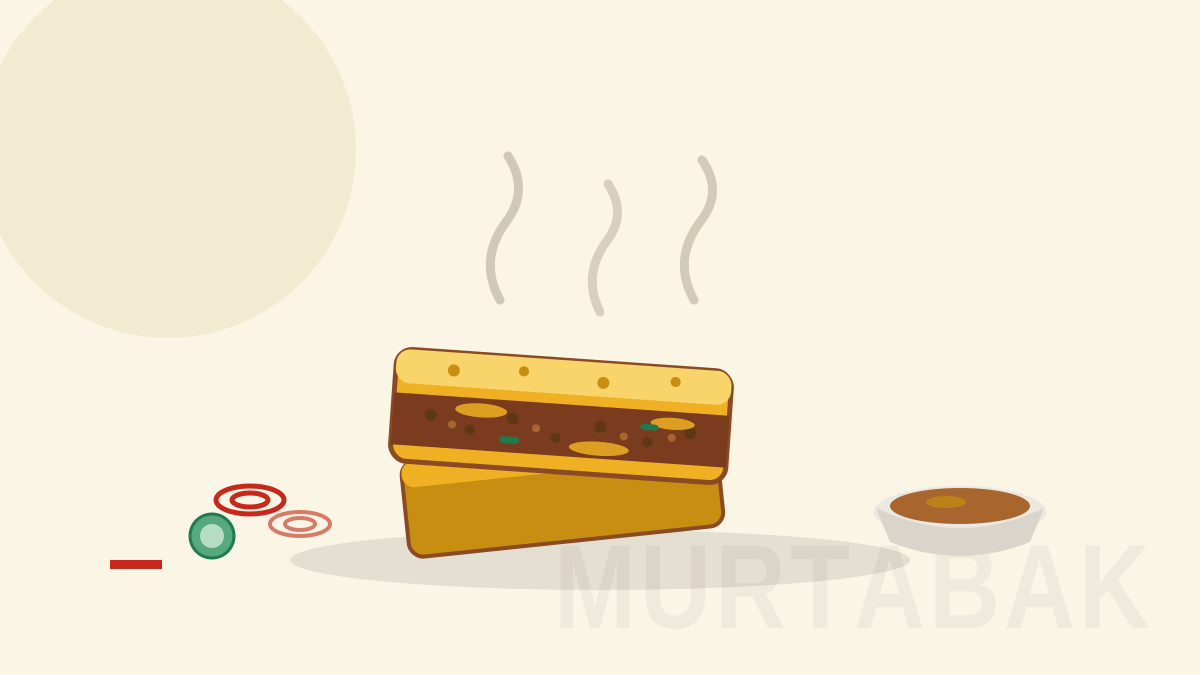
Murtabakمرطبق · murtabak
Prata dough stretched glass-thin, folded over curried minced mutton and egg, griddled in ghee — the North Bridge Road classic rebuilt at home, fold by fold.
 05
05The Indian-Muslim Table·85 min·Intermediate
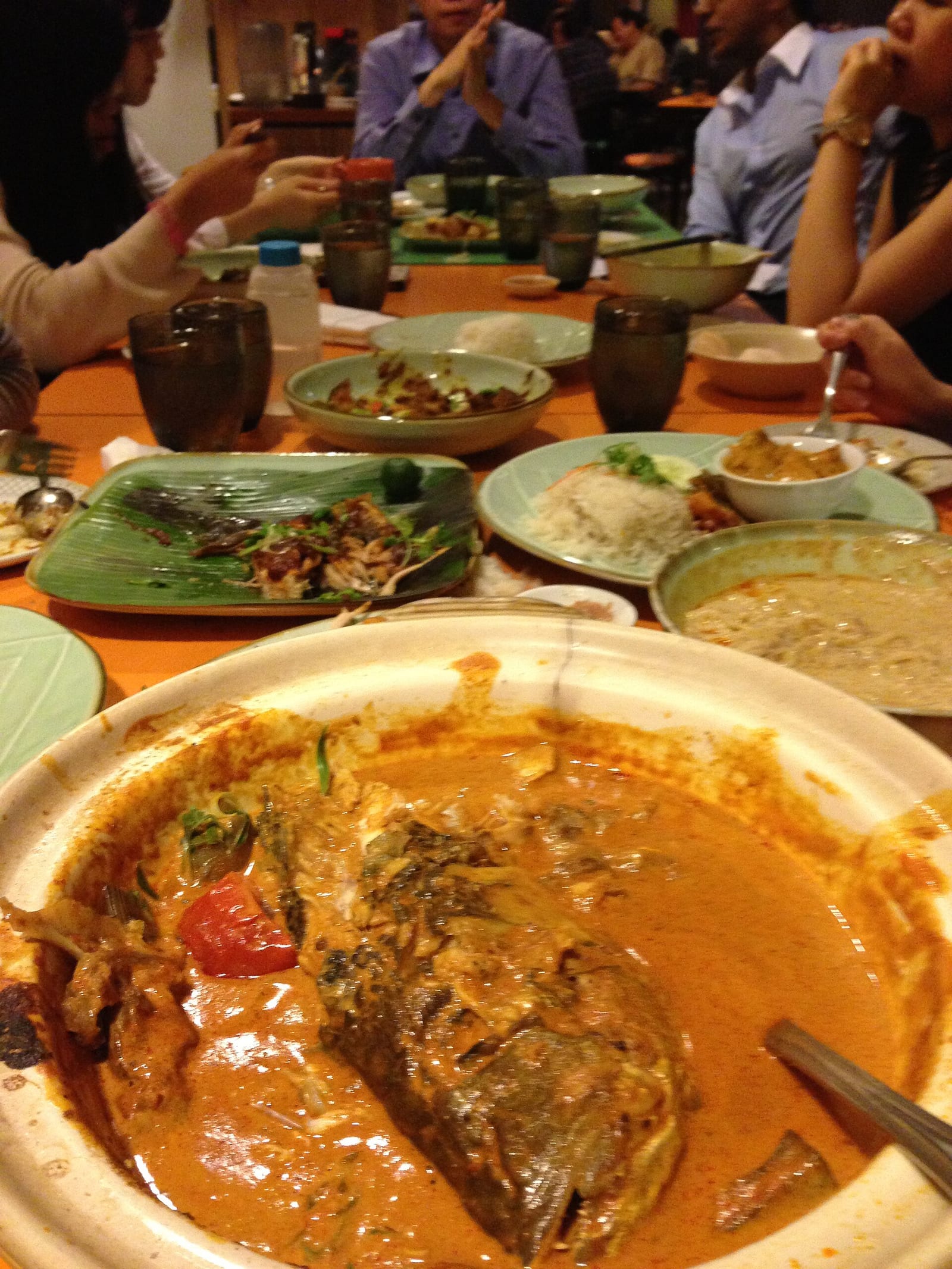
Fish Head Curryமீன் தலை கறி
A whole snapper head simmered in a tamarind-sour, coconut-rich South Indian gravy with okra and brinjal — the dish Singapore invented in 1949 and no city else can claim.
 09
09Kopitiam & Drinks·15 min·Beginner
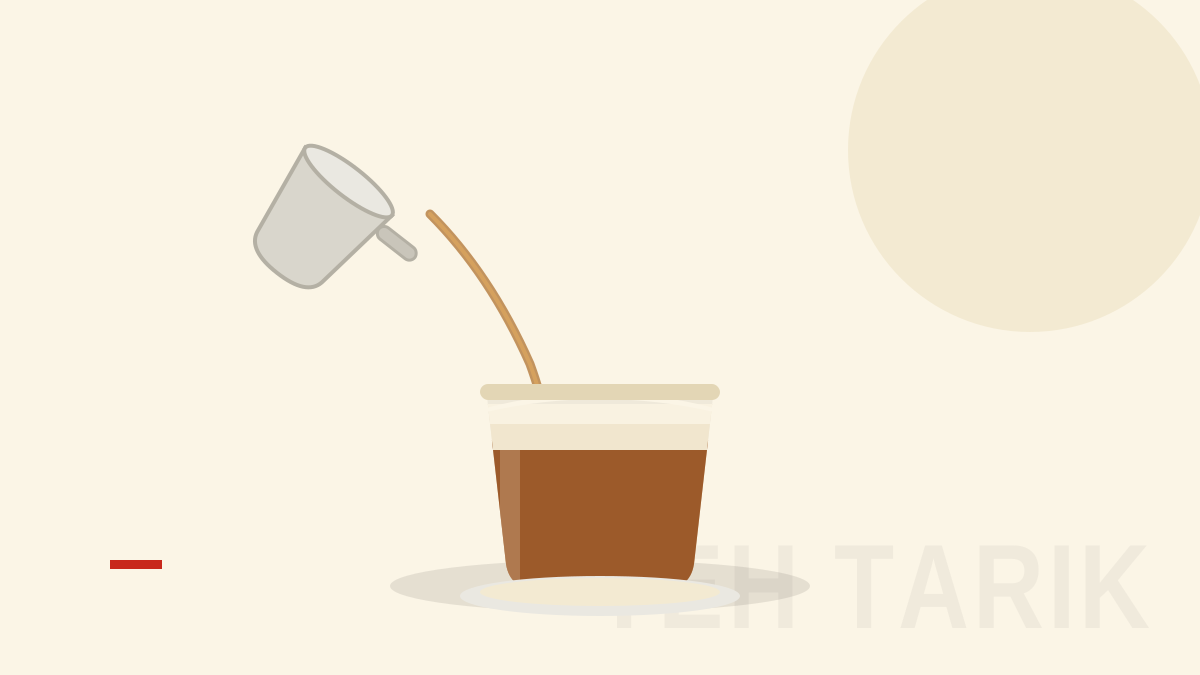
Teh Tarikதே தரிக் · teh tarik
Strong black tea, condensed and evaporated milk, pulled between two vessels until it caps with foam — the mamak stall's "pulled tea" and the island's small daily theatre.