Teh Tarik
தே தரிக் · teh tarik
Strong black tea, condensed and evaporated milk, pulled between two vessels until it caps with foam — the mamak stall's "pulled tea" and the island's small daily theatre.
By The Singaporean Recipes Kitchen · World Cookbook Series · July 16, 2026
Little India & TekkaStreet hawkers & the kampong, 1900s–1942
No pork, no lard — as written.
 09
09- Prep
- 5 min
- Cook
- 10 min
- Serves
- 2
- Level
- Beginner
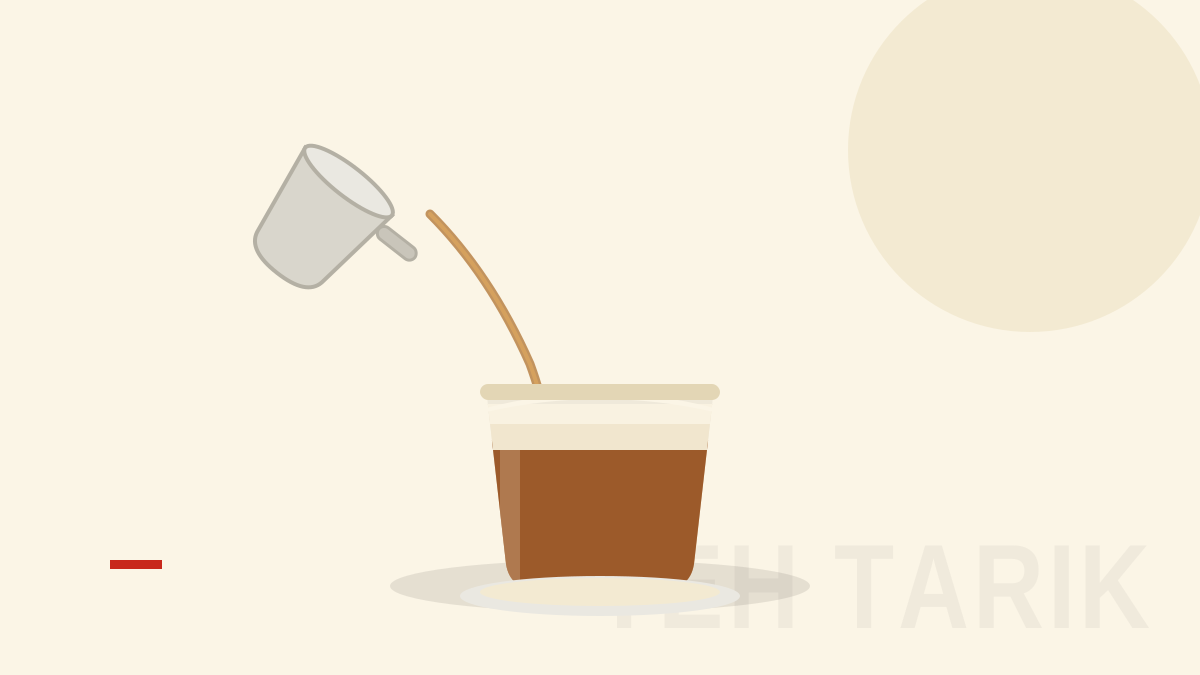
Teh tarik means "pulled tea," and the name describes a technique before it describes a drink: strong black tea, mixed with condensed and evaporated milk, then poured in a long arc from one vessel to another and back, again and again, the pouring hand rising higher each time until the tea stretches into a ribbon through the air. It is the signature of the mamak stalls — the Indian-Muslim coffee shops and drink counters of the Malay world — and for generations it has been the small daily theatre of the island, performed a thousand times an hour across Singapore by men who can pull a cup a meter long without spilling a drop.
The temptation is to treat the pull as pure showmanship, and the temptation to treat it as pure function is just as strong, and both are half right. Stretching the tea through the air does real, measurable work: it drags in air, which cools scalding tea to drinking temperature in seconds, mellows the sharp tannins, and whips up the crown of fine foam that caps a proper glass. But nobody who has watched a mamak master pull tea pretends the arc is only physics. The show and the function grew up together, one feeding the other, and to separate them is to misunderstand the thing. You can make a good cup pulling low and careful over your own sink. You simply won't be performing.
What you cannot fake is the tea underneath. Teh tarik carries two kinds of milk and a real load of sweetness, and the brew below all that has to be fierce — tea dust steeped strong enough to make you wince plain, so that after the condensed milk goes in there is still tea to taste. And the milk matters as much: sweetened condensed for the sugar and the body, evaporated for the creamy cooked roundness, the two together giving the drink its particular caramel warmth. This is one of the rare cases where the tinned, "convenient" ingredient is the authentic one and fresh milk would be the impostor. It is a mamak drink, halal as it stands, and it asks nothing of you but a strong brew, a steady hand, and a willingness to spill a few times while you learn the fall.
The long fall between two cups isn't a trick. It cools the tea, softens the tannins, and builds the foam — the theatre and the technique were never separate things.
Shiok (when it's exactly right) · A word from the kitchen
Ingredientsbahan-bahan
Serves
The brew
- 3 tbspstrong black tea dust or loose Ceylon tea (about 20 g)tea dust, not fine leaf — the fannings and dust used at mamak stalls brew fast and fierce, which is exactly the backbone you want under all that milk
- 500 mlwater, freshly boiled (about 2 cups)
The milk and sweet
- 4 tbspsweetened condensed milkthis is the sugar and the body both — teh tarik is sweetened with condensed milk, never plain sugar and plain milk
- 3 tbspevaporated milkthe evaporated milk adds a cooked, creamy roundness without more sweetness; the two milks together are the point
Methodcara masak
Step 1: Brew it fierce
Put the tea into a small pot or a teapot, pour over the just-boiled water, and let it steep 4 to 5 minutes until it is genuinely strong — darker and more bitter than you would ever drink it plain. It has to punch through two kinds of milk and still taste of tea, so a timid brew makes a beige, milky nothing. Strong to the point of astringent is correct here.
Step 2: Strain it clean
Strain the tea through a fine sieve into a heatproof jug, pressing the dust to wring out the last of it, then strain a second time if any grit slipped through. Mamak stalls pull the tea through a cloth sock filter for exactly this reason — a single stray grain of tea dust in a smooth, foamed cup is a flaw you feel on the tongue. You want a clean, dark liquor with nothing suspended in it.
Step 3: Sweeten while it's hot
Stir the condensed milk and evaporated milk into the hot tea until both fully dissolve and the color lightens to a warm caramel-tan. Taste it — it should be sweet, strong, and creamy all at once. Adjust now, before the pulling: more condensed milk for sweetness and body, a splash more evaporated for creaminess, a little more of the reserved strong tea if the milk has buried the tea flavor.
Step 4: The pull — what it actually does
Pour the tea from the jug into a second heatproof vessel (a large mug or a metal pitcher), then pour it back, raising the pouring hand higher each time so the stream stretches longer through the air. Start with the vessels close together and lengthen the fall only as your confidence grows — this is the "tarik," the pull. It is not showmanship for its own sake. The long fall drags air into the tea, which cools it to drinking temperature, softens the edge off the tannins, and whips up the crown of fine foam that defines the drink. Do it over the sink the first several times, because you will spill, and everyone does.
Step 5: Serve capped with foam
Pull it six or eight times, until a stable head of pale foam sits on top and the tea has cooled from scalding to hot-but-drinkable. Pour it into glasses so the foam caps each one — the froth is the signature, the visible proof the tea was pulled and not just stirred. Drink it while the foam holds. A teh tarik that sat too long and lost its head still tastes right, but it has stopped being teh tarik and gone back to being ordinary milk tea.
Perkakas · The tools
Equipment
Tall stockpot (10 qt+)
Prawn broth, bak kut teh, laksa gravy — the deep pot keeps a lazy simmer lazy and your kitchen unsplattered.
Shop on Amazon →Frying thermometer
The difference between shattering har cheong gai and greasy har cheong gai is oil held at temperature — stop guessing.
Shop on Amazon →
Equipment links are Amazon affiliate links. As an Amazon Associate we earn from qualifying purchases, at no cost to you. Disclosure.
Rate this recipe
Questions from the kitchen
What does the pulling actually accomplish, or is it just for show?
A bit of both, honestly, and the honest answer is more interesting than the pure-function one. The pull does real work: stretching the tea through the air aerates it, cools scalding tea to drinking temperature in seconds, and beats up the froth that caps the glass. Aeration also mellows the tannins, so a pulled tea tastes rounder and less sharp than the same tea stirred. But nobody pretends the theatre isn't part of it — the arc of tea between two vessels, higher and higher, is a small daily performance the mamak stalls turned into an art, and the show and the function grew up together. You can make a fine cup pulling low over a sink. You just won't be putting on a show.
My teh tarik tastes weak and milky, not like tea. What went wrong?
You underbrewed. Because teh tarik carries two milks and a lot of sweetness, the tea underneath has to be brewed far stronger than you would ever drink it on its own — properly astringent, almost harsh. Use tea dust rather than fine leaf tea, steep it a full four or five minutes, and taste the plain liquor before you add milk: if it doesn't make you wince slightly, it isn't strong enough to survive the condensed milk.
Can I use fresh milk and sugar instead of the canned milks?
You can make a pleasant milk tea that way, but it stops being teh tarik. The character of the drink comes specifically from sweetened condensed and evaporated milk — the cooked, caramelized note of tinned milk is inseparable from what the cup tastes like, and fresh milk plus sugar gives you something cleaner and thinner and simply different. This is one of those cases where the "shortcut" ingredient is the authentic one, and the from-scratch version is the impostor.
Makan lagi · Cook next
Keep the burner on
 09
09Kopitiam & Drinks·7 min·Beginner
Milo Dinosaurmilo dinosaur
Iced Milo built strong on condensed milk, then buried under a heaped spoon of undissolved Milo powder — a 1990s mamak invention named for its hump.
 09
09Kopitiam & Drinks·20 min·Beginner
Kaya Toast & Soft Eggs咖椰吐司
The kopitiam breakfast built at home — charcoal-thin toast, a cold slab of butter, pandan kaya, and eggs steeped barely set under dark soy and white pepper.
 05
05The Indian-Muslim Table·300 min·Advanced
Roti Prataரொட்டி பிராட்டா
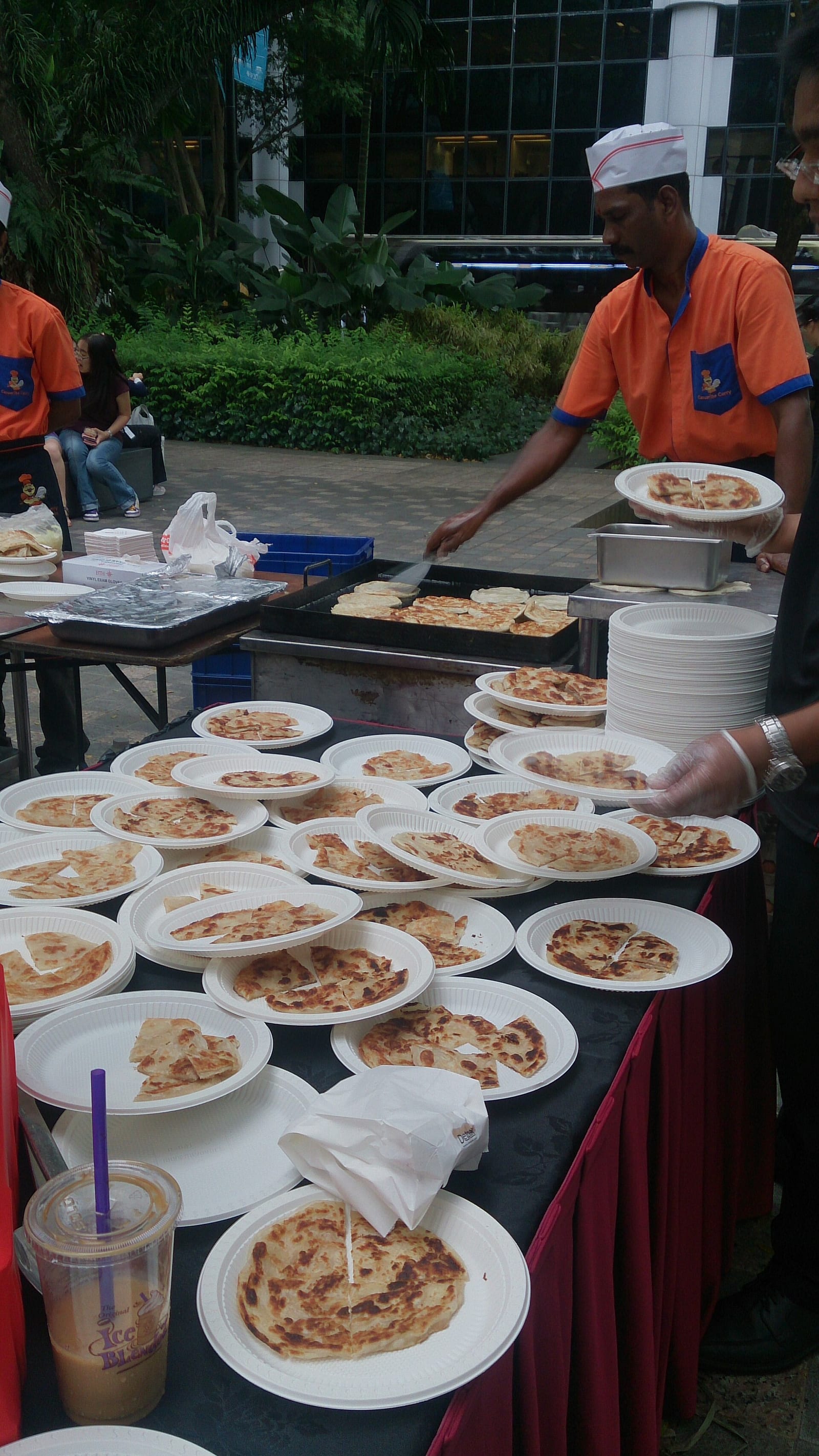
The Indian-Muslim griddle bread Singapore eats at 2 a.m. — ghee-rested dough stretched to tissue, folded, and fried until it shatters at the edges.