Kaya Toast & Soft Eggs
咖椰吐司
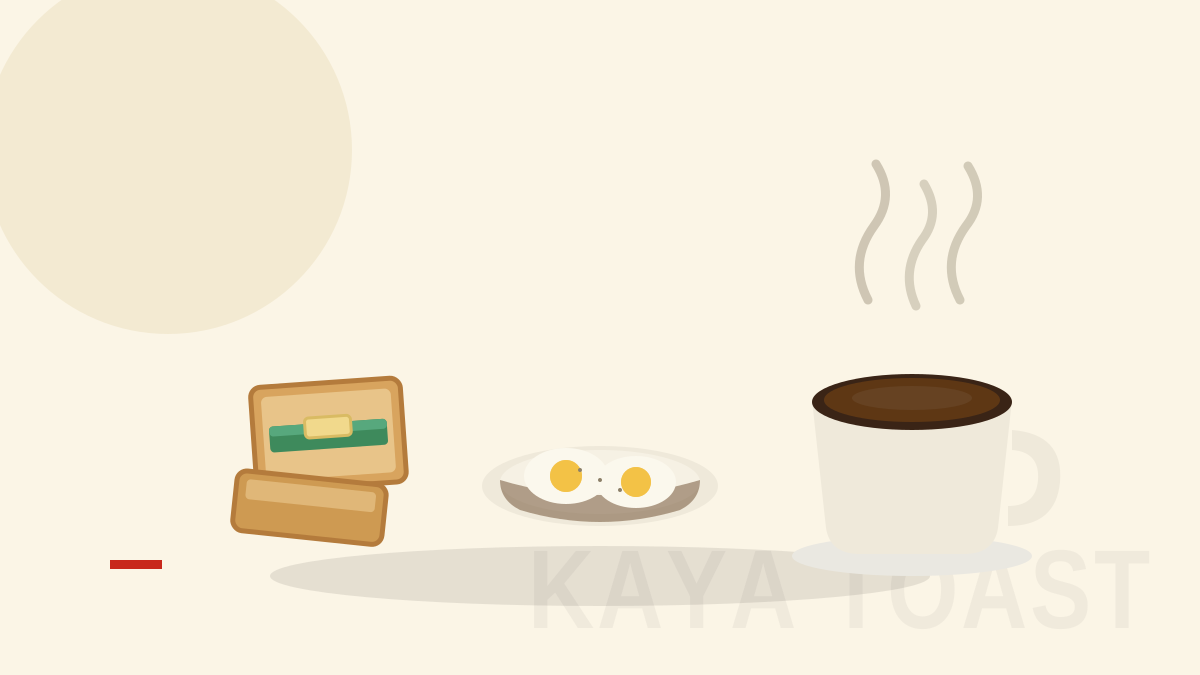
The kopitiam breakfast built at home — charcoal-thin toast, a cold slab of butter, pandan kaya, and eggs steeped barely set under dark soy and white pepper.
By The Singaporean Recipes Kitchen · World Cookbook Series · July 9, 2026
The HeartlandsCrown Colony & coolie kitchens, 1867–1900s
 09
09- Prep
- 10 min
- Cook
- 10 min
- Serves
- 2
- Level
- Beginner
The kaya toast set is what happens when a colony's breakfast gets handed to the people who actually cooked it. Under the crown colony, Hainanese immigrants — later arrivals than the Hokkien and Teochew, and shut out of much of the established trade — found work in European and British households, where they learned to bake bread, brew coffee and lay out a Western breakfast to order. When many of them later opened coffee shops of their own, they kept the toast and the soft eggs and the strong coffee, but they swapped the imported marmalade for something from their own pantry: kaya, the coconut-and-pandan custard-jam of the Malay world. The British breakfast went in one door and came out another, and it has been the island's morning ever since.
Everything in the set is a small argument about contrast, which is why it rewards precision more than the short ingredient list suggests. The toast must go past golden to charcoal-thin and brittle, because it is a vehicle and it needs to snap. The butter goes on cold and in slabs, not spread soft, so it stays a distinct cool richness against the heat. The kaya is thick and green-sweet. And the eggs are steeped, not boiled — sat in hot water off the flame until the whites barely cloud and the yolks stay loose — then poured into a saucer with dark soy and a hard hit of white pepper and used as a dip. Get any one of those temperatures or textures wrong and the whole thing sags into an ordinary breakfast.
It is also, still, a social ritual as much as a recipe, which is the part a home kitchen can only half-reproduce. The kaya toast set belongs to a marble-topped table, a ceiling fan, a folded newspaper and a cup of kopi ordered in the local shorthand. You can build the plate at home, and you should, because it is a fine and honest breakfast. But keep in mind that the version at the old coffee shop comes with the room attached, and the room is doing some of the work.
Charcoal-thin toast, a cold slab of butter, kaya, and an egg you dip it into — the whole colony's breakfast in four moves.
Shiok (when it's exactly right) · A word from the kitchen
Ingredientsbahan-bahan
Serves
The toast
- 4 sliceswhite bread, thick-cutday-old sandwich loaf toasts crisper than fresh; the square white kopitiam loaf if you can find it
- 40 gcold salted butter, cut in slabs (about 3 tbsp)cold and thick, laid on hot toast so it half-melts and half-holds its shape — never soft, never spread thin
- 4 tbsppandan kayaour foundation kaya recipe if you make your own; a good jarred kaya is an honest stand-in
The soft eggs
- 4eggs, at room temperaturecold-from-the-fridge eggs throw the timing off — let them sit out first
- to finishdark soy saucethick dark soy, not light soy — a few drops per saucer
- to finishwhite pepper, ground
Methodcara masak
Step 1: Toast it thin and hard
Toast the bread well past golden — the kopitiam standard is charcoal-thin, crisp the whole way through, the corners near-black and scraped smooth if they catch. It should snap, not bend. Over charcoal this is a two-minute lean over the grill; a hot toaster or a dry pan gets you most of the way there. Pale, soft toast is the single most common home failure and the whole texture depends on going darker than feels comfortable.
Step 2: Cold butter, thick kaya
Lay slabs of cold butter straight onto the hot toast so they soften at the base but hold their shape on top, then spread the pandan kaya thick on the other slice and press the two together. The pleasure is in the temperature clash — cold fat, warm crisp toast, the coconut-pandan sweetness of the kaya against the salt of the butter. Soft, evenly spread butter melts to nothing and misses the entire point.
Step 3: Steep the eggs, do not boil them
Use the kopitiam method — sit the room-temperature eggs in a bowl, cover with boiling water off the heat, put a lid on and leave them six minutes for barely-set. The whites should just turn from clear to trembling cloud and the yolks stay liquid. This gentle steeping, rather than a rolling boil, is how you get the signature almost-raw set without a rubbery edge. A minute long and you have lost it; time it honestly.
Step 4: Crack, season, dip
Crack the eggs into a shallow saucer, add a few drops of dark soy and a heavy dust of white pepper, and stir once. The eggs are not a side dish — they are a dip. You break off a corner of the hot kaya toast and drag it through the loose, seasoned egg, and that is the bite the whole ritual is built around. Coffee alongside, and if you order it the local way, kopi is with condensed milk, kopi-o is black with sugar, kosong means no sugar, and gao means made strong.
Perkakas · The tools
Equipment
Small charcoal grill
satay grillSatay is charcoal or it is something else. A narrow hibachi-style grill fans twenty sticks at once the way the stalls do.
Shop on Amazon →Frying thermometer
The difference between shattering har cheong gai and greasy har cheong gai is oil held at temperature — stop guessing.
Shop on Amazon →
Equipment links are Amazon affiliate links. As an Amazon Associate we earn from qualifying purchases, at no cost to you. Disclosure.
Rate this recipe
Questions from the kitchen
Where does the kaya toast set actually come from?
From the colonial kitchen, sideways. Hainanese immigrants who staffed British and European households learned to bake bread, brew coffee and cook a Western breakfast, and when many later opened their own coffee shops they kept the toast and the eggs but answered the marmalade with kaya, a coconut-and-pandan jam of the region. The result is a British breakfast rerouted through a Hainanese kitchen and a Malay pantry — which is to say, a very Singapore way to start the day.
My eggs came out either raw and slimy or fully hard. What is the fix?
It is a water and timing problem. Use room-temperature eggs, a bowl that holds heat, and enough boiling water to cover them well — too little water cools too fast and underdoes them. Then trust the clock: about six minutes covered for that trembling, barely-set kopitiam texture, a little less if you like them looser. Boiling them on the stove overshoots almost every time.
Do I really need charcoal and homemade kaya?
No, and most Singaporeans do not have either at home. A toaster taken darker than you think is right, and a good jar of kaya, will get you a genuinely faithful set — the non-negotiables are that the toast is crisp and thin, the butter is cold and thick, and the eggs are barely set. Charcoal adds a faint smoke and homemade kaya adds depth, but the ritual survives without them.
Makan lagi · Cook next
Keep the burner on
 09
09Kopitiam & Drinks·15 min·Beginner
Teh Tarikதே தரிக் · teh tarik
Strong black tea, condensed and evaporated milk, pulled between two vessels until it caps with foam — the mamak stall's "pulled tea" and the island's small daily theatre.
 09
09Kopitiam & Drinks·7 min·Beginner
Milo Dinosaurmilo dinosaur
Iced Milo built strong on condensed milk, then buried under a heaped spoon of undissolved Milo powder — a 1990s mamak invention named for its hump.
 01
01Foundations·80 min·Intermediate
Pandan Kayakaya · 咖椰
Coconut-and-egg jam cooked low over a double boiler, perfumed with real pandan — the green Nyonya school and the brown Hainanese one, told straight.