Mamak Mee Goreng
மீ கோரெங்
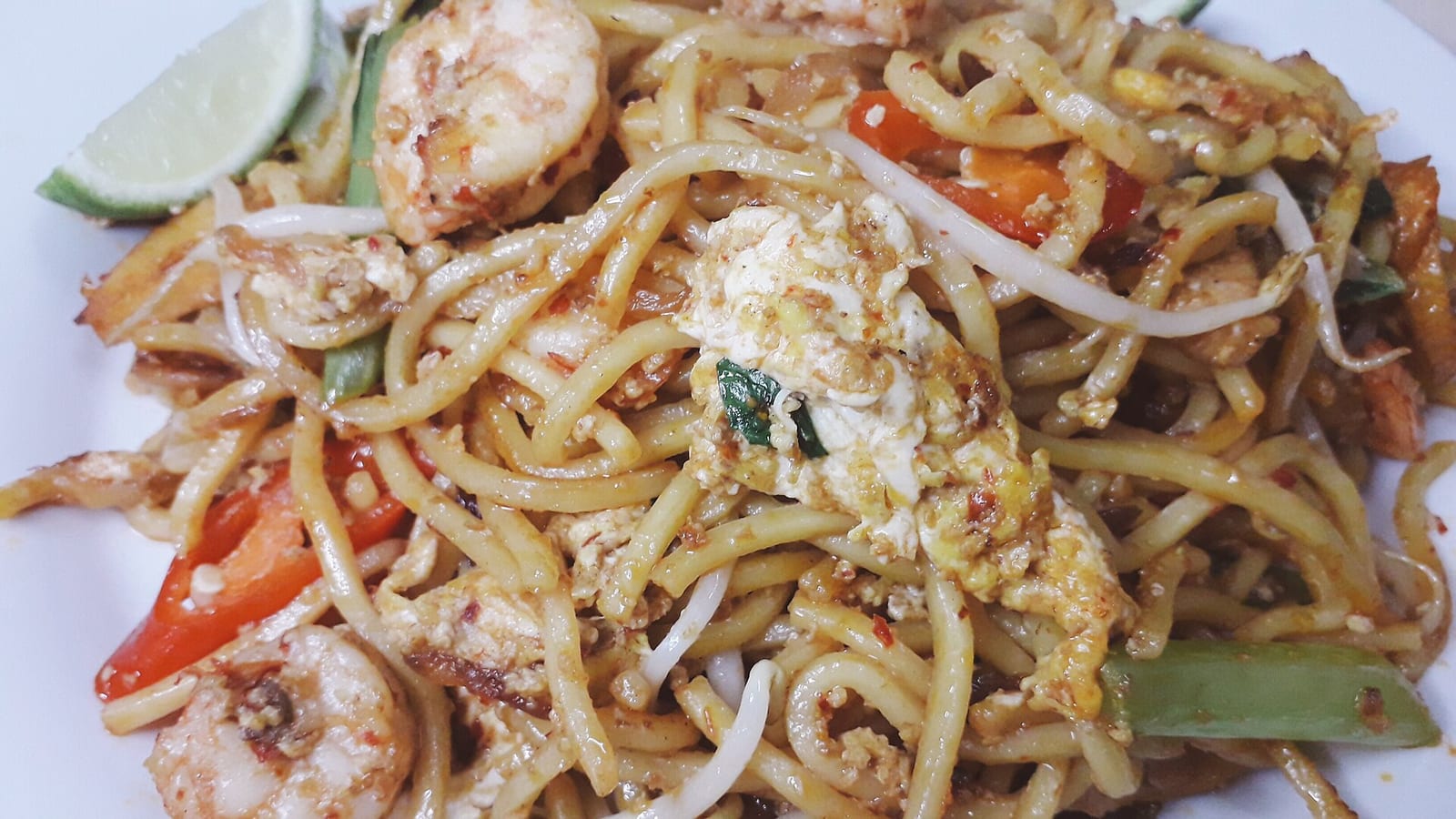
Yellow noodles fried hard with potato, tau kwa and a sweet-hot tomato-chili sauce — the Indian-Muslim stall dish that exists nowhere in India, only in the Malay world.
By The Singaporean Recipes Kitchen · World Cookbook Series · July 15, 2026
Little India & TekkaStreet hawkers & the kampong, 1900s–1942
No pork, no lard — as written.

- Prep
- 20 min
- Cook
- 15 min
- Serves
- 2
- Level
- Beginner
Mamak mee goreng is a dish with a false passport. The name is Tamil, the noodles are Chinese, the ketchup is European, and the whole thing is claimed loosely as "Indian" on menus across the island — and yet it exists nowhere in India. Look for it in Chennai, in Hyderabad, in Kerala where so much of Singapore's Indian food traces back, and you will not find it. It was invented here, in the Malay world, by the Indian-Muslim cooks whose stalls Singaporeans call mamak, improvising a plate of fried noodles out of whatever the port city put on the shelf: Hokkien wheat noodles, bottled chili sauce, tomato ketchup, a boiled potato, a block of pressed tofu.
That origin is worth telling straight, because the instinct is to be embarrassed by the ketchup, to treat it as a corruption of some purer original. There is no purer original. The ketchup is the dish. Its sugar and vinegar, cooked hard against the side of a screaming wok, are half of what makes mamak mee goreng taste the way it tastes — sweet and hot and faintly scorched, red-brown and glossy. This is food that was born mixed, in a city that was itself being improvised, and the cleaner you try to make its story the further you get from the truth of it.
It is also, mercifully, the most forgiving dish in this chapter — a genuine beginner's plate, four minutes of controlled chaos over the hottest flame you own. The only real disciplines are heat and speed: get the wok roaring, have every ingredient cut and the sauce premixed before you start, cook one portion at a time, and throw the bean sprouts in last so they keep their snap. It is Indian-Muslim food and therefore halal as written — no pork, no lard, just noodles and egg and a sauce that no purist would approve of and every mamak stall has been making for a century.
Go looking for it in India and you'll find nothing. It was built here, on Chinese noodles with a squeeze of ketchup, and it belongs to no one and everyone.
Shiok (when it's exactly right) · A word from the kitchen
Ingredientsbahan-bahan
Serves
The sauce
- 3 tbsptomato ketchupnot a shortcut to apologize for — ketchup is authentic mamak mee goreng, and its sugar and vinegar are half the flavor
- 2 tbspchili sauce, the sweet garlicky bottled kind
- 1 tbsptomato pastethis is what keeps the sauce from tasting merely of ketchup — it adds a cooked, savory depth
- 1 tbspsweet dark soy sauce (kecap manis)
- 1 tspchili powder
- 1 tspsugar
- 1/2 tspfine salt
The stir-fry
- 300 gfresh yellow Hokkien noodles, loosened under warm water and drained (about 10 oz)the thick oiled yellow noodles from the chiller — rinse off the surface oil and they take sauce better
- 3 tbspneutral oil
- 3garlic cloves, minced
- 1medium potato, boiled until just tender, peeled and cubedpre-boiled — raw potato never cooks through in the time a stir-fry allows, and the cube is a mamak signature
- 1block firm tau kwa (pressed tofu), cubed and patted dry
- 2eggs
- 1tomato, cut into wedges
- 2green chilies, sliced
- 2 handfulsbean sprouts, tailed
- 1 handfulmustard greens or choy sum, cut into short lengths
To finish
- 2calamansi limes, halved (or 1 regular lime)the squeeze of acid at the table is not optional — it cuts the sweet sauce and wakes the whole plate
- 2 tbspfried shallots
- 1 handfulcoriander leaves
Methodcara masak
Step 1: Mix the sauce before the wok is hot
Stir the ketchup, chili sauce, tomato paste, sweet soy, chili powder, sugar, and salt together in a small bowl. Mamak mee goreng cooks in about four minutes of chaos once the wok is roaring, and there is no time to measure sauces mid-fry — a stall cook has this premixed in a squeeze bottle for exactly this reason. Have everything else cut and within arm's reach too.
Step 2: Crisp the tau kwa and potato first
Heat 2 tablespoons of the oil in a wok over high heat until it shimmers and just wisps smoke. Fry the tau kwa cubes, turning, 2 to 3 minutes until they take on gold edges and a light crust, then add the boiled potato and fry 1 minute more to catch some color. Scrape both to one side. Crisp surfaces matter here — soft tofu and soft potato in a soft noodle plate is a texture failure the browning fixes.
Step 3: Scramble the egg into the fat
Push everything to the side, add the last tablespoon of oil to the cleared space with the garlic, let it sizzle 10 seconds, then crack in the eggs. Let them set for 15 seconds before breaking them into loose curds. Do not fully scramble them dry — you want soft ribbons of egg that will cling to the noodles rather than rattle around as hard crumbs.
Step 4: Add noodles and sauce and fry hard
Tip in the drained noodles and pour the sauce down the side of the hot wok, not onto the noodles — a second against the metal caramelizes the sugar and deepens it. Toss and fry hard for 2 to 3 minutes, lifting and folding constantly so the sauce coats every strand and the noodles pick up scorched edges from the wok. They should darken to a glossy brick-red and start to smell faintly toasted. Add the tomato and green chilies partway through.
Step 5: Sprouts last, then off the heat
Throw in the bean sprouts and greens and toss just 30 to 45 seconds — long enough to wilt the greens but leave the sprouts with a raw snap. Overcooked sprouts go limp and weep water into the sauce, thinning everything you just built; their crunch is the counterpoint the whole plate needs. Kill the heat, plate it, and crown it with fried shallots, coriander, and the lime halves. The lime gets squeezed at the table, over everything, right before the first mouthful.
Perkakas · The tools
Equipment
Carbon-steel wok
chaoHalf this site happens in a wok, and carbon steel is the only honest choice at home — it heats fast, takes a season, and gets you the closest to wok hei your burner allows.
Shop on Amazon →Spider strainer
Lifts blanched noodles out of the pot in one pass and fried shallots out of the oil in the next. One tool, half the hawker canon.
Shop on Amazon →Granite mortar & pestle
lesung batuThe rempah tool. Pounding bruises and bleeds the aromatics in a way blades never do — the lesung is the sound of a Singapore kitchen starting dinner.
Shop on Amazon →
Equipment links are Amazon affiliate links. As an Amazon Associate we earn from qualifying purchases, at no cost to you. Disclosure.
Rate this recipe
Questions from the kitchen
Why is there ketchup in an Indian noodle dish?
Because it was never an Indian dish. Mamak mee goreng is an invention of the Indian-Muslim stalls of the Malay world — the mamak stalls of Singapore and Malaysia — and it exists nowhere on the Indian subcontinent. Go looking for it in Chennai or Hyderabad and you'll find nothing; it was built here, on Chinese wheat noodles, with tomato ketchup and bottled chili sauce, by cooks improvising a plate that belonged to no single tradition. The ketchup isn't a Western corruption of something older and purer. It's original, told with a raised eyebrow at anyone who wants their food to have cleaner borders than food ever really has.
My noodles came out soggy and pale instead of dark and glossy. Why?
The wok wasn't hot enough and the pan was too crowded. Yellow noodles carry a lot of moisture, and a cool or packed wok steams them into a limp tangle instead of frying them. Cook a single portion at a time over the highest heat you have, pour the sauce down the hot metal so it caramelizes on contact, and keep everything moving. If you're cooking for four, do it in two batches — one properly fried plate beats two mediocre ones.
Can I make it without the tofu and potato?
You can, but you'd be cooking a different, thinner dish. The tau kwa and the cubed boiled potato are what make mamak mee goreng substantial and distinctly itself — the potato especially is the tell that separates it from a plain fried noodle. If you skip them, at least keep the egg and load up the sprouts and greens for texture, and know you've made fried noodles rather than the mamak plate.
Makan lagi · Cook next
Keep the burner on
 05
05The Indian-Muslim Table·300 min·Advanced
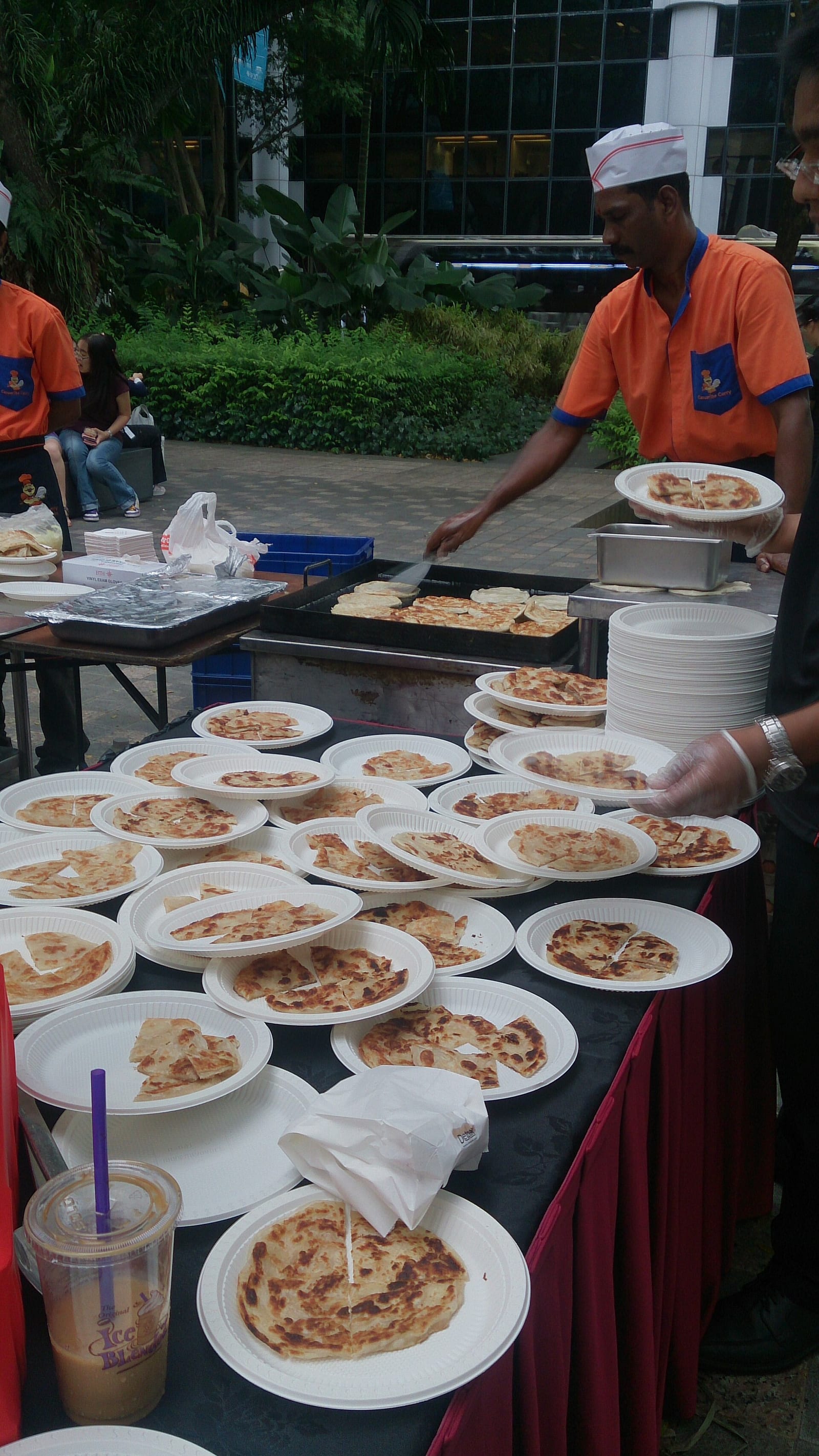
Roti Prataரொட்டி பிராட்டா
The Indian-Muslim griddle bread Singapore eats at 2 a.m. — ghee-rested dough stretched to tissue, folded, and fried until it shatters at the edges.
 05
05The Indian-Muslim Table·85 min·Intermediate
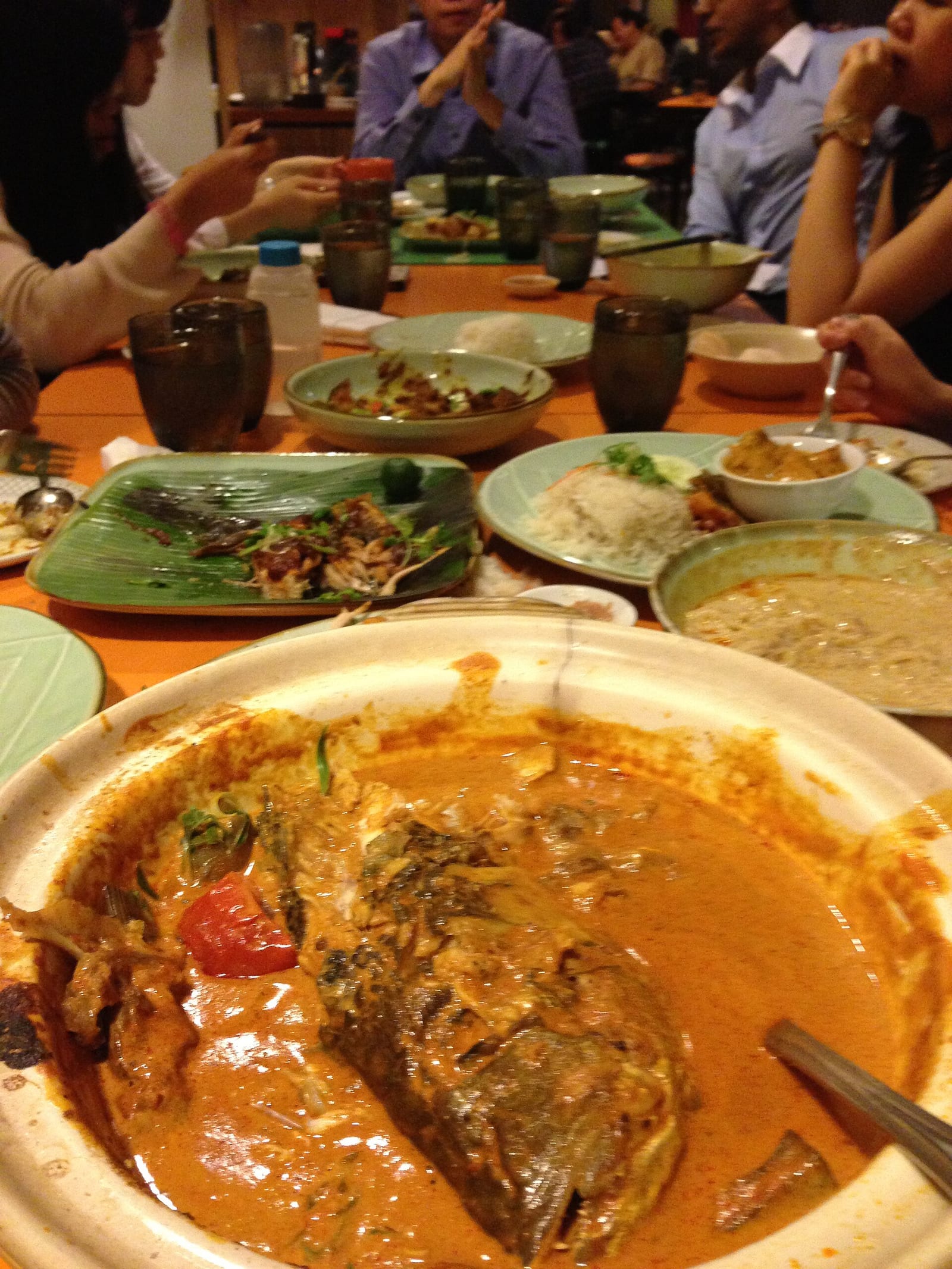
Fish Head Curryமீன் தலை கறி
A whole snapper head simmered in a tamarind-sour, coconut-rich South Indian gravy with okra and brinjal — the dish Singapore invented in 1949 and no city else can claim.
 05
05The Indian-Muslim Table·205 min·Advanced
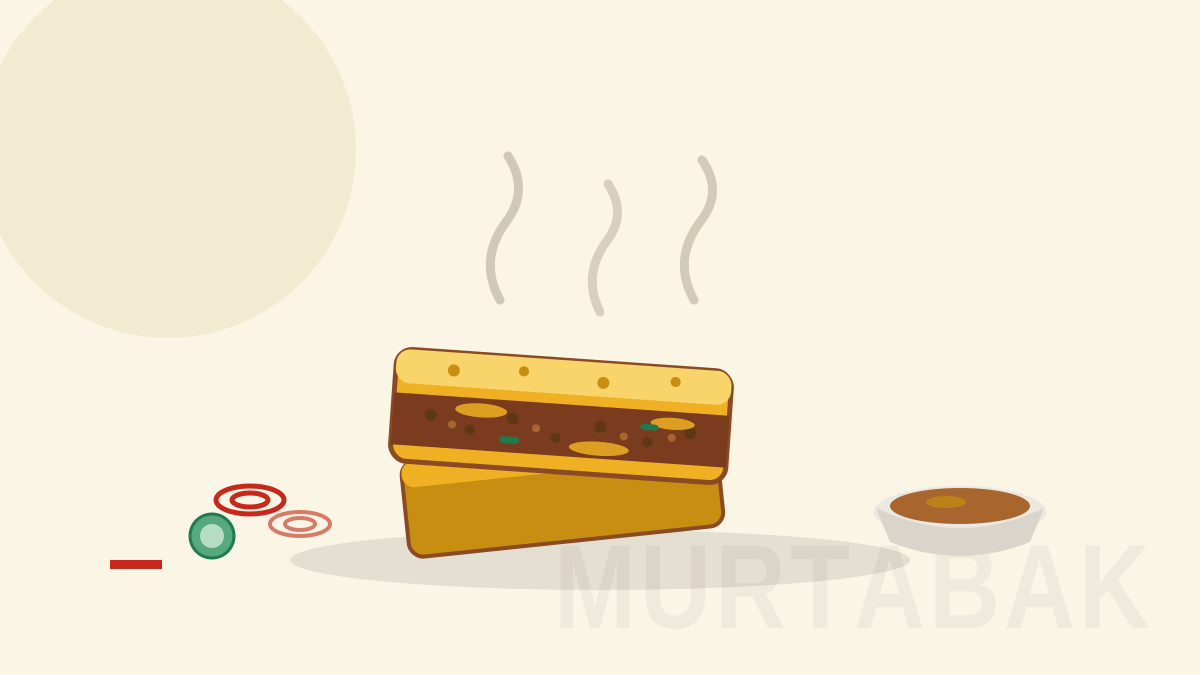
Murtabakمرطبق · murtabak
Prata dough stretched glass-thin, folded over curried minced mutton and egg, griddled in ghee — the North Bridge Road classic rebuilt at home, fold by fold.