Katong Laksa
叻沙 · laksa lemak
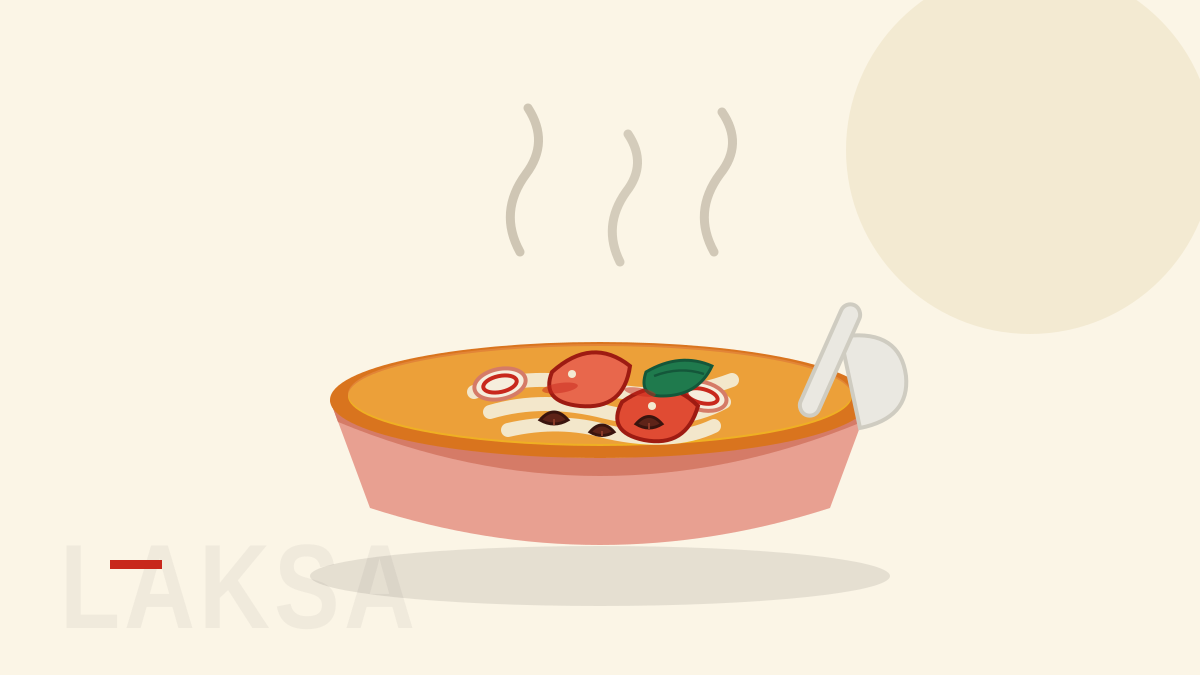
Coconut laksa the Katong way — a prawn-sweet gravy over rice noodles cut short for the spoon, the style Janggut hawked along East Coast Road in the 1950s.
By The Singaporean Recipes Kitchen · World Cookbook Series · June 24, 2026
Katong–Joo ChiatPostwar & Merdeka, 1945–1965
 02
02- Prep
- 45 min
- Cook
- 50 min
- Serves
- 4
- Level
- Intermediate
In the 1950s a hawker the neighborhood called Janggut — "beard" in Malay, for the mole-whiskers on his chin — carried laksa through the streets of Katong, and somewhere along East Coast Road he made a decision that still defines the bowl: he snipped the noodles short. No chopsticks, no twirling, no decisions. A spoon, loaded each time with noodle, gravy, tau pok, and a shred of laksa leaf, repeated until the bowl was empty. His descendants and his imitators have spent seventy years arguing over who inherited the mantle — at one point three separate stalls within walking distance all claimed the original Katong laksa — and the argument itself is the best evidence of how much this bowl matters here.
Katong is the old Peranakan seaside quarter, and the laksa is Peranakan logic in a bowl: Chinese noodles and fishcake, Malay rempah and coconut, a Southeast Asian herb garden on top. It belongs to the wider "which laksa" question that stretches across the strait — Penang's assam laksa is sour, tamarind-based, and coconut-free, and its partisans consider lemak a soft southern indulgence, a compliment the south happily accepts. We take no side. The word traveled the old trade routes and every port spent it differently; this recipe is simply the way Katong spent it.
The bowl runs on two engines and neither is optional. The first is prawn: shells roasted hard, dried shrimp pounded into the rempah until they vanish, so the sweetness comes from every direction at once. The second is the fry — the rempah cooked past raw, past fragrant, all the way to the point where the oil breaks back out. Cut either short and you get something laksa-shaped that tastes like a memo about laksa. Give them their full time and you get the thing the queue on East Coast Road has always been about.
A Katong laksa is eaten with a spoon alone — the noodles were cut short seventy years ago so nothing would interrupt the gravy on its way to you.
Shiok (when it's exactly right) · A word from the kitchen
Ingredientsbahan-bahan
Serves
The prawn stock
- 500 gwhole prawns, shells and heads on (about 1 lb)the shells and heads ARE the stock — buy the ugliest, freshest prawns with heads intact
- 1.5 Lwater (about 6 cups)
- 1 tbspneutral oil
The laksa rempah
- 10dried red chilies, soaked in hot water 15 minutesdeseed most of them — Katong gravy is warm, not punishing
- 120 gshallots, peeled (about 4 oz)
- 4garlic cloves
- 4candlenutsmacadamias substitute honestly
- 20 ggalangal, sliced thin (a thumb)
- 15 gfresh turmeric, peeled (a smaller thumb)or 1 tsp ground — fresh stains your board and tastes brighter
- 2lemongrass stalks, tender bottom third, sliced fine
- 40 gdried shrimp, soaked 10 minutes and drained (about 1/3 cup)hae bee — the deep savory engine of a Katong-style gravy; do not skip
- 15 gbelacan, toasted (1 tbsp packed)
The gravy
- 6 tbspneutral oil
- 400 mlcoconut milk (one 13.5 oz can)full-fat; the word lemak means rich, and the can should agree
- 2 tspsugar
- 1 tspsalt, or to taste
The bowl
- 400 gthick round rice noodles (laksa noodles or thick bee hoon), cooked per packet (about 14 oz)cut them into 3–4 cm lengths with scissors — this is canon, not a garnish choice
- 8fried tau pok (beancurd puffs), halvedthey drink the gravy and hand it back when bitten
- 150 gfishcake, sliced (about 5 oz)
- 100 gbean sprouts, blanched 20 seconds (two handfuls)
- 1 small bunchlaksa leaves (daun kesum), sliced into fine ribbonsthis herb is the smell of Katong — mint and coriander are not substitutes, they are different dishes
- 4 tspchili oil or sambal, to serve
Methodcara masak
Step 1: Make the prawn stock
Peel the prawns, keep every shell and head, and set the meat aside. Fry the shells in 1 tablespoon of oil over high heat, crushing the heads with your spoon, until they go from grey to deep orange and the pan smells like a seafood grill — about 4 minutes. That roasting step is the difference between prawn stock and prawn-flavored water. Add the water, simmer 20 minutes, and strain, pressing hard on the solids. You want about 1.2 litres.
Step 2: Pound the rempah
Work the lesung in the usual order — galangal, turmeric, and lemongrass first, then candlenuts and garlic, then soaked chilies and dried shrimp, shallots last, belacan crumbled in at the end. Or blend with a spoonful of the oil to get the blades moving. The dried shrimp should disappear into the paste; visible shreds now mean gritty gravy later.
Step 3: Fry until the oil returns
Heat the 6 tablespoons of oil over medium and fry the rempah, stirring and scraping, 12 to 15 minutes. It will slump, darken from orange to burnt sienna, and finally release the oil back out around the edges. Do not rush this. A laksa that tastes flat and raw was almost always stopped five minutes early right here.
Step 4: Build the gravy
Pour in the prawn stock and simmer 10 minutes so the paste and stock become one thing. Add the coconut milk, sugar, and salt, bring it just to the edge of a simmer — lazy bubbles at the rim, never a rolling boil, which splits coconut milk into grease and curds — and cook 5 minutes more. Slide in the prawn meat for the last 2 minutes, until just pink and hooked into commas. Taste. It should be rich, prawn-sweet, and gently hot, with the belacan as a low hum underneath.
Step 5: Assemble for the spoon
Divide the short-cut noodles among four bowls with the tau pok, fishcake, and bean sprouts. Ladle the gravy generously — the noodles should float, not sit in a puddle. Finish with the ribboned laksa leaf and a spoonful of chili oil. Serve with a spoon and no chopsticks. If a guest asks for chopsticks, tell them the story.
Perkakas · The tools
Equipment
Granite mortar & pestle
lesung batuThe rempah tool. Pounding bruises and bleeds the aromatics in a way blades never do — the lesung is the sound of a Singapore kitchen starting dinner.
Shop on Amazon →Carbon-steel wok
chaoHalf this site happens in a wok, and carbon steel is the only honest choice at home — it heats fast, takes a season, and gets you the closest to wok hei your burner allows.
Shop on Amazon →Tall stockpot (10 qt+)
Prawn broth, bak kut teh, laksa gravy — the deep pot keeps a lazy simmer lazy and your kitchen unsplattered.
Shop on Amazon →Spider strainer
Lifts blanched noodles out of the pot in one pass and fried shallots out of the oil in the next. One tool, half the hawker canon.
Shop on Amazon →
Equipment links are Amazon affiliate links. As an Amazon Associate we earn from qualifying purchases, at no cost to you. Disclosure.
Rate this recipe
Questions from the kitchen
Which laksa is the real laksa?
Depends who you ask, and how much time you have. Penang says laksa means assam laksa — sour, fishy, tamarind-dark, no coconut in sight. The Peranakan kitchens of Singapore and Malacca say laksa lemak, rich with coconut. Both are laksa; the word likely comes through old trade routes and got spent differently in every port. What Singapore can claim outright is this specific bowl — the Katong style, coconut gravy, noodles cut short — which grew up in the Peranakan shophouses of the East Coast. We tell the story and keep our chopsticks out of the fight.
Why did my gravy split into oil and curds?
You boiled the coconut milk. Full-fat coconut milk breaks under a hard boil — the fat walks out and sulks on the surface. Add it late, keep the pot at a bare simmer, and stir gently. If it has already split, a splash of cold water and a vigorous whisk off the heat will mostly bring it home, but the texture never fully forgives you.
Can I use a store-bought laksa paste?
You can, and on a Tuesday night plenty of Singapore kitchens do. Buy a Singapore-style brand, fry it in oil until it darkens and releases — the jar skips the pounding, not the frying — and make the real prawn stock anyway. The stock is where a jar bowl becomes a good bowl. What you lose is the fresh galangal-turmeric brightness and the pride; only one of those matters at 7pm.
Makan lagi · Cook next
Keep the burner on
 02
02Noodles & Laksa·120 min·Intermediate
Prawn Noodle Soup虾面 · hae mee
A rust-red Hokkien broth built entirely from prawn shells and heads, fried till they roar, simmered deep — noodles, sweet prawns, and a spoon of chili over the top.
 02
02Noodles & Laksa·80 min·Intermediate
Mee Rebusmee rebus
Yellow noodles under a thick sweet-savoury gravy built on mashed sweet potato and fermented soybean, crowned with egg, green chili and lime — the island's most underrated sauce.
 02
02Noodles & Laksa·115 min·Advanced
Hokkien Mee福建面
Yellow noodles and thick bee hoon braised in a prawn-and-pork stock until they drink it dry — Singapore's wettest, deepest plate of fried noodles.