Prawn Noodle Soup
虾面 · hae mee
A rust-red Hokkien broth built entirely from prawn shells and heads, fried till they roar, simmered deep — noodles, sweet prawns, and a spoon of chili over the top.
By The Singaporean Recipes Kitchen · World Cookbook Series · July 10, 2026
Tiong BahruStreet hawkers & the kampong, 1900s–1942
 02
02- Prep
- 30 min
- Cook
- 90 min
- Serves
- 4
- Level
- Intermediate
Prawn mee is a dish about garbage, in the best possible sense. The part of the prawn most people throw away — the shells, the heads, the papery legs — is the entire point, and the naked prawn everyone prizes is almost an afterthought sitting on top. The Hokkien hawkers who made this bowl a Singapore staple understood that the flavor is in the shell, and specifically in what happens to the shell when you fry it hard enough that it turns deep orange and roars. Watch a good stall and you'll see them crushing spent shells against the pot like they owe them money. They do.
That frying step is where the whole dish is won or lost, and it's worth saying plainly because it's the mistake everyone makes at home: shells that go into water raw give a thin, grey, faintly fishy broth, while shells fried to a roasted, toasty orange give the rust-red depth that makes prawn mee prawn mee. There's real chemistry in it — the same browning that makes roasted meat taste of more than boiled meat — and no amount of long simmering rescues a broth that was built on pale, under-fried shells. Fry first, ask questions later.
There's an honest fork in this recipe worth naming, because a lot of sites quietly pick one and hide it. The classic hawker broth simmers pork ribs in with the shells for backbone, and the oldest bowls lean hard on that. But the prawn shells carry the dish, and a shell-only broth is lighter without being lesser — so this version gives you both roads and lets you choose, rather than pretending the pork was never optional. Either way, the ritual is the same: fry the shells till they roar, simmer them till they surrender, press out every last drop of orange fat, and build the bowl to order so the noodles hit the broth hot. It's a bowl that respects the parts other recipes bin, which is a very Singapore way to cook.
The broth is a lesson in shells — fry them till they roar, simmer them till they give up everything, then press out the last orange drop.
Shiok (when it's exactly right) · A word from the kitchen
Ingredientsbahan-bahan
Serves
The broth
- 600 gwhole large prawns, shell-on (about 1.3 lb)buy them head-on if you can — the heads hold the orange fat (tomalley) that colors and deepens the whole broth
- 2 tbspneutral oil
- 4shallots, sliced
- 4garlic cloves, smashed
- 1 tspwhite peppercorns, cracked
- 30 grock sugar (2 tbsp)prawn-shell broth is faintly sweet by nature; the rock sugar rounds the pepper and salt, it doesn't make it a dessert
- 2 tbspdark soy sauce
- 2 Lwater (about 8 cups)
The optional pork path (the classic version)
- 400 gpork ribs, optional (about 14 oz)traditional prawn mee simmers pork ribs into the broth for backbone; it is genuinely optional — a shell-only broth is lighter but still complete. Leave it out entirely for a pork-free bowl
- 1 tbspdried anchovies (ikan bilis), optionala small handful adds savory depth whether or not you use pork
The bowl
- 300 gfresh yellow Hokkien noodles (about 10 oz)
- 150 gthin rice vermicelli (bee hoon) (about 5 oz)the classic order is half-and-half yellow noodles and bee hoon; take whichever ratio you like
- 1 bunchkangkong (water spinach) or bean sprouts
- fried shallots, sliced spring onion, and sambal chili, to serve
- 2hard-boiled eggs, halved, optional
Methodcara masak
Step 1: Peel the prawns and save every scrap
Peel and devein the prawns, setting the naked prawns aside in the fridge. Keep every shell and head — this is the entire broth, so nothing goes in the bin. If your prawns came head-on, gently press the orange fat from inside the heads; that tomalley is liquid gold and the source of the broth's rust-red color and roasted-sea depth.
Step 2: Fry the shells until they roar and turn deep orange
Heat the oil in your stockpot over high and add all the shells and heads. Fry them hard, pressing and crushing with a spatula, 5 to 8 minutes until they turn from grey-pink to a deep toasted orange and the kitchen smells intensely of the sea. This frying step is the whole dish — a broth from raw, unfried shells tastes thin and vaguely fishy, while fried shells give that roasted, almost nutty depth the hawkers are chasing. Don't stop until the color has really turned.
Step 3: Build and simmer the broth low
Add the shallots, garlic, and cracked peppercorns and fry 2 minutes, then pour in the water, scraping the roasty bits off the base. Add the pork ribs and ikan bilis now if using, along with the rock sugar and dark soy. Bring to a boil, skim off the grey foam that rises, then drop to a low simmer for 60 to 90 minutes. Skimming isn't fussiness — that scum is what turns a broth muddy and bitter, so take it off in the first ten minutes while it's rising.
Step 4: Strain, pressing the shells hard
Strain the broth through a sieve into a clean pot, and here's the part people skip: press and mash the spent shells against the sieve with a ladle to squeeze out every drop of trapped flavor and orange fat. Then push it through again for a clean, silky broth. Taste and adjust — it should read savory-sweet with a warm white-pepper hum at the back. If you used ribs, pull the meat off and keep it for the bowls.
Step 5: Cook the prawns and blanch the noodles
Return the broth to a gentle simmer and poach the reserved prawns in it for just 2 minutes until they curl and turn opaque coral — pull them the instant they're done, because a rubbery overcooked prawn is a waste of a good prawn. In a separate pot of boiling water, blanch the Hokkien noodles and bee hoon 30 seconds and the greens 20 seconds, then divide between bowls.
Step 6: Assemble hot
Pile the noodles and greens into bowls, arrange the prawns on top, and ladle the roaring-hot broth over so it scalds everything into life. Finish with fried shallots, spring onion, half an egg if you like, and a spoon of sambal on the side to stir in to taste. Serve immediately — the noodles keep drinking the broth, so this is a bowl you build to order and eat at once.
Perkakas · The tools
Equipment
Tall stockpot (10 qt+)
Prawn broth, bak kut teh, laksa gravy — the deep pot keeps a lazy simmer lazy and your kitchen unsplattered.
Shop on Amazon →Carbon-steel wok
chaoHalf this site happens in a wok, and carbon steel is the only honest choice at home — it heats fast, takes a season, and gets you the closest to wok hei your burner allows.
Shop on Amazon →Spider strainer
Lifts blanched noodles out of the pot in one pass and fried shallots out of the oil in the next. One tool, half the hawker canon.
Shop on Amazon →
Equipment links are Amazon affiliate links. As an Amazon Associate we earn from qualifying purchases, at no cost to you. Disclosure.
Rate this recipe
Questions from the kitchen
Is prawn mee meant to have pork in it or not?
The traditional hawker version simmers pork ribs — and sometimes pork bones and even a little lard — into the broth alongside the prawn shells, and the deepest old-school bowls lean on that backbone. But the prawn shells are doing the real work, and a shell-only broth is a genuinely complete, if lighter, bowl. This recipe names the pork path honestly and makes it optional, so you can build the bowl you actually want rather than pretend a choice doesn't exist. The soul of the dish is the fried shells either way.
My broth came out thin, grey, and a bit fishy. What went wrong?
You didn't fry the shells hard enough. This is the single most common failure — raw or barely-warmed shells give a pale, thin, fishy stock, while shells fried to deep toasted orange give the roasted, sweet, rust-red depth the dish is known for. Fry them until the color has genuinely turned and the smell fills the kitchen, and skim the broth well in the first ten minutes so it stays clean rather than muddy.
Can I use just prawn stock cubes to save the hour?
You can, and it will taste like a shortcut — flat, salty, and missing the roasted depth that only comes from frying real shells. The far better cheat is to make the broth in bulk when you do have an hour and freeze it in portions; it reheats perfectly and turns this into a 15-minute weeknight bowl. If you're peeling prawns for any other dish this week, freeze the shells and you're already halfway to a real broth.
Makan lagi · Cook next
Keep the burner on
 02
02Noodles & Laksa·115 min·Advanced
Hokkien Mee福建面
Yellow noodles and thick bee hoon braised in a prawn-and-pork stock until they drink it dry — Singapore's wettest, deepest plate of fried noodles.
 02
02Noodles & Laksa·150 min·Intermediate
Lor Mee卤面
Hokkien noodles under a dark five-spice gravy thickened to a slow ooze — braised pork, egg ribbons, black vinegar and raw garlic stirred in at the table.
 02
02Noodles & Laksa·60 min·Intermediate
Wonton Mee云吞面
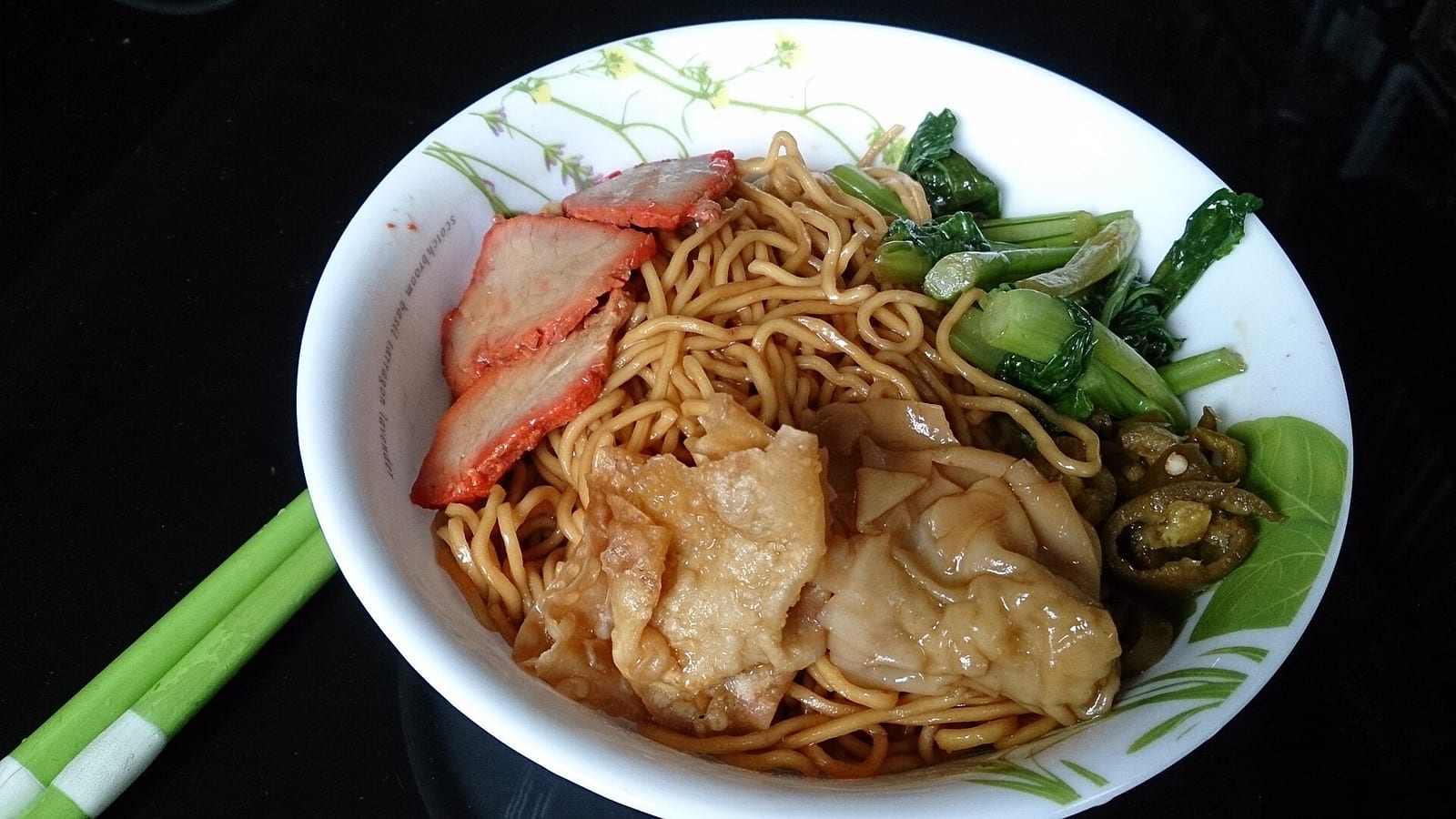
Springy egg noodles tossed dry in dark sauce and lard, crowned with char siu and pork-prawn wontons, a bowl of soup on the side — the Cantonese hawker plate Singapore made its own.