Hokkien Mee
福建面
Yellow noodles and thick bee hoon braised in a prawn-and-pork stock until they drink it dry — Singapore's wettest, deepest plate of fried noodles.
By The Singaporean Recipes Kitchen · World Cookbook Series · June 27, 2026
Old Airport Road & GeylangPostwar & Merdeka, 1945–1965
 02
02- Prep
- 40 min
- Cook
- 75 min
- Serves
- 4
- Level
- Advanced
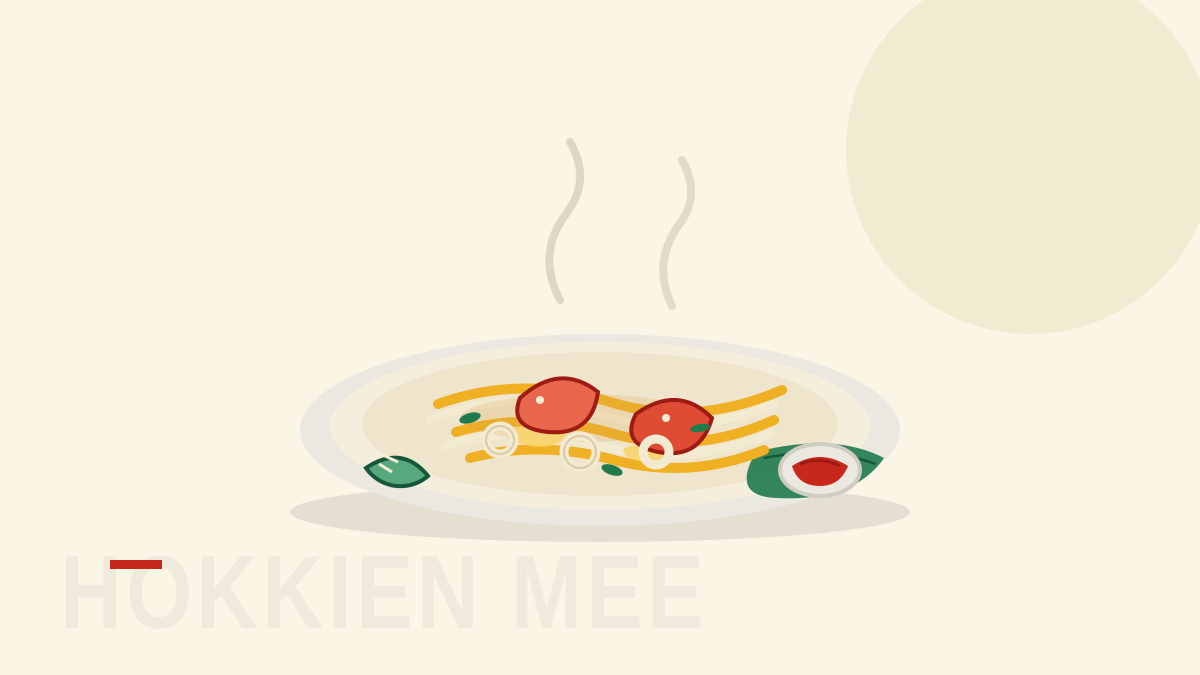
Every serious food city has a dish that looks like a mistake and eats like a thesis. Singapore's is hokkien mee: a pale, wet, faintly disheveled pile of yellow noodles and bee hoon that arrives looking underdressed next to the lacquered drama of char kway teow — until you taste it, and realize the color was never the point. The flavor is submerged, built into the noodles themselves through repeated drinks of a stock made from smashed prawn heads and pork belly. The story goes that the dish took its Singapore form after the war, around Rochor Road, where Hokkien noodle hands fried the day's unsold noodles in prawn stock for sailors and stevedores. Whether that account is history or well-polished folklore, the dish it describes is real, and the stalls of Geylang and Old Airport Road still serve it to people who will queue forty minutes and argue about wetness the whole time.
Because this is our second wok-fire dish, the same honesty applies, stated plainly: your stove cannot do what a hawker's burner does. The good news is that hokkien mee is the most forgiving place to learn that lesson, because the technique is braise-fry — stock added in stages, covered, absorbed — and absorption asks less of your flame than searing does. Where the heat gap shows is at the edges, in the faint catch and smoke the stall version carries. Close the gap the honest ways: a carbon-steel wok or cast-iron pan preheated until it smokes, portions no larger than this recipe's, the lid trick to concentrate steam, and, if you want the last five percent, a kitchen torch swept over the plated noodles. We name the torch openly every time we recommend it. It is a cheat. It is also the difference between describing wok hei and tasting a rumor of it.
What the home kitchen can match — and even beat, given patience — is the stock. A hawker makes theirs at volume; you can make yours with more prawn heads per litre than economics allows them. Press the shells like you're getting a confession out of them, keep the pork belly honest, and don't rush the noodles' three drinks. The plate that results is humble-looking, faintly orange at the edges, richer than it has any visual right to be — and entirely yours.
Hokkien mee isn't fried so much as braised in installments — the noodles drink the prawn stock three times, and the third drink is the dish.
Shiok (when it's exactly right) · A word from the kitchen
Ingredientsbahan-bahan
Serves
The stock
- 500 gmedium prawns, heads and shells on (about 1 lb)the heads are the recipe — buy headless prawns and you've bought half a dish
- 300 gpork belly, in one piece (about 10 oz)it flavors the stock first, then comes back sliced on the plate
- 1.5 Lwater (about 6 cups)
- 2 tbspneutral oil
- 10 grock sugara small lump; it rounds the shell bitterness without reading as sweet
The fry
- 300 gfresh yellow noodles (about 10 oz)rinse briefly in hot water to shed the alkaline coating, or the whole plate tastes of it
- 200 gthick bee hoon (rice vermicelli), soaked in warm water 20 minutes (about 7 oz)
- 150 gsquid, cleaned, scored, cut into rings (about 5 oz)
- 3eggs, lightly beaten
- 4garlic cloves, minced
- 100 gbean sprouts (a big handful)
- 30 gkoo chye (garlic chives), in 5 cm lengths
- 3 tbsplard or neutral oillard is the hawker default here too, but this dish survives the swap far better than char kway teow does
- 1 tbspfish sauce
- 1/2 tspground white pepper
At the table
- 4calamansi limes, halvednot optional — the acid cuts a rich plate that is designed to be cut
- 4 tbspsambal belacansee our foundation recipe; hokkien mee without sambal is a handshake without eye contact
Methodcara masak
Step 1: Build the stock like you mean it
Simmer the pork belly in the water, gently, 30 minutes; lift it out and slice thin once cool, keeping the liquid. Meanwhile twist the heads and peel the shells from the prawns; blanch the tail meat in that pork liquid for 90 seconds until just pink, then scoop it out. Now fry the heads and shells in 2 tablespoons of oil in your stockpot, pressing and smashing them with the spatula, five full minutes, until they're brick-red, brittle, and the oil is orange. That pressing is the flavor extraction — unsmashed heads are unread letters. Add the pork liquid and rock sugar, simmer 30 minutes, then strain hard, crushing the shells against the sieve. You want roughly 1 litre of stock that tastes almost too intense on its own; the noodles will dilute it.
Step 2: Eggs first, into hot lard
Heat the wok over high flame until it smokes, add the lard, and pour in the beaten eggs. Let them puff and brown at the edges for 15 seconds — you want ragged and slightly overdone, because the egg here is a flavor of its own, not a soft furnishing. Add the garlic in the last five seconds.
Step 3: Noodles in, first drink
Add both noodles and toss through the egg. Pour in 250 ml of stock — it should hiss and boil on contact — and spread the noodles flat. Cover with a lid or an inverted plate and leave for 90 seconds. This is the move that separates hokkien mee from every other fried noodle — it isn't fried so much as braised in installments, the noodles swelling with prawn stock while their undersides catch on the hot metal.
Step 4: Second and third drinks
Uncover, toss, taste a strand. Repeat with another 250 ml of stock, covered, 90 seconds; then again. Three drinks over eight to ten minutes, and the yellow noodles should turn from springy to supple and stained pale gold, with the bee hoon gone silky. Season with the fish sauce and white pepper. The finished texture is loose and slick — Singapore's version is wet, closer to a gravy than a glaze, and drying it out to look tidy is how you ruin it.
Step 5: Seafood back in, then the greens
Add the squid and cook two minutes in the wet noodles until the rings turn opaque and curl — no longer, or you're chewing rubber bands. Return the blanched prawns, then the sprouts and chives, and toss 30 seconds. Add a final splash of stock so the noodles sit just shy of soupy, and slide everything onto a platter with the sliced pork belly.
Step 6: Serve it the only correct way
Sambal belacan on the side of every portion, a calamansi half squeezed over the top at the table, not in the wok. The lime brightens; the sambal deepens; each person calibrates their own plate. If your version tastes rich but flat, it needed more lime, not more salt — and if you want the faint smoke of the stall version, a three-second torch pass over the plated noodles is the honest cheat, admitted here as policy.
Perkakas · The tools
Equipment
Carbon-steel wok
chaoHalf this site happens in a wok, and carbon steel is the only honest choice at home — it heats fast, takes a season, and gets you the closest to wok hei your burner allows.
Shop on Amazon →Tall stockpot (10 qt+)
Prawn broth, bak kut teh, laksa gravy — the deep pot keeps a lazy simmer lazy and your kitchen unsplattered.
Shop on Amazon →Spider strainer
Lifts blanched noodles out of the pot in one pass and fried shallots out of the oil in the next. One tool, half the hawker canon.
Shop on Amazon →Kitchen torch
The admitted cheat. A home burner cannot make stall fire, and a quick torch pass over char kway teow is the honest approximation — we say so in every wok essay.
Shop on Amazon →
Equipment links are Amazon affiliate links. As an Amazon Associate we earn from qualifying purchases, at no cost to you. Disclosure.
Rate this recipe
Questions from the kitchen
Is this the same hokkien mee they eat in Kuala Lumpur?
No, and ordering across the Causeway is a reliable comedy. KL's hokkien mee is thick noodles in black soy; Penang's is a spicy prawn soup; Singapore's is this pale, wet, prawn-stock braise. The story goes that ours took shape after the war around Rochor Road, where Hokkien sailors and noodle hands fried the day's leftover noodles in prawn stock — a story told often, verified never, and repeated here with exactly that confidence. All three cities are certain theirs is the real one. All three are right at home.
My noodles turned to mush before they absorbed the stock. What went wrong?
Almost always heat, or the lack of it. If the wok isn't hot enough to keep the stock at a hard boil, the noodles sit and soak instead of braising, and yellow noodles collapse fast once oversoaked. Add stock in stages, keep the flame at maximum, and stop at the third drink even if the plate looks wetter than you expected — it tightens in the two minutes between wok and table. Also check your bee hoon soak; 20 minutes in warm water, not hot, or it arrives half-dead.
Can I make this without spending an hour on stock?
You can shorten it honestly - fry the shells hard, then simmer just 15 minutes; the pressing matters more than the clock. What you cannot do is swap in cube stock or plain water and expect hokkien mee, because the noodles ARE the stock in this dish; there is no sauce to hide behind. If prawn heads are unavailable, dried shrimp simmered with the shells you do have will get you surprisingly far. A shortcut that keeps the shells is a shortcut; one that discards them is a different, sadder recipe.
Makan lagi · Cook next
Keep the burner on
 02
02Noodles & Laksa·37 min·Advanced
Char Kway Teow炒粿条
Flat rice noodles seared in lard with sweet dark soy, lap cheong, and cockles — and the honest truth about chasing stall fire on a home burner.
 02
02Noodles & Laksa·120 min·Intermediate
Prawn Noodle Soup虾面 · hae mee
A rust-red Hokkien broth built entirely from prawn shells and heads, fried till they roar, simmered deep — noodles, sweet prawns, and a spoon of chili over the top.
 02
02Noodles & Laksa·95 min·Intermediate
Katong Laksa叻沙 · laksa lemak
Coconut laksa the Katong way — a prawn-sweet gravy over rice noodles cut short for the spoon, the style Janggut hawked along East Coast Road in the 1950s.