Char Kway Teow
炒粿条
Flat rice noodles seared in lard with sweet dark soy, lap cheong, and cockles — and the honest truth about chasing stall fire on a home burner.
By The Singaporean Recipes Kitchen · World Cookbook Series · June 26, 2026
Old Airport Road & GeylangStreet hawkers & the kampong, 1900s–1942
 02
02- Prep
- 25 min
- Cook
- 12 min
- Serves
- 2
- Level
- Advanced
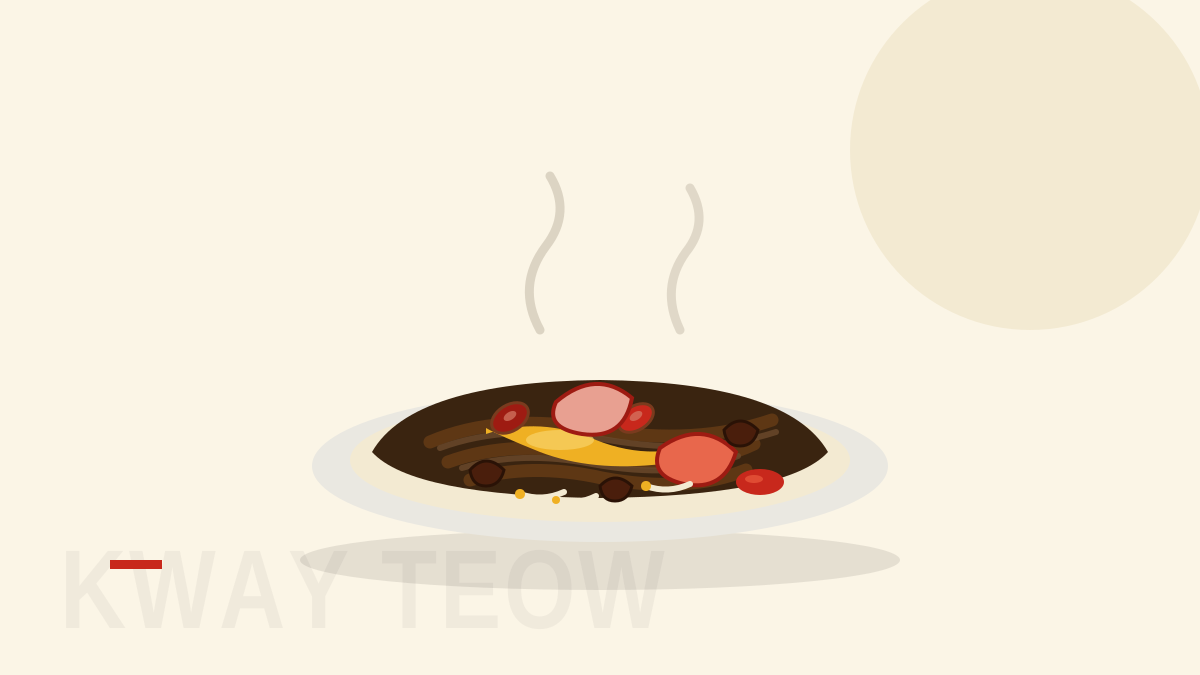
Char kway teow is the dish Singapore uses to argue about everything else — health, heritage, whether the old ways are worth their cholesterol. It began as fuel: flat rice noodles fried in lard by Teochew and Hokkien hawkers for laborers who needed maximum calories per cent, sweetened with dark soy because sugar was cheap energy too. The dish still carries that logic in its bones. It is not balanced. It is not light. It is noodles, pig fat, cured sausage, and blood cockles hit with fire until the edges char, and the plates that draw hour-long queues along Old Airport Road are the ones that refuse to apologize for any of it.
Now the honest part, because this site does not sell fantasies about your stove. The defining flavor of great char kway teow is wok hei — the "breath of the wok," that faint smokiness that happens when fat and soy vaporize against metal hot enough to scorch them on contact. A hawker's pressurized burner throws heat your domestic hob cannot legally approach. You cannot replicate stall fire at home. What you can do is close most of the distance: fry one portion at a time so the wok never loses its temper, use carbon steel or cast iron preheated until it visibly smokes, press the noodles flat and leave them alone so they actually sear, and — the cheat we admit to without shame — pass a kitchen torch over the finished plate for a few seconds. Purists will wince. Purists also aren't standing in your kitchen with a 9,000-BTU burner.
The lard question deserves the same candor. The classic plate is fried in lard, studded with lap cheong, sometimes finished with crisp lardons, and that combination is not decoration — it is the flavor spine. A no-pork version made with neutral oil is a genuinely good plate of fried noodles, and we give that path here without tricks. But it is a different dish wearing the same clothes, and anyone who tells you otherwise is selling something. Cook whichever version your table calls for; just know which one you're cooking.
The sear happens while you resist stirring. Contact is flavor, and patience at full flame is the whole technique.
Shiok (when it's exactly right) · A word from the kitchen
Ingredientsbahan-bahan
Serves
The plate
- 400 gfresh flat rice noodles (kway teow) (about 14 oz)room temperature and loosened by hand before they meet the wok — cold noodles clump and tear
- 100 gfresh yellow noodles (about 3.5 oz)the Singapore tell — a minority of mee in the majority of kway teow
- 2lap cheong (Chinese sausage), sliced thin on the biasthe sweet cured backbone; thin slices crisp at the edges, thick ones stay waxy
- 16blood cockles (see hum), shuckedfrom the wet market, or frozen shucked; they go in last and barely cook — that's the correct texture, not an oversight
- 100 gbean sprouts (a big handful)
- 40 gkoo chye (garlic chives), cut into 5 cm lengths
- 2eggs
- 2garlic cloves, minced
The fat
- 4 tbsplard, plus 2 tbsp crisp lard croutons if you've rendered your ownthe classic path — neutral oil works, and the honest cost is discussed in the essay
The sauce
- 2 tbspsweet dark soy sauce (or kecap manis)this is the color and the caramel; regular dark soy plus 2 tsp sugar approximates it
- 1 tbsplight soy sauce
- 1 tspfish sauce
- 1 tbspchili paste (sambal or garlic-chili)stir all four together in one bowl before you light the burner — there is no time to measure mid-fry
Methodcara masak
Step 1: Set up for two small fights, not one big one
Divide everything into two equal portions — noodles, sauce, egg, all of it. A home burner pushed to maximum can just barely sear one portion; two at once and the wok temperature collapses, the noodles steam in their own moisture, and you get soft, pale, sweet noodles that are technically char kway teow the way a photograph of a fire is technically warm. This split is the single biggest upgrade available to you.
Step 2: Heat the wok past your comfort zone
Carbon steel or cast iron, empty, over your strongest flame until it smokes visibly — a flick of water should vanish on contact with a crack, not a hiss. Only then add 2 tablespoons of lard. It should shimmer and haze almost immediately. If your pan never smokes, it never got hot enough, and no sauce can fake what didn't happen.
Step 3: Sausage, garlic, then noodles — and leave them alone
Lap cheong first, 30 seconds until the edges frill and the fat runs. Garlic in for five seconds. Then one portion of both noodles, spread across the metal and pressed flat with the back of the spatula — and now do nothing for a full 30 seconds. The sear happens while you resist stirring. Tossing early is the most common failure in this dish; contact is flavor.
Step 4: Sauce around the rim, then toss
Pour half the sauce mixture around the edge of the wok, not on the noodles — it hits hot metal first and caramelizes on the way down. Now toss hard for 30 seconds until every strand is glossed mahogany. The noodles should hiss continuously; if the sound dies, stop tossing and let them sit again.
Step 5: The egg crater
Push the noodles up one side. Add another half tablespoon of lard to the cleared metal, crack in one egg, and break the yolk. Let it set at the edges for ten seconds — you want ragged, browned lace, not a gentle scramble — then fold the noodles back over the egg and toss so it smears and clings rather than sitting in polite curds.
Step 6: Sprouts, chives, cockles — then off
Half the sprouts and chives in, ten seconds of tossing so they wilt but keep their snap. Kill the heat, add half the cockles, and fold for five seconds only — residual heat should just set their edges and no more. A fully cooked cockle is a rubber eraser; a barely warmed one is the briny, faintly metallic point of the whole plate. Slide onto a plate, scatter lard croutons if you have them, and repeat the entire fry for round two.
Step 7: The admitted cheat
If your plate tastes right but lacks that whisper of smoke, sweep a kitchen torch over the finished noodles for three to four seconds, moving constantly. This is not authentic technique and no hawker does it. It is an openly declared workaround for the fact that your stove makes a tenth of the heat theirs does — and it works better than pretending.
Perkakas · The tools
Equipment
Carbon-steel wok
chaoHalf this site happens in a wok, and carbon steel is the only honest choice at home — it heats fast, takes a season, and gets you the closest to wok hei your burner allows.
Shop on Amazon →Kitchen torch
The admitted cheat. A home burner cannot make stall fire, and a quick torch pass over char kway teow is the honest approximation — we say so in every wok essay.
Shop on Amazon →Chinese cleaver
chai daoChops through a whole chicken for chicken rice, smashes ginger with the flat, scoops the lot into the wok. One blade, most of the canon.
Shop on Amazon →
Equipment links are Amazon affiliate links. As an Amazon Associate we earn from qualifying purchases, at no cost to you. Disclosure.
Rate this recipe
Questions from the kitchen
Why do some plates have cockles and some don't?
Cockles were cheap protein from the mudflats when this was laborer food, and the old guard considers a plate without see hum incomplete — the story goes that hawkers judged each other by how late in the fry they dared add them. Rising cockle prices and squeamish customers have made them optional at many stalls. On this site they're in, and they go in last, barely warmed. If you truly can't source them, small prawns are the honest substitute, not an equivalent.
My noodles broke into short pieces and turned mushy. What happened?
Two culprits, usually together — cold noodles and an overcrowded wok. Refrigerated kway teow is brittle; bring it to room temperature and separate the strands gently by hand first. Then fry one portion at a time so the noodles sear instead of stewing. Stirring constantly finishes the job of destruction; press, wait, then toss.
Can I skip the lard?
You can, and here is the real trade. Lard carries the smoke, crisps the edges, and leaves the faint sweetness that reads as "hawker" to anyone who grew up on this. Neutral oil produces a clean, lighter plate that is a good stir-fried noodle and a less convincing char kway teow — same skeleton, less ghost. If you're skipping lard, also skip the lap cheong (it's pork too) and lean harder on the sear and the torch. We won't pretend the two versions are the same dish; we'll just say both are worth eating.
Makan lagi · Cook next
Keep the burner on
 02
02Noodles & Laksa·115 min·Advanced
Hokkien Mee福建面
Yellow noodles and thick bee hoon braised in a prawn-and-pork stock until they drink it dry — Singapore's wettest, deepest plate of fried noodles.
 02
02Noodles & Laksa·210 min·Advanced
Kway Chap粿汁
A Teochew braise platter — broad rice sheets in a peppery soup beside pork, egg, and offal lacquered in a dark five-spice master braise.
 02
02Noodles & Laksa·150 min·Intermediate
Lor Mee卤面
Hokkien noodles under a dark five-spice gravy thickened to a slow ooze — braised pork, egg ribbons, black vinegar and raw garlic stirred in at the table.