Dum Biryani
தம் பிரியாணி
Long-grain basmati and spiced chicken sealed in one pot and cooked on its own steam — the Indian dum tradition, carried to Singapore through Little India's kitchens.
By The Singaporean Recipes Kitchen · World Cookbook Series · July 14, 2026
Little India & TekkaRaffles & the colonial port, 1819–1867
No pork, no lard — as written.
 05
05- Prep
- 60 min
- Cook
- 60 min
- Serves
- 6
- Level
- Advanced
Biryani is old, and it did not begin here. It came to Singapore the way most of the island's Indian food came — with people, after 1819, when Raffles turned a Malay port into a trading hub and the migration from the subcontinent began in earnest: laborers, traders, soldiers, and cooks, carrying the food of Hyderabad and Tamil Nadu and the Malabar coast. Among that food was dum — the technique of layering parboiled rice over spiced meat, sealing the pot, and cooking it on nothing but its own trapped steam. The lanes around Tekka became one of the places that tradition kept breathing. But the dish is Indian to its bones, and the honest thing is to say so and cook it with respect rather than dress it up as an island invention.
The word dum is the whole idea. It means the low, patient steam-cooking that happens inside a sealed vessel, and it asks something of the cook that most weeknight food does not: faith. You build the pot — seared marinated chicken on the bottom, parboiled rice blanketed over it, fried onions and saffron milk and ghee between — and then you seal it and walk away, and you do not open it, because every time you lift the lid to check you let out the pressure that is doing the cooking. The dish that comes out separate-grained and layered, chicken falling off the bone, a faint toasted crust at the base, is the reward for leaving it alone.
Two things make or break it, and neither is the spice blend everyone frets over. The first is the onions, fried slow to a sweet even gold, because that birista is the backbone of the flavor and not a garnish. The second is the parboil — the rice pulled from the water at exactly the moment it still holds a hard white pinpoint at its core, so that the steam can finish it without turning it to mush. Get those two right and a beginner's biryani beats an expert's careless one. It is halal as written, chicken and yogurt and spice, no pork and no compromise — the way it was cooked by the communities who carried it here.
Dum is a promise you make to the pot and then have to keep — seal it, trust it, and do not, whatever the smell tells you, lift the lid.
Shiok (when it's exactly right) · A word from the kitchen
Ingredientsbahan-bahan
Serves
The rice
- 500 gaged basmati rice, rinsed until the water runs clear, then soaked 30 minutes (about 2 1/2 cups)aged basmati, not new-crop — old grains drink less water and stay separate, which is the entire ambition of biryani
- 4green cardamom pods, lightly cracked
- 4cloves
- 1cinnamon stick
- 2bay leaves
- 1star anise
- 2 tbspfine saltthe parboiling water should taste aggressively of the sea — this is the rice's only chance to be salted from within
The marinated chicken
- 1 kgbone-in chicken thighs and drumsticks, skin off, slashed to the bone (about 2 1/4 lb)bone-in and slashed — the bone flavors the pot and the slashes let the marinade reach the center
- 250 gplain full-fat yogurt, whisked smooth (about 1 cup)
- 3 tbspginger-garlic paste
- 1 tbspKashmiri chili powderKashmiri for deep red color without punishing heat; swap in regular chili powder and halve it
- 1 tspground turmeric
- 2 tspgaram masala
- 1 tspfine salt
- 1 handfulmint leaves, torn
- 1 handfulcoriander leaves, chopped
- 2 tbsplime juice
The layering and dum
- 4large onions, sliced paper-thinthese fry down to birista — the sweet fried-onion tangle that is biryani's backbone, not a garnish
- 200 mlneutral oil, for frying the onions (about 3/4 cup plus 1 tbsp)
- 1 pinchsaffron threads, steeped in 4 tbsp warm milk
- 3 tbspghee
- 2 tbsprosewater or kewra wateroptional and easy to overdo — a scant tablespoon perfumes; three drowns the dish in soap
Methodcara masak
Step 1: Fry the onions to birista, slowly
Heat the oil in a wide pan over medium and fry the sliced onions, stirring often, for 15 to 20 unhurried minutes until they collapse and turn an even deep gold — not brown, not black. Pull them the moment they hit gold; they carry cooking on their own heat and one shade too far turns them bitter. Drain on paper, where they crisp as they cool. Half go into the marinade, half crown the finished pot. This is the longest, most thankless step and the one that most separates a good biryani from a flat one.
Step 2: Marinate the chicken
Whisk the yogurt, ginger-garlic paste, chili powder, turmeric, garam masala, salt, mint, coriander, and lime juice together, crumble in half the fried onions, and turn the slashed chicken through it until every piece is coated and the marinade has worked into the cuts. Cover and rest it at least an hour, or overnight in the fridge — the yogurt's acid tenderizes the meat and carries spice past the surface. Rushed marination is why home biryani so often tastes seasoned only on the outside.
Step 3: Parboil the rice to exactly seventy percent
Bring a large pot of water to a hard boil with the cardamom, cloves, cinnamon, bay, star anise, and the 2 tablespoons salt. Drain the soaked rice and tip it in. Boil 4 to 5 minutes, then start testing — a grain should bend and mash between your fingers but keep a hard white pinpoint at its core. That undercooked center is deliberate; the rice finishes in steam and would blow out to mush if boiled through now. Drain it the instant it's there. This 30-second window is the knife-edge the whole dish balances on.
Step 4: Sear the chicken and layer the pot
In a heavy pot with a tight lid, warm 2 tablespoons of the ghee and lay in the marinated chicken with all its marinade. Cook over medium heat 6 to 8 minutes, until the marinade tightens from loose and pale to thick and glossy and the chicken is seared on its cut faces — it needn't cook through here. Spread the parboiled rice over the chicken in an even blanket. Scatter the remaining fried onions, drizzle over the saffron milk in streaks so the finished rice is mottled saffron-and-white rather than uniformly yellow, dot with the last ghee, and add the rosewater if using.
Step 5: Seal it and cook on dum
Cover the pot with a sheet of foil pressed down onto the rim, then clamp the lid over it — or seal the rim with a rope of stiff flour dough, the traditional way, which traps every wisp of steam. Set it over the lowest possible heat, on a heat diffuser or tava if you have one, and cook undisturbed 25 minutes. Dum means the dish cooks in its own trapped steam; lift the lid to peek and you vent the pressure that is doing the work, so trust it. When the time is up, kill the heat and let it stand, still sealed, 10 more minutes.
Step 6: Open it and fold, don't stir
Break the seal and lift the lid away from you — the steam is scalding and smells of everything at once. The rice should stand in separate grains, the chicken pull from the bone, the bottom carrying a faint toasted crust the Persians would call tahdig and Little India just calls the best part. Fold it gently from the bottom up with a flat spoon to bring the chicken and the saffron rice together without mashing the grains. Serve with a cool raita and nothing else that competes.
Perkakas · The tools
Equipment
Tall stockpot (10 qt+)
Prawn broth, bak kut teh, laksa gravy — the deep pot keeps a lazy simmer lazy and your kitchen unsplattered.
Shop on Amazon →Claypot
sha baoFor claypot rice the pot IS the recipe — clay holds gentle heat, builds the crust, and comes to the table still ticking.
Shop on Amazon →Spider strainer
Lifts blanched noodles out of the pot in one pass and fried shallots out of the oil in the next. One tool, half the hawker canon.
Shop on Amazon →Granite mortar & pestle
lesung batuThe rempah tool. Pounding bruises and bleeds the aromatics in a way blades never do — the lesung is the sound of a Singapore kitchen starting dinner.
Shop on Amazon →
Equipment links are Amazon affiliate links. As an Amazon Associate we earn from qualifying purchases, at no cost to you. Disclosure.
Rate this recipe
Questions from the kitchen
Where does biryani in Singapore come from?
It came with people. Indian migration to the island began in earnest after 1819, when Raffles established the port and labor, traders, and soldiers arrived from across the subcontinent — and the dum tradition of layered, sealed, steam-cooked rice came with them, from the great biryani kitchens of Hyderabad and the south. Little India and the lanes around Tekka became the ground where that tradition kept living, but the dish is Indian to its foundations and this recipe credits it as such. We point to the neighborhood, not to any one kitchen's secret, because the secret was never one kitchen's to begin with.
My rice came out mushy at the bottom and hard on top. What went wrong?
Two failures that compound. First, the parboil went too far — if the rice was already soft when it went into the pot, the steam finished it into paste. Second, the heat under the sealed pot was too high and uneven, scorching the base while the top starved for steam. Parboil to a firm white core, use the lowest flame with a diffuser under the pot, and resist every urge to lift the lid. Biryani punishes impatience more than almost any dish on this site.
Can I skip frying the onions and buy them?
You can buy fried onions, and packaged birista is a real timesaver Little India cooks themselves keep on the shelf. But taste them first — many packaged versions are fried too dark and taste faintly of the fryer, and the sweetness you want comes only from onions pulled at exactly gold. If you buy them, buy pale-gold ones and refresh them in a dry pan for a minute. The one thing you cannot outsource is the parboil and the dum; those are the dish, and there is no packet for them.
Makan lagi · Cook next
Keep the burner on
 05
05The Indian-Muslim Table·85 min·Intermediate
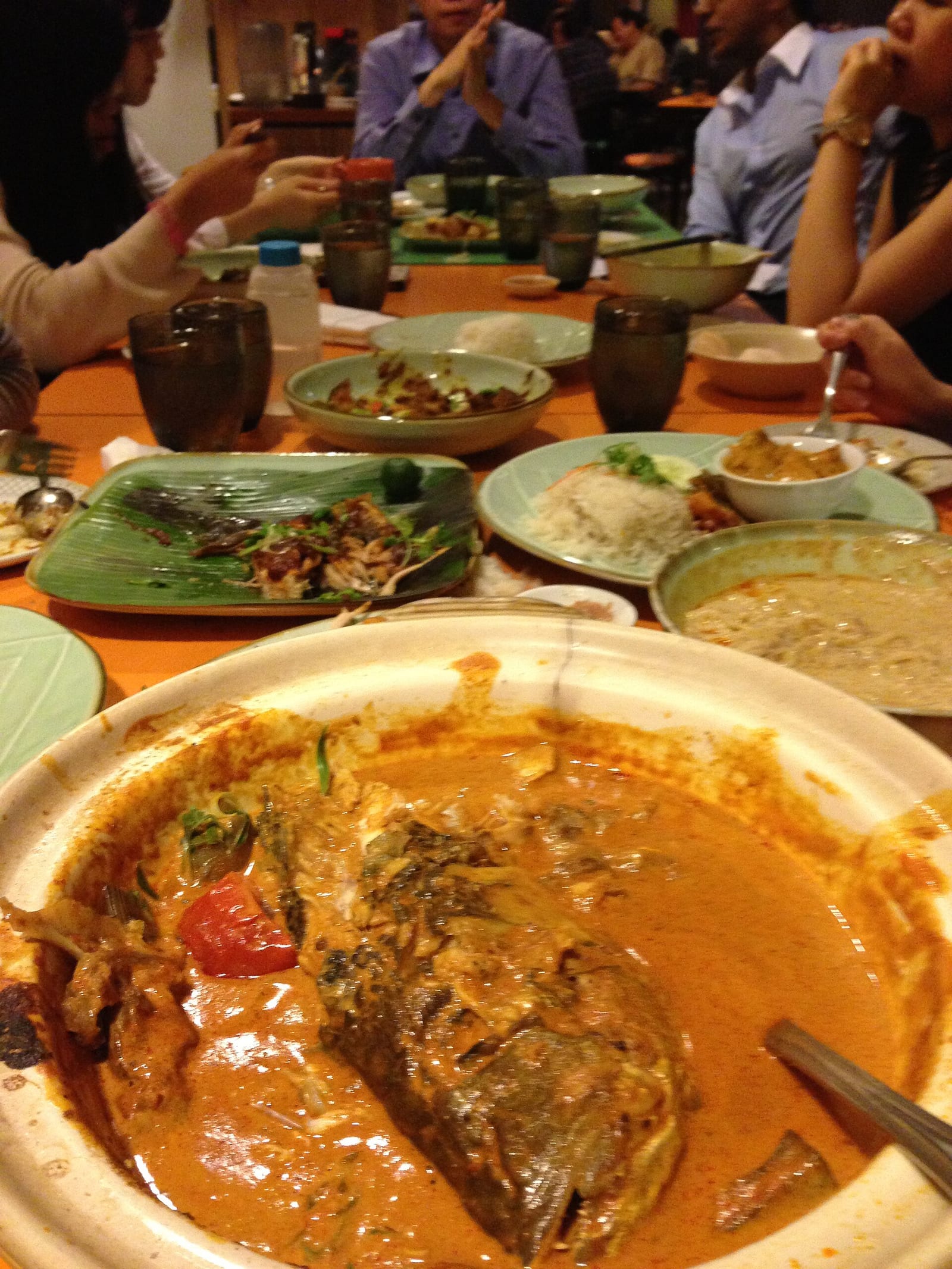
Fish Head Curryமீன் தலை கறி
A whole snapper head simmered in a tamarind-sour, coconut-rich South Indian gravy with okra and brinjal — the dish Singapore invented in 1949 and no city else can claim.
 05
05The Indian-Muslim Table·300 min·Advanced
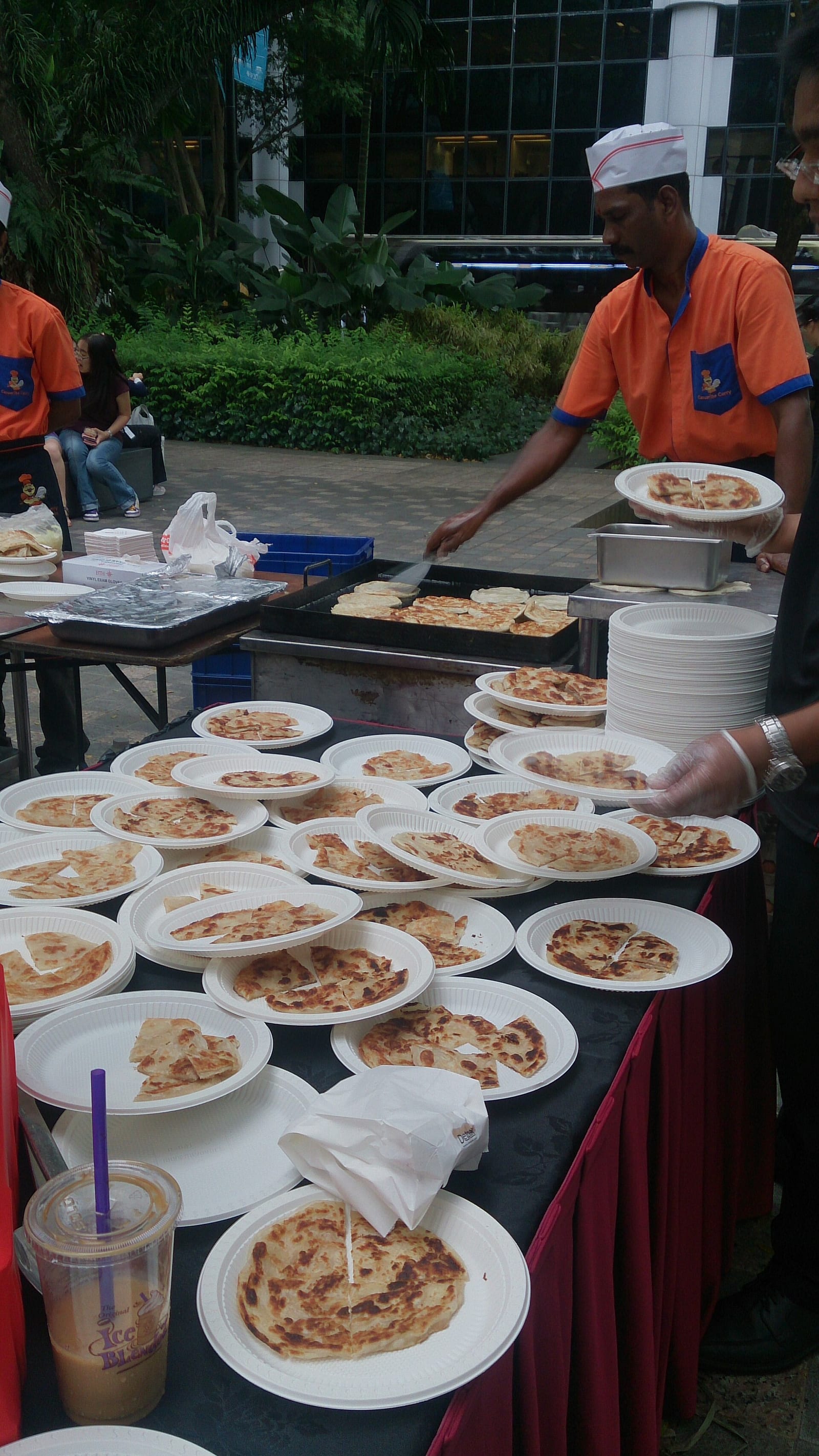
Roti Prataரொட்டி பிராட்டா
The Indian-Muslim griddle bread Singapore eats at 2 a.m. — ghee-rested dough stretched to tissue, folded, and fried until it shatters at the edges.
 05
05The Indian-Muslim Table·205 min·Advanced
Murtabakمرطبق · murtabak
Prata dough stretched glass-thin, folded over curried minced mutton and egg, griddled in ghee — the North Bridge Road classic rebuilt at home, fold by fold.