Singapore Curry Chicken
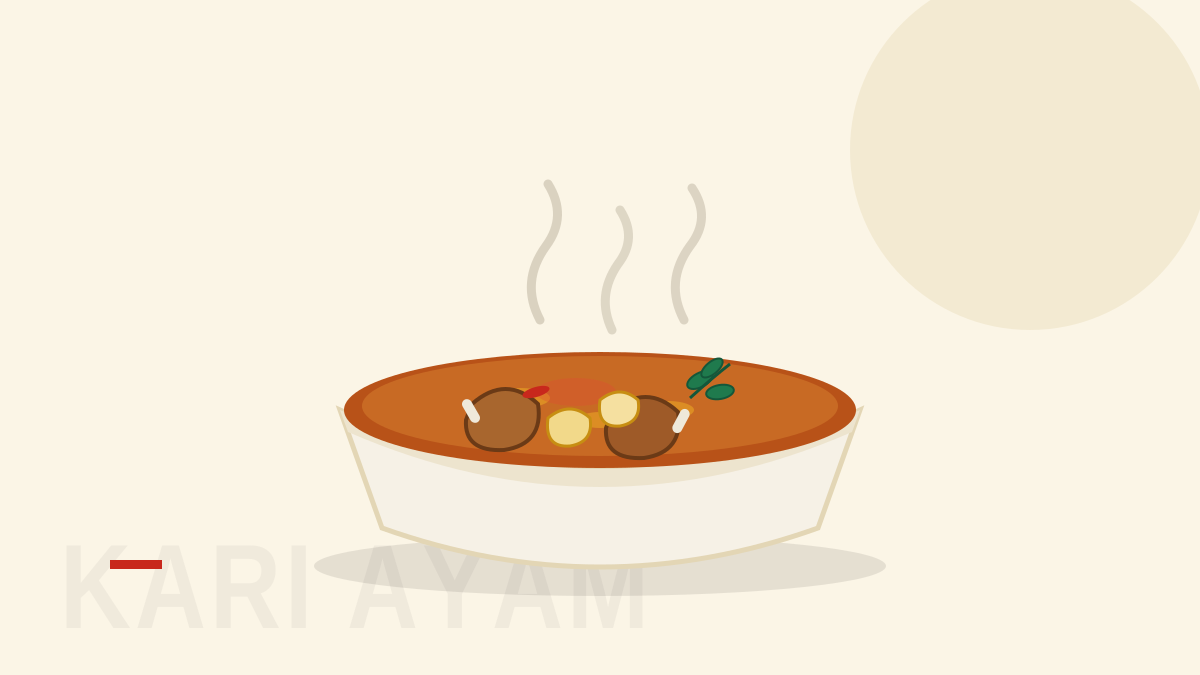
咖喱鸡 · kari ayam
The HDB kitchen's Sunday pot — chicken and potatoes in a coconut curry where every community's spice box met, mopped up with baguette or rice, both correct.
By The Singaporean Recipes Kitchen · World Cookbook Series · July 3, 2026
The HeartlandsIndependence & the HDB kitchen, 1965–1971
 06
06- Prep
- 30 min
- Cook
- 50 min
- Serves
- 5
- Level
- Intermediate
If you want to understand how Singapore actually eats, skip the famous stalls for a moment and look into a Housing Board kitchen on a Sunday. In one of those compact flats, in a block where the smell of one family's lunch drifts through the corridor into another's, someone is making curry chicken. It is not anyone's heritage dish and it is everyone's — a pot that took the coconut base of a Malay kari, the tinned curry powder an Indian merchant blended for local kitchens, and the star anise a Chinese cook reached for by habit, and simmered them together until the seams disappeared. The HDB kitchen did not invent multiculturalism, but it cooked it into a gravy.
That is the honest story of this curry, and it is a better story than any single-origin myth. There is no ancient lineage to protect and no authentic version to gatekeep, because the whole dish is a record of communities cooking within earshot of one another. The pre-blended curry powder that a purist might sniff at is not a shortcut grafted onto the recipe — it is the recipe, the exact product that made this style of home curry possible in the first place. Toast your own whole spices if you like a project, but know you are wandering away from the thing people grew up on.
The cooking rewards attention at two moments and forgives you the rest of the time. First is the fry — the paste and the bloomed curry powder cooked until the oil splits and the raw-spice smell is gone, because that is where the flavour is built and nothing downstream can fix a lazy fry. Second is the coconut, which goes in late and must never boil hard, or the emulsion breaks into oil and grit. Between those two, the pot mostly looks after itself while the potatoes soften and fray and quietly thicken the whole thing.
Then comes the only question the dish leaves open, and it is a friendly one — bread or rice. Tear a baguette, the one the colonial bakeries left behind, and drag it through the gravy; or spoon the curry over rice and let the grains do the soaking. Both are right. On an island built out of everyone's leftovers and everyone's genius, insisting on only one way to eat the curry would rather miss the point of the curry.
No one community owns this pot, and every one seasoned it. That is not a compromise. That is the whole country in a bowl.
Shiok (when it's exactly right) · A word from the kitchen
Ingredientsbahan-bahan
Serves
The spice paste
- 100 gshallots, peeled (about 8)
- 6garlic cloves
- 30 gginger, sliced (a fat thumb)
- 2lemongrass stalks, tender bottom third, sliced fine
- 6dried red chilies, soaked in hot water 15 minutes
- 3 tbspSingapore-style meat curry powderthe pre-blended tin — this is the one shortcut the dish was built on, and the reason it tastes like the island and not like anywhere in particular
The curry
- 1 kgchicken, bone-in, cut into large pieces (about 2.2 lb)bone-in — the bones give the gravy the body that boneless breast never will
- 500 gwaxy potatoes, peeled and halved (about 1.1 lb)they thicken the gravy as they soften and soak up the spice — half the reason the pot exists
- 4 tbspneutral oil
- 3whole star anise
- 1cinnamon stick (5 cm)
- 400 mlcoconut milk (1 can)
- 500 mlwater or light stock (2 cups)
- 1 tbspsugar
- 1.5 tspsalt, to taste
To serve
- 1baguette, torn, or steamed riceboth are right — the French loaf came in with the colonial bakeries and never left the curry table
Methodcara masak
Step 1: Make the paste and bloom the powder
Blend or pound the shallots, garlic, ginger, lemongrass, and soaked chilies to a paste with a splash of the soaking water. Separately, stir the curry powder into a few tablespoons of water to make a loose slurry — blooming it wet like this stops it scorching and lets the spices swell before they hit the pan.
Step 2: Fry the paste until the oil splits
Heat the oil in a heavy pot over medium, add the star anise and cinnamon for thirty seconds until fragrant, then the shallot paste. Fry it 8 to 10 minutes, stirring, until it darkens and the oil starts to bead at the edges. Add the curry-powder slurry and fry another 3 to 4 minutes until the raw, dusty smell is gone and the whole mixture smells cooked and deep. This frying is where the curry earns its flavour — stop early and no amount of simmering rescues that raw-spice edge.
Step 3: Sear the chicken in the paste
Turn up the heat, add the chicken pieces, and toss them in the paste until they are coated and the surface has turned from pink to pale all over, about 5 minutes. You are not browning them so much as sealing them in spice, so every piece carries the paste into the gravy.
Step 4: Add potatoes, coconut, and simmer
Pour in the water, add the potatoes, and bring to a simmer. Cook uncovered 20 minutes, then add the coconut milk, sugar, and salt, and simmer gently another 15 to 20 minutes. Keep it below a hard boil once the coconut is in, or the milk can split into oil and grain. It is ready when the potatoes are tender to a knife tip and starting to break at the edges — that fraying is what thickens the gravy — and the chicken pulls easily from the bone.
Step 5: Rest, then serve with something to mop
Let the curry sit off the heat 10 minutes before serving; like most curries it deepens as it settles, and it is frankly better the next day. Serve it in a wide bowl with torn baguette to dunk or rice to spoon it over. The bread is not an affectation — the colonial bakeries left the French loaf on this island, and dragging it through curry gravy is as Singaporean as the curry itself.
Perkakas · The tools
Equipment
Granite mortar & pestle
lesung batuThe rempah tool. Pounding bruises and bleeds the aromatics in a way blades never do — the lesung is the sound of a Singapore kitchen starting dinner.
Shop on Amazon →Carbon-steel wok
chaoHalf this site happens in a wok, and carbon steel is the only honest choice at home — it heats fast, takes a season, and gets you the closest to wok hei your burner allows.
Shop on Amazon →Tall stockpot (10 qt+)
Prawn broth, bak kut teh, laksa gravy — the deep pot keeps a lazy simmer lazy and your kitchen unsplattered.
Shop on Amazon →
Equipment links are Amazon affiliate links. As an Amazon Associate we earn from qualifying purchases, at no cost to you. Disclosure.
Rate this recipe
Questions from the kitchen
Whose curry is this — Malay, Indian, or Chinese?
All of them, which is exactly the point. Curry chicken as Singapore cooks it is a convergence dish — it took the coconut-and-lemongrass base of a Malay kari, the tinned meat-curry powder that Indian spice merchants blended for local tastes, and the star anise and cooking habits of Chinese kitchens, and it stirred them into one pot in the shared corridors of the HDB flats. No single community owns it and every one contributed. It is less a recipe with a homeland than a snapshot of an island learning to cook next door to itself.
My gravy split into oil and grit after the coconut went in. What happened?
The pot was boiling too hard. Coconut milk is an emulsion, and a rolling boil breaks it — once the coconut is in, keep the curry at a gentle simmer with only the occasional bubble. If it has already split, take it off the heat and stir briskly, or add a small splash of cold coconut milk to bring it back. A little oil pooling on top is normal and even prized; a curdled, grainy gravy is the boil talking.
Is the curry powder cheating? Shouldn't I toast whole spices?
It is not cheating — it is the dish. Singapore curry chicken grew up around the pre-blended tins that Indian merchants made for exactly this kind of home cooking, and those blends are as much a part of the flavour as the coconut. You can toast and grind your own coriander, cumin, turmeric, and fennel if you want a project, and it will be lovely, but it will also taste a step removed from the curry people actually grew up eating. The tin is the honest origin, not a compromise.
Makan lagi · Cook next
Keep the burner on
 06
06Zi Char & the Wok·20 min·Beginner
Sambal Kangkongsambal kangkung
Water spinach seared in belacan sambal over the hottest wok you own — thirty seconds of fire, stems still snapping, the zi char vegetable that earns its place.
 06
06Zi Char & the Wok·40 min·Intermediate
Har Cheong Gai虾酱鸡
Chicken wings marinated overnight in fermented prawn paste, then twice-fried until the crust shatters and your whole kitchen smells like the sea.
 06
06Zi Char & the Wok·35 min·Intermediate
Cereal Prawns麦片虾
Crisp-fried prawns tossed in a sandstorm of buttery, curry-leaf cereal — a 1990s zi char invention no one asked permission to make, and everyone is glad of it.