Wonton Mee
云吞面
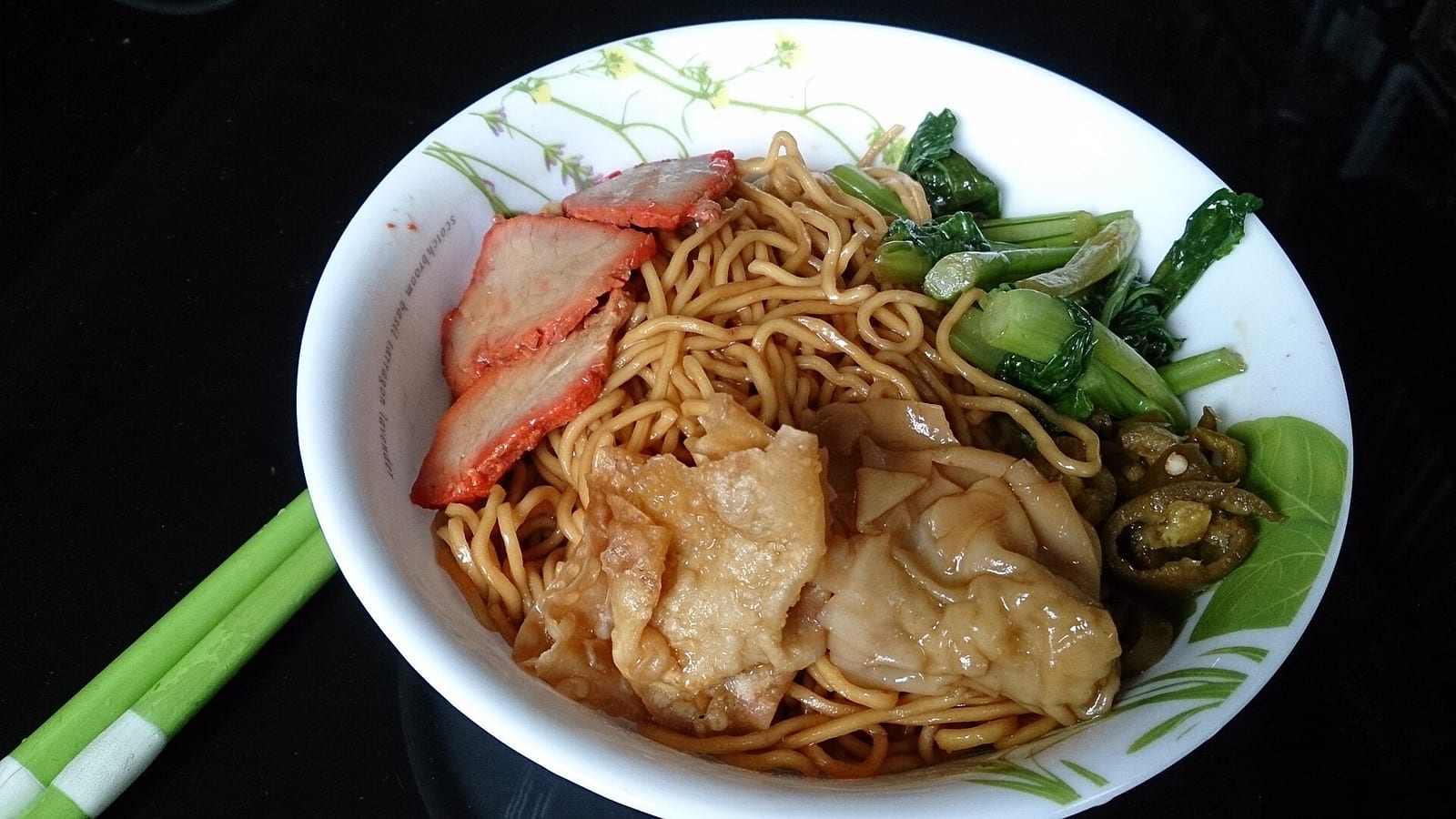
Springy egg noodles tossed dry in dark sauce and lard, crowned with char siu and pork-prawn wontons, a bowl of soup on the side — the Cantonese hawker plate Singapore made its own.
By The Singaporean Recipes Kitchen · World Cookbook Series · July 7, 2026
Chinatown & MaxwellStreet hawkers & the kampong, 1900s–1942

- Prep
- 40 min
- Cook
- 20 min
- Serves
- 4
- Level
- Intermediate
Wonton mee is a Cantonese dish that emigrated, and like a lot of things that got off the boat in Singapore, it changed its mind about what it wanted to be. In Hong Kong it is a bowl of soup — wontons and thin noodles floating in a clean prawn-shell broth, dignified and restrained. Somewhere in the island's hawker decades it got tossed dry instead, slicked with dark soy and lard, given a spoon of chili and a heap of char siu, with the soup exiled to a small bowl on the side. Purists across the water consider this a minor heresy. The lunch queues on this side consider it an improvement, and lunch queues rarely lie.
Let's be plain about what's in the bowl, because it matters to some readers: this dish is pork, top to bottom. The char siu is roast pork, the wontons are pork and prawn, the gloss on the noodles is traditionally lard. There is no honest halal version of wonton mee — you could build something adjacent with chicken and oil, but it would be a different dish wearing this one's name, and this site would rather tell you the truth than sell you a costume. If you keep halal, the Malay and Indian-Muslim noodle chapters have bowls built for you from the ground up.
The technique that separates a good bowl from a sad one isn't the char siu or even the wontons — it's the noodles, and specifically the cold shock. Fresh egg noodles cook in seconds, and the hawker move is to plunge them into cold water and back into hot, which rinses the starch and snaps the strands taut into that springy QQ bite Singaporeans will drive across the island for. Get that right, toss them hot and fast in the waiting sauce so nothing sits and clumps, and the rest is just assembly. It is a two-dollar plate that punishes carelessness and rewards a cook who moves quickly, which is to say, it is a hawker dish to its bones.
Dry noodles, wet soup, and a spoon of chili between them — the whole argument of a Singapore lunch, settled in one order.
Shiok (when it's exactly right) · A word from the kitchen
Ingredientsbahan-bahan
Serves
The wontons (makes about 24)
- 200 gminced pork, not too lean (about 7 oz)this dish contains pork and there is no honest halal version of it — the char siu and the wonton fat are the whole point
- 100 graw prawns, peeled and roughly chopped (about 3.5 oz)leave some pieces coarse — you want to bite prawn, not paste
- 1 tsplight soy sauce
- 1 tspsesame oil
- 1/2 tspwhite pepper
- 1 tspcornstarch
- 24thin wonton wrappersthe fine yellow Hong Kong style, not the thick square dumpling kind
The dressing (per bowl, multiply up)
- 2 tspdark soy saucefor the color and that faint caramel edge Singapore bowls are known for
- 1 tsplight soy sauce
- 1 tspoyster sauce
- 1 tbsplard, or the fat rendered from the char siu endslard is the traditional gloss; a neutral oil works but the bowl loses its sheen and its perfume
- 1 tspfried shallot oil
- 1 tspsambal or pickled green chili, to taste
The noodles and greens
- 400 gfresh thin egg noodles (mee kia) (about 14 oz)
- 1 bunchchoy sum or kai lan, cut into lengths
- 200 gchar siu, sliced (bought, or from the site recipe) (about 7 oz)char siu is roast pork — plainly so; slice it thin against the grain
The soup
- 1.2 Lpork or chicken stock, lightly seasoned (about 5 cups)
- 1spring onion, sliced, to finish
Methodcara masak
Step 1: Mix and wrap the wontons
Combine the pork, prawns, soy, sesame oil, white pepper, and cornstarch and stir in one direction for a full minute until the mix turns sticky and tacky — that stickiness is what stops the filling falling apart in the water. Place a teaspoon on each wrapper, wet the edges, and gather into a loose pouch; don't overwork them into tight parcels, a little frill catches the broth. A dry filling means a wonton that boils apart, so if it looks crumbly, a splash more soy and another minute of stirring fixes it.
Step 2: Prep the dressing in the bowls
This is a dry-tossed noodle dish (kon lo mee), so the sauce waits in the serving bowl, not the pan. Spoon the dark soy, light soy, oyster sauce, lard, shallot oil, and chili into the bottom of each bowl. The hot noodles will melt the lard and carry the sauce up through every strand when you toss — get this ready before the noodles hit the water, because the whole assembly happens in under a minute.
Step 3: Blanch the greens and poach the wontons
Bring the stock to a gentle simmer in one pot and a large pot of water to a boil in another. Blanch the greens in the boiling water 30 seconds until just vivid and lift them out. Drop the wontons into the simmering stock and cook 3 to 4 minutes — they are done when they float and the wrappers turn translucent enough to show the pink filling through. Boiling them hard tears the skins, so keep it to a simmer.
Step 4: Cook the noodles springy, then shock them
Loosen the egg noodles and cook in the boiling water just 30 to 45 seconds — they should stay springy with a real bite, never soft. The hawker move that matters most: lift them out and plunge them into cold water for a few seconds, then straight back into the hot water for two seconds to reheat. That cold shock sets the springy QQ texture the whole dish lives or dies on; skip it and you get a claggy, sticky lump.
Step 5: Toss and plate
Drop the drained noodles into the waiting bowl of dressing and toss hard with chopsticks for a good ten seconds until every strand is coated and glossy and no puddle of sauce sits at the bottom. Top with the char siu, the greens, and a few wontons. Ladle the rest of the wontons into a small bowl of the hot stock with the spring onion, and serve the two side by side — dry noodles, wet soup, the way the stalls do it.
Perkakas · The tools
Equipment
Carbon-steel wok
chaoHalf this site happens in a wok, and carbon steel is the only honest choice at home — it heats fast, takes a season, and gets you the closest to wok hei your burner allows.
Shop on Amazon →Tall stockpot (10 qt+)
Prawn broth, bak kut teh, laksa gravy — the deep pot keeps a lazy simmer lazy and your kitchen unsplattered.
Shop on Amazon →Spider strainer
Lifts blanched noodles out of the pot in one pass and fried shallots out of the oil in the next. One tool, half the hawker canon.
Shop on Amazon →
Equipment links are Amazon affiliate links. As an Amazon Associate we earn from qualifying purchases, at no cost to you. Disclosure.
Rate this recipe
Questions from the kitchen
Why is Singapore wonton mee served dry when Hong Kong serves it in soup?
Because the island took a Cantonese soup dish and, somewhere in the hawker decades, decided the noodles were better off tossed dry in dark sauce with the soup demoted to a side bowl. Hong Kong purists will tell you the wet bowl is the real one, and they have history on their side; Singapore will tell you the dry bowl with a sweet-dark edge and a spoon of chili is better, and it has the lunch queues on its side. Both are correct, and the dark-soy, slightly-sweet dressing is the tell that you're eating the Singapore version.
My noodles turned into a sticky clump. What went wrong?
You skipped the cold shock, or overcooked them. Fresh egg noodles need barely 30 to 45 seconds, and the cold-water plunge between two hot dips is not optional theater — it rinses off surface starch and firms the strands so they stay separate and springy. Toss them the instant they hit the sauce, too; noodles left sitting will glue themselves together no matter how well you cooked them.
Can I use dried noodles and shop-bought char siu?
Shop-bought char siu is completely honest — most hawkers buy their roast pork from a specialist rather than roasting it themselves, so you're in good company. Dried wonton noodles are a bigger compromise: they'll never hit the fresh springy bite, but if you cook them a touch under and shock them well, they'll carry the sauce fine. What you should not skip is folding your own wontons — the shop-frozen ones are mostly gluey wrapper and a sad nub of filling.
Makan lagi · Cook next
Keep the burner on
 02
02Noodles & Laksa·95 min·Intermediate
Katong Laksa叻沙 · laksa lemak
Coconut laksa the Katong way — a prawn-sweet gravy over rice noodles cut short for the spoon, the style Janggut hawked along East Coast Road in the 1950s.
 02
02Noodles & Laksa·150 min·Intermediate
Lor Mee卤面
Hokkien noodles under a dark five-spice gravy thickened to a slow ooze — braised pork, egg ribbons, black vinegar and raw garlic stirred in at the table.
 02
02Noodles & Laksa·120 min·Intermediate
Prawn Noodle Soup虾面 · hae mee
A rust-red Hokkien broth built entirely from prawn shells and heads, fried till they roar, simmered deep — noodles, sweet prawns, and a spoon of chili over the top.