Kway Chap
粿汁
A Teochew braise platter — broad rice sheets in a peppery soup beside pork, egg, and offal lacquered in a dark five-spice master braise.
By The Singaporean Recipes Kitchen · World Cookbook Series · July 26, 2026
Old Airport Road & GeylangStreet hawkers & the kampong, 1900s–1942
 02
02- Prep
- 60 min
- Cook
- 150 min
- Serves
- 6
- Level
- Advanced
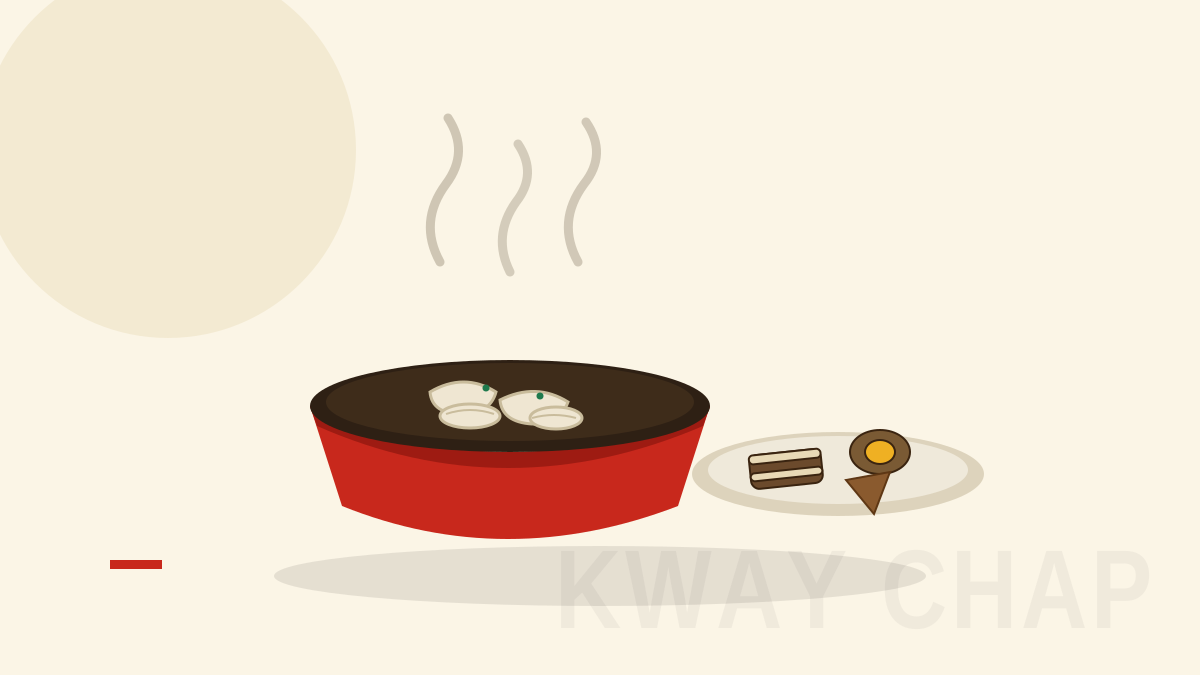
Kway chap arrives in two vessels, and understanding why is understanding the dish. In one bowl, broad sheets of rice noodle sit in a shallow pool of dark, peppery braise — soft, slippery, almost plain. Beside it, on a separate platter, is the reason you came: pork belly, hard-boiled eggs, beancurd, and offal, all lacquered mahogany in a five-spice master braise and cut to order. You eat back and forth between them, the mild rice sheets and the deeply braised platter, and the contrast is the whole architecture. This is Teochew food, patient and unshowy, and in the supper stretches of Geylang and Old Airport Road it is an institution.
At the centre of it is the lor — the master braise — and the offal it transforms. Let us be plain about the offal, because kway chap is plain about it: pig intestine, stomach, sometimes skin and blood, braised until they surrender. This is not a dare or a test of a diner's nerve. Offal is the point, valued for its texture and for the way it drinks up a good braise more completely than any lean cut can. The only thing it asks in return is honest cleaning — scrubbed with flour and salt, deodorised with vinegar, blanched before it braises. Do that work and the intestine becomes the best thing on the platter; skip it and it poisons the whole pot. There is no middle ground and no shortcut, which is exactly why the dish sits at the advanced end.
The lor itself is the closest thing this cuisine has to an heirloom you can taste. A Teochew braise is not made fresh each time so much as kept alive — topped up, re-spiced, carried forward, some stall pots running for years or decades, each braise deepening the next. Galangal, not merely ginger, is the Teochew tell in it; dark soy and rock sugar give it its tea-dark colour and caramel edge. Your pot starts today, and it will never be better than it is a year from now, if you keep feeding it. That is the quiet lesson buried in this dish. You do not finish a master braise. You inherit it, you tend it, and you hand it on.
A Teochew master braise is meant to outlive the cook. You do not finish the pot; you feed it, and pass it on.
Shiok (when it's exactly right) · A word from the kitchen
Ingredientsbahan-bahan
Serves
The master braise (lor)
- 2 Lwater or light pork stock (about 8 cups)
- 4 tbspdark soy saucedark soy carries the mahogany colour and the caramel edge; the braise should end up the colour of strong tea
- 3 tbsplight soy sauce
- 40 grock sugar (about 1 1/2 oz)
- 3whole star anise
- 1cinnamon stick
- 1 tbspfive-spice powder
- 4garlic cloves, smashed
- 20 ggalangal, sliced (a thumb)galangal, not just ginger, is the Teochew tell — it is what separates this braise from a generic lor
- 2pandan leaves, knotted, optional
- 1 tspwhite peppercorns, cracked
The proteins and offal
- 500 gpork belly, in one piece (about 1 lb)
- 300 gpig intestine (large), cleaned (about 10 oz)the offal is the heart of kway chap, not a dare — cleaning it well is the real work; do it properly and it rewards you
- 200 gpork stomach or extra belly, optional (about 7 oz)
- 6eggs, hard-boiled and peeled
- 6tau pok (fried beancurd puffs)
- 2tau kwa (firm beancurd), each cut in half
To clean the intestine
- 3 tbspflour
- 3 tbspcoarse salt
- 3 tbspvinegarflour and salt scrub away the slick, vinegar deodorises, and a blanch finishes the job — skip this and the whole pot smells wrong
The kway (rice sheets)
- 400 gfresh broad rice sheets (kway), or wide flat rice noodles (about 14 oz)fresh flat rice sheets, cut or torn into rough squares; if you can only find dried, soak and cut them broad
- to servefried shallots and chopped coriander
- to servechili-garlic sauce or sliced chili in dark soy
Methodcara masak
Step 1: Clean the offal like you mean it
This is the step that makes or breaks the dish, so do not rush it. Turn the intestine, strip away the fat, and rub it hard with the flour and salt, then rinse; repeat until the slick is gone and the water runs clear. Rub again with vinegar, rinse, then blanch it in boiling water for 5 minutes and discard that water. Clean intestine smells faintly of nothing much; if it still smells strong, it is not clean yet. Done right, the offal becomes the best thing in the bowl — done lazily, it ruins everything it touches.
Step 2: Build and start the master braise
Combine the water, both soys, rock sugar, star anise, cinnamon, five-spice, garlic, galangal, pandan, and cracked pepper in a deep pot and bring to a simmer. Taste it — it should be savoury, gently sweet, and warm with spice, dark as strong tea. This lor is the soul of the dish and it only deepens with use; Teochew cooks keep a master braise going for years, topping it up rather than starting over. Yours starts today.
Step 3: Braise the meats in order of toughness
Lower in the pork belly and the cleaned intestine and stomach first, since they need the longest, and simmer gently — never a hard boil, which toughens offal — for about 1.5 hours, until the belly is chopstick-tender and the intestine is soft with a faint chew. Add the hard-boiled eggs, tau kwa, and tau pok for the last 30 to 40 minutes so they soak up colour and flavour without falling apart. The eggs should stain a deep brown; the tau pok should turn spongy with braise.
Step 4: Rest, then slice
Lift everything out and let the meats rest 10 minutes before slicing — resting keeps the belly from shredding and lets the juices settle. Slice the belly into thick pieces, cut the intestine into bite lengths, and halve the eggs. Keep the braise simmering; you will need it hot for both the platter and the bowl. Skim any heavy fat from the top so the soup is rich but not greasy.
Step 5: Warm the kway and serve two-vessel
Blanch the broad rice sheets briefly in hot water until soft and slippery, then divide them into bowls and ladle over some of the hot, thinned master braise until they sit in a shallow, peppery soup. Arrange the sliced belly, offal, egg, tau pok, and tau kwa on a separate platter, spooned with more of the dark braise and scattered with fried shallots and coriander. Serve the two side by side with chili on the table — you eat the soft rice sheets from the bowl and the braised platter alongside, alternating, which is exactly what kway chap is.
Perkakas · The tools
Equipment
Tall stockpot (10 qt+)
Prawn broth, bak kut teh, laksa gravy — the deep pot keeps a lazy simmer lazy and your kitchen unsplattered.
Shop on Amazon →Claypot
sha baoFor claypot rice the pot IS the recipe — clay holds gentle heat, builds the crust, and comes to the table still ticking.
Shop on Amazon →Chinese cleaver
chai daoChops through a whole chicken for chicken rice, smashes ginger with the flat, scoops the lot into the wok. One blade, most of the canon.
Shop on Amazon →
Equipment links are Amazon affiliate links. As an Amazon Associate we earn from qualifying purchases, at no cost to you. Disclosure.
Rate this recipe
Questions from the kitchen
What exactly is kway chap, and why the offal?
Kway chap is a Teochew dish in two vessels — 粿汁, literally the rice-sheet "kway" and the "chap" of soup it swims in. One bowl holds broad, slippery rice sheets in a peppery portion of the braise; a separate platter holds the braised things, and among them, traditionally, is offal — pig intestine, stomach, sometimes skin and blood. This is not a stunt or a test of nerve. Offal is the point of the dish, prized for texture and for how completely it drinks up a good master braise. Handled with respect and cleaned properly, it is the reason people order kway chap over anything plainer.
The intestine came out smelly and tough. What did I do wrong?
Two separate mistakes, both common. The smell is a cleaning failure — intestine has to be scrubbed hard with flour and salt, deodorised with vinegar, and blanched before it ever meets the braise; skip any of that and no amount of spice will cover it. The toughness is a heat mistake: offal turns rubbery over a hard boil. Keep the braise at a bare, patient simmer and give it the full time, and the intestine goes soft with just a gentle chew. Rushing the clean or cranking the heat are the only two ways to fail here.
Is there any real shortcut?
Honestly, not much of one, and this is an Advanced dish for a reason — it is a long, slow braise and a genuinely fussy cleaning job. What you can do is make the master braise and cook the meats a day ahead; like most lor, it tastes better on day two, and reheating is quick. You can also buy the fresh kway rice sheets rather than making them. But the cleaning of the offal has no shortcut worth taking — that patience is the price of admission, and skipping it does not save time so much as waste the whole pot.
Makan lagi · Cook next
Keep the burner on
 02
02Noodles & Laksa·150 min·Intermediate
Lor Mee卤面
Hokkien noodles under a dark five-spice gravy thickened to a slow ooze — braised pork, egg ribbons, black vinegar and raw garlic stirred in at the table.
 02
02Noodles & Laksa·37 min·Advanced
Char Kway Teow炒粿条
Flat rice noodles seared in lard with sweet dark soy, lap cheong, and cockles — and the honest truth about chasing stall fire on a home burner.
 02
02Noodles & Laksa·120 min·Intermediate
Prawn Noodle Soup虾面 · hae mee
A rust-red Hokkien broth built entirely from prawn shells and heads, fried till they roar, simmered deep — noodles, sweet prawns, and a spoon of chili over the top.