Frog Leg Porridge
田鸡粥
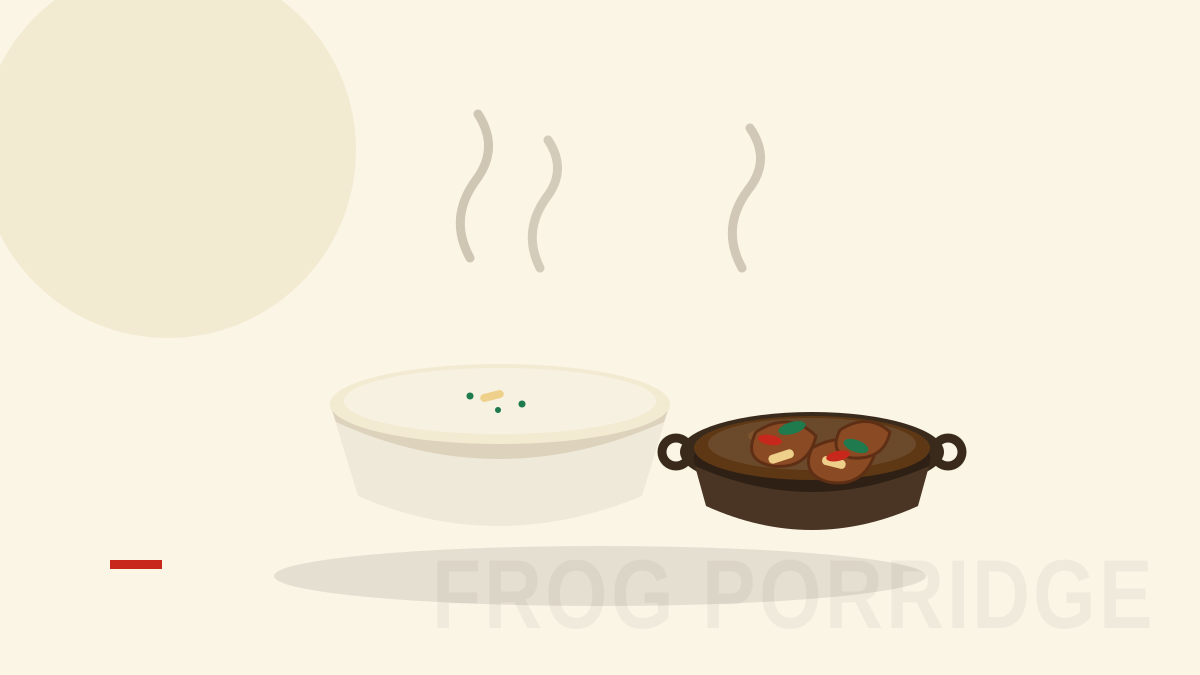
Geylang after midnight — field chicken seared with dried chili and dark soy in a claypot, a bowl of silken porridge alongside to cool the fire.
By The Singaporean Recipes Kitchen · World Cookbook Series · July 25, 2026
Old Airport Road & GeylangKopitiam to food court, 1986–2004
 06
06- Prep
- 25 min
- Cook
- 50 min
- Serves
- 4
- Level
- Intermediate
There is a version of Singapore that only exists after midnight, and it eats in Geylang. When the hawker centres have shuttered and the offices are long dark, the lorong stretches of Geylang stay lit and loud, and one of the things they are lit for is frog leg porridge — 田鸡粥, "field chicken porridge," a dish built for the hours when hunger and insomnia arrive together. Taxi drivers, shift workers, clubbers, and night owls fold into plastic chairs and order it at an hour that would frighten a normal kitchen.
The dish is a duet, and understanding that is understanding the dish. On one side, a claypot or wok of frog seared hard and tossed in a fierce kung pao sauce — dried chili, dark soy, ginger, spring onion — lacquered dark and sizzling when it hits the table. On the other, a plain bowl of silky Teochew-style porridge, the rice cooked loose and collapsed into a creamy broth, seasoned with almost nothing. You eat them together, back and forth: a piece of the dark, chili-slicked frog, then a cooling spoon of porridge to put the fire out, then back again. Neither bowl is a garnish to the other. They are two halves of one supper.
Frog itself asks for respect and speed. The meat is lean and mild — much closer to the most delicate chicken than to anything wild-tasting — and it turns from tender to rubbery in the space of a minute, so the whole technique is to sear it fast, pull it early, and let the final toss in the sauce finish the job. This is food-court and supper-culture cooking, unpretentious and precise at once, the kind of dish that looks like a quick stir-fry and quietly punishes anyone who treats it carelessly. Get the timing right and you get what the queue on Lorong 9 has always been for: fire on one side, mercy on the other, at an hour when both are exactly what you need.
You eat the frog for the fire and the porridge for the mercy. One bowl attacks, the other forgives, and that is the whole supper.
Shiok (when it's exactly right) · A word from the kitchen
Ingredientsbahan-bahan
Serves
The porridge
- 200 gjasmine rice, rinsed (about 1 cup)
- 2 Lwater or light chicken stock (about 8 cups)
- 3 slicesginger
- 1 tspneutral oilrubbing a little oil and salt into the rice before it cooks helps the grains break down into that silky, collapsed texture faster
- to tastesalt and white pepper
The frog
- 4whole frog (field chicken), cleaned and cut into joints (about 500 g)buy them fresh and already dressed from the wet market or Asian butcher; joint them so each piece cooks at the same rate
- 1 tbsplight soy sauce
- 1 tbspShaoxing wine
- 2 tspcornflourthe light marinade and cornflour velvet the meat so it stays tender and just-set rather than seizing up tough
The kung pao sauce
- 2 tbspneutral oil
- 8dried red chilies, wiped and cut, seeds shaken out for less heat
- 4garlic cloves, sliced
- 20 gginger, julienned (a thumb)
- 3spring onions, cut into batons, white and green kept apart
- 1 tbspdark soy saucedark soy is for colour and a faint caramel depth, not salt — it is what gives the dish its lacquered mahogany look
- 1 tbspoyster sauce
- 1 tspsugar
- 3 tbspwater or stock
Methodcara masak
Step 1: Start the porridge and walk away from it
Rub the rinsed rice with the oil and a pinch of salt, then bring it to a boil with the water or stock and the ginger. Drop to a low simmer and cook, stirring now and then so it does not catch, for 40 to 45 minutes until the grains have burst and broken down into a loose, silky porridge — Teochew style is looser than a thick congee, the grains still just visible in a creamy broth. Season near the end with salt and white pepper. It should pour, not stand.
Step 2: Marinate the frog while the porridge cooks
Toss the jointed frog with the light soy, Shaoxing, and cornflour and leave it 15 minutes. Frog is lean and delicate — closer to the tenderest chicken than to anything gamey — and this quick velvet keeps it moist under high heat. Pat the pieces just barely dry before they hit the pan so they sear rather than steam.
Step 3: Sear the frog hard and fast
Get 2 tablespoons of oil smoking in a wok or claypot, then lay in the frog in one layer and sear without fussing for about a minute a side, until the pieces are golden at the edges and nearly cooked through. Frog cooks in a flash and turns rubbery the moment it overcooks, so you are chasing colour and a just-firm bounce, not doneness by the clock. Lift it out and set aside.
Step 4: Build the kung pao and bring the frog home
In the same pan, fry the dried chilies, garlic, ginger, and spring onion whites until fragrant and the chilies darken a shade — watch closely, scorched chili turns bitter in seconds. Add the dark soy, oyster sauce, sugar, and water, let it bubble into a glossy sauce, then return the frog and toss for a final minute until every piece is lacquered and just cooked through. Throw in the spring onion greens at the very end so they stay bright.
Step 5: Serve them side by side
This is a two-bowl dish, and that is the point. The frog comes to the table sizzling and dark and fierce with chili; the porridge sits plain and silken beside it to cool the fire and carry the sauce. You eat a piece of frog, a spoon of porridge, back and forth — the porridge is the calm the whole dish is built around. Serve both hot, the frog straight from the pan.
Perkakas · The tools
Equipment
Carbon-steel wok
chaoHalf this site happens in a wok, and carbon steel is the only honest choice at home — it heats fast, takes a season, and gets you the closest to wok hei your burner allows.
Shop on Amazon →Claypot
sha baoFor claypot rice the pot IS the recipe — clay holds gentle heat, builds the crust, and comes to the table still ticking.
Shop on Amazon →Chinese cleaver
chai daoChops through a whole chicken for chicken rice, smashes ginger with the flat, scoops the lot into the wok. One blade, most of the canon.
Shop on Amazon →
Equipment links are Amazon affiliate links. As an Amazon Associate we earn from qualifying purchases, at no cost to you. Disclosure.
Rate this recipe
Questions from the kitchen
Why is frog leg porridge such a Geylang thing?
Because Geylang is where Singapore goes to eat when the rest of the island has gone to bed. The stretch is the city's great late-night and supper quarter, and frog leg porridge — spelled 田鸡粥, "field chicken porridge" — is one of its signature after-midnight orders, a dish you queue for at an hour when most kitchens are dark. It grew into an institution in the food-court and supper-culture decades, sold from stalls that stay open long past sensible closing time. Order it at 1am among taxi drivers and night owls and you are eating it exactly as intended.
My frog came out rubbery and tough. What went wrong?
You cooked it too long, which is the one real trap with frog. The meat is lean and delicate and cooks in barely more time than a prawn does, so a minute too many and it seizes from tender to bouncy-tough. Sear it hard and fast, pull it out while it is nearly but not quite done, and let the final toss in the sauce finish it. The marinade with cornflour buys you a little insurance, but nothing saves frog that has been left to stew.
Do I have to make the porridge, or can I just do the frog?
You can absolutely serve the kung pao frog on its own over rice and it is a fine dish — but then it is not frog leg porridge, it is stir-fried frog. The pairing is the whole identity here: the fierce, dark, chili-slicked frog against a plain silky porridge that cools your mouth between bites. The porridge is not a side, it is the other half of a duet. Skip it and you have made something good and different, not this.
Makan lagi · Cook next
Keep the burner on
 06
06Zi Char & the Wok·35 min·Intermediate
Cereal Prawns麦片虾
Crisp-fried prawns tossed in a sandstorm of buttery, curry-leaf cereal — a 1990s zi char invention no one asked permission to make, and everyone is glad of it.
 06
06Zi Char & the Wok·20 min·Beginner
Sambal Kangkongsambal kangkung
Water spinach seared in belacan sambal over the hottest wok you own — thirty seconds of fire, stems still snapping, the zi char vegetable that earns its place.
 06
06Zi Char & the Wok·35 min·Intermediate
Salted Egg Prawns咸蛋虾
Prawns fried crisp, then tossed through salted duck-egg yolk foamed in butter with curry leaves and chili — the mid-2010s craze that ate the whole island.