Salted Egg Prawns
咸蛋虾
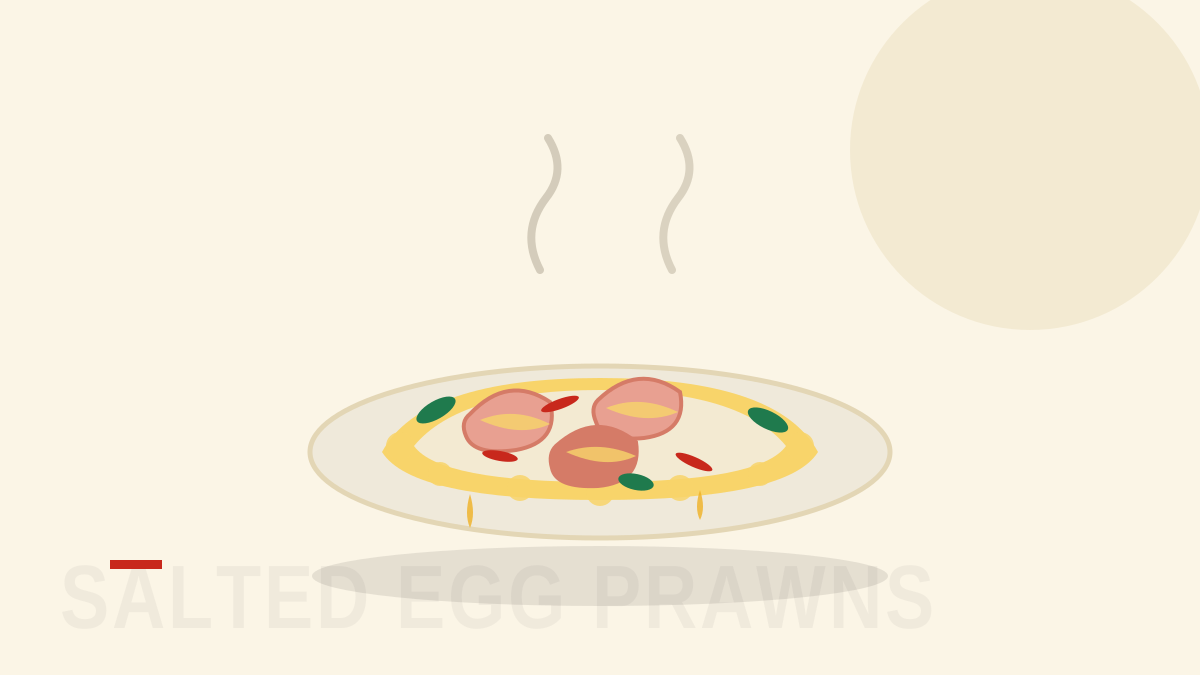
Prawns fried crisp, then tossed through salted duck-egg yolk foamed in butter with curry leaves and chili — the mid-2010s craze that ate the whole island.
By The Singaporean Recipes Kitchen · World Cookbook Series · July 11, 2026
The HeartlandsUNESCO & the new hawkers, 2016–now
 06
06- Prep
- 20 min
- Cook
- 15 min
- Serves
- 4
- Level
- Intermediate
Every so often a cuisine acquires a new obsession fast enough that you can watch it happen, and in Singapore the mid-2010s belonged to salted egg. The base ingredient was nothing new — the salted duck egg is an ancient thing, a duck egg buried in brine or charcoal paste for weeks until the white goes firm and saline and the yolk turns dense, orange and oily, long used in mooncakes, in congee, in steamed pork. What was new was the idea of taking that yolk, mashing it, and frothing it in butter with curry leaves and chili into a golden foam that would coat anything that held still. Prawns and crab first, then fish skin, then chicken, then, inevitably, chips and croissants and instant noodles. For a few years the island could not stop.
Salted egg prawns are the dish that shows the technique at its best, and they are a genuinely good addition to the zi char canon rather than a novelty that overstayed. The method is precise in one place and forgiving everywhere else. You steam the cured yolks until they firm up, because raw salted yolks are too soft and greasy to foam; you fry the prawns crisp and just-cooked; and then you make the sauce over the lowest heat you can manage, coaxing butter and mashed yolk into a sandy, nutty froth that curry leaves and chili padi lift out of pure richness. The single failure mode is heat — push the foam too hard and it splits into oil and grit, and there is no bringing it back.
That this dish counts as canon now says something about how Singapore's food culture actually works. The island's hawker culture was inscribed by UNESCO in 2020 as living heritage, and the word living is doing real work there. A cuisine that treated its canon as closed would never have let a mid-2010s butter-and-yolk foam sit down at the same table as century-old chicken rice. Singapore let it, on merit, within a few years of its invention — which is exactly the kind of thing a living tradition does when nobody is guarding the door.
The salted duck egg is centuries old; the golden foam that ate every menu in Singapore is barely ten — sometimes the canon updates itself overnight.
Shiok (when it's exactly right) · A word from the kitchen
Ingredientsbahan-bahan
Serves
The prawns
- 500 glarge prawns, shell-on, legs and feelers trimmed (about 1 lb)shell-on holds the crust and the sauce and keeps the meat juicy; head-on if you do not mind the mess
- 2 tbspcornstarch, for dusting
- for fryingneutral oil, enough to shallow-fry
The salted-egg foam
- 4salted duck egg yolksbuy whole salted duck eggs and use the yolks, or vacuum-packed yolks; the powdered salted-egg mixes taste flat and chalky
- 40 gbutter (about 3 tbsp)salted or unsalted works — the yolks carry plenty of salt of their own
- 2 sprigscurry leaves, strippedfresh only; dried curry leaves have no perfume left to give
- 2chili padi (bird's eye chilies), sliced
- 1 tspsugar
- 2 tbspevaporated milk, optionalfor a saucier, wetter style; the classic zi char version is a dry butter-and-yolk foam with no milk
Methodcara masak
Step 1: Steam and mash the yolks
Steam the salted egg yolks eight to ten minutes until firm and slightly oily, then mash them to a smooth paste while still warm. This step is not optional — raw cured yolks are soft and greasy and will never foam properly; steaming sets them so they can dissolve into the butter and froth. A warm yolk mashes far more easily than a cooled one.
Step 2: Dry the prawns and fry them crisp
Pat the prawns bone-dry, dust them in cornstarch, and shallow-fry in hot oil two to three minutes until the shells blister and turn deep coral and the flesh is just opaque. Dry prawns and hot oil are what give you crisp shells rather than steamed ones. Do not push past just-cooked — prawns turn to rubber in seconds — then lift them out and drain.
Step 3: Foam the sauce low and slow
Pour off most of the oil, drop the heat to low, and melt the butter. Add the curry leaves and chili padi and let them crackle and go fragrant, then stir in the mashed yolks. Keep stirring as the mixture bubbles up into a sandy, pale-gold foam — this foam IS the dish, and it lives or dies on temperature. Too hot and it splits into greasy oil and grit; kept gentle, it froths and smells nutty and rich.
Step 4: Toss, coat, serve at once
Return the prawns to the pan on the lowest heat and fold them through the foam until every shell is lacquered gold. If you want the wetter style, stir the evaporated milk in here and let it bubble briefly. Serve immediately, while the foam still clings and the shells still crackle — salted egg waits for no one, and a plate left to stand goes oily and dull.
Perkakas · The tools
Equipment
Carbon-steel wok
chaoHalf this site happens in a wok, and carbon steel is the only honest choice at home — it heats fast, takes a season, and gets you the closest to wok hei your burner allows.
Shop on Amazon →Bamboo steamer
Chwee kueh, pau, and whole fish — bamboo breathes, so condensation never rains back onto your work.
Shop on Amazon →Spider strainer
Lifts blanched noodles out of the pot in one pass and fried shallots out of the oil in the next. One tool, half the hawker canon.
Shop on Amazon →
Equipment links are Amazon affiliate links. As an Amazon Associate we earn from qualifying purchases, at no cost to you. Disclosure.
Rate this recipe
Questions from the kitchen
Is salted egg a real tradition or just a fad?
Both, depending on where you draw the line. The salted duck egg itself is old — a preserved egg of the southern-Chinese pantry, cured in brine for months, used in mooncakes and congee for generations. What is new is the golden foam. Somewhere in the mid-2010s a wave of salted-egg everything swept Singapore, and the yolk-butter-curry-leaf coating jumped from prawns and crab to fish skin, chicken, chips, croissants and pasta. The ingredient is ancestral; the craze is barely a decade old, and it earned its place on the zi char menu on merit.
My sauce split into greasy grit instead of a smooth foam. Why?
Heat, almost always. The salted-yolk foam is delicate and breaks if the pan is too hot — the butter and yolk separate into oil and sandy solids instead of frothing together. Keep the flame low, add the yolks to gently melted butter, and stir constantly. The other cause is skipping the steam step or using powdered mix, both of which leave you with yolks that cannot emulsify.
Can I use salted-egg powder to save time?
You can, and it will be recognisably salted-egg, but it is an honest downgrade rather than a shortcut. The powders lean chalky and one-note, missing the round, oily richness of real steamed yolks and the way they foam in butter. If you are cooking this for people who know the dish, steam the real yolks — it is fifteen minutes and it is the entire difference between good and forgettable.
Makan lagi · Cook next
Keep the burner on
 06
06Zi Char & the Wok·35 min·Intermediate
Cereal Prawns麦片虾
Crisp-fried prawns tossed in a sandstorm of buttery, curry-leaf cereal — a 1990s zi char invention no one asked permission to make, and everyone is glad of it.
 06
06Zi Char & the Wok·40 min·Intermediate
Har Cheong Gai虾酱鸡
Chicken wings marinated overnight in fermented prawn paste, then twice-fried until the crust shatters and your whole kitchen smells like the sea.
 06
06Zi Char & the Wok·75 min·Intermediate
Singapore Chili Crab辣椒螃蟹
Mud crab in a chili-tomato gravy ribboned with egg, born on a 1950s Kallang pushcart — Singapore's table-flag dish, with fried mantou for the sauce.