Singapore Chili Crab
辣椒螃蟹
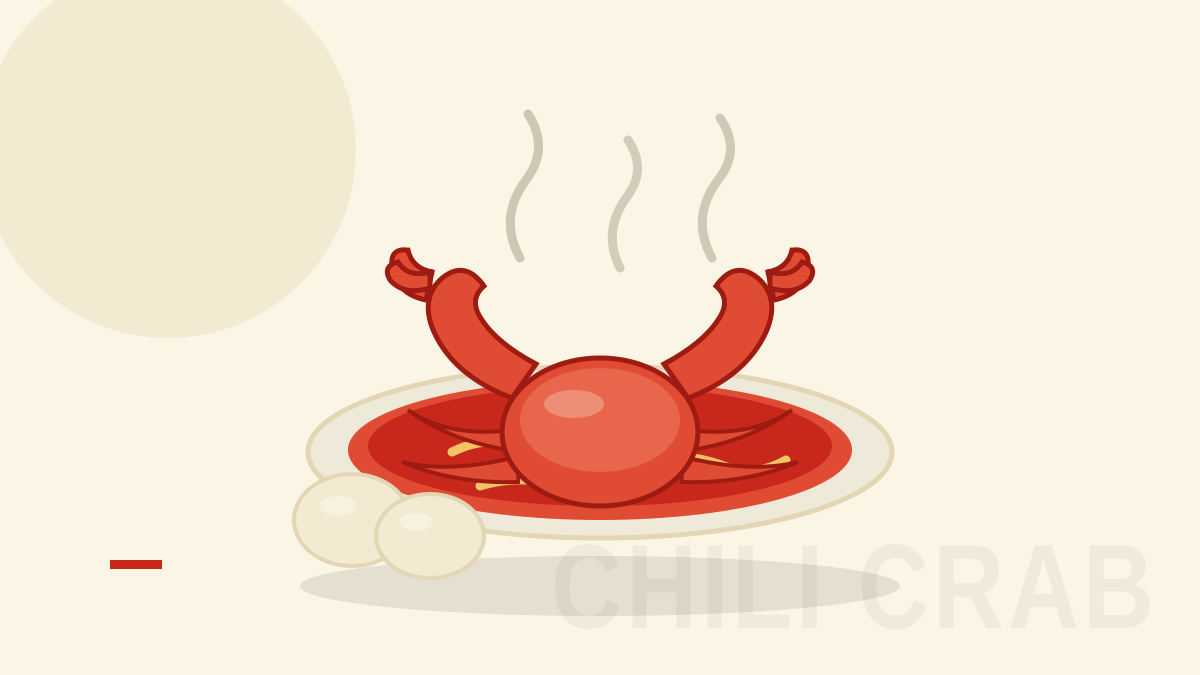
Mud crab in a chili-tomato gravy ribboned with egg, born on a 1950s Kallang pushcart — Singapore's table-flag dish, with fried mantou for the sauce.
By The Singaporean Recipes Kitchen · World Cookbook Series · June 27, 2026
East CoastPostwar & Merdeka, 1945–1965
 06
06- Prep
- 45 min
- Cook
- 30 min
- Serves
- 4
- Level
- Intermediate
Every country gets the national dish it deserves, and Singapore's is a plate you cannot eat politely. Chili crab was invented in the mid-1950s by Cher Yam Tian, who started tossing mud crabs with bottled chili sauce and ketchup on a pushcart near the Kallang River; the stall did well enough to become a restaurant, Palm Beach, and the dish did well enough to become shorthand for the island itself. That timeline matters. This is not an ancient recipe with a mystical lineage — it is a hawker's smart idea, younger than the nation's airport, built from what a 1950s pushcart could stock: crabs from the kelongs, chili sauce, ketchup, eggs.
Across the Causeway, Malaysia will tell you — correctly — that it has magnificent crab cooking of its own, and the argument over who owns which crustacean is a regional sport played mostly in newspaper comment sections. We're not entering the tournament. The sweet-hot tomato-chili gravy with egg ribbons is Singapore's chapter of the story, and it's a good enough chapter that it doesn't need to steal anyone else's.
The dish's second act happened on the East Coast, where the seafood restaurants that rose with the reclaimed land in the decades after independence turned chili crab from a stall dish into an occasion — long tables, bibs, tourists learning that the buns matter more than they look. Those seafood centres are the dish's cultural home now, and worth a visit for the atmosphere alone. But the recipe never stopped being a home-scale proposition: one wok, one paste, one gravy you taste and adjust like the hawker who invented it did.
A word about the ketchup, because someone at your table will raise it: it was there from the beginning. This dish was born from bottled sauces and has no purist version hiding behind it. Cooking it well doesn't mean replacing the ketchup with something respectable — it means frying the paste properly, cooking the crab just to doneness, and ribboning the egg off the boil. The shortcuts are the recipe. The technique is where the cooking happens.
The gravy is the dish. The crab is the excuse, and the mantou is the getaway car.
Shiok (when it's exactly right) · A word from the kitchen
Ingredientsbahan-bahan
Serves
The crab
- 1.5 kglive mud crabs, ideally two of 700–800 g each (about 3.3 lb)buy them lively and heavy for their size — a light crab is an empty crab
The paste
- 100 gshallots, peeled (about 8)
- 6garlic cloves
- 30 gginger, sliced (a fat thumb)
- 6fresh red chilies, roughly choppedseed half of them — the gravy should warm, not punish
- 4dried red chilies, soaked in hot water 15 minutesthese carry the color the fresh ones can't
- 1 tbsptaucheo (fermented soybean paste), lightly mashedthe savory floor under the sweetness — don't skip it
The gravy
- 4 tbspneutral oil
- 120 mltomato ketchup (1/2 cup)yes, ketchup — it has been in the dish since the pushcart; this is the origin, not a shortcut
- 60 mlAsian chili sauce (Lingham's style) (1/4 cup)
- 30 gsugar (2 tbsp)
- 400 mlwater or light chicken stock (1 2/3 cups)
- 1 tbspcornstarch, mixed with 2 tbsp cold water
- 2eggs, lightly beaten
- 1 tbsplime or calamansi juicethe acid that stops the gravy tasting like dessert
To serve
- 8fried or steamed mantou bunsfrozen mantou from the Asian grocer, fried golden — this is what the gravy is for
- 1 handfulcoriander leaves
Methodcara masak
Step 1: Chill, dispatch, and cut the crab
Put the live crabs in the freezer for 30 to 45 minutes until they are fully sluggish — this is the humane part, and it also makes them safe to handle. Dispatch each one quickly with a heavy knife tip through the depression behind the mouthplates, then lift off the carapace, discard the feathery gills, and quarter the body with the legs attached. Crack the claws once with the back of a cleaver so the gravy can get in and your guests can get in after it. A crab cut cleanly cooks evenly; a crab wrestled cooks angry.
Step 2: Make the paste
Blend or pound the shallots, garlic, ginger, both chilies, and taucheo to a rough paste with a spoonful of the chili-soaking water. It doesn't need rempah silk — this paste gets a shorter fry than a laksa base, and a little texture reads as honest in the finished gravy.
Step 3: Fry the paste until it smells cooked, not raw
Heat the oil in your largest wok over medium and fry the paste 4 to 5 minutes, stirring, until the raw shallot smell is gone and the oil starts to stain red at the edges. Stop early and the whole dish tastes of raw onion under sugar — this fry is where the gravy earns its depth.
Step 4: Build the gravy
Add the ketchup, chili sauce, sugar, and water. Bring it to a simmer and taste — it should read sweet-forward with heat behind, and slightly too loud, because the crab and the egg will both mute it. Adjust chili sauce for fire and sugar for balance now, before the crab goes in and stirring becomes a contact sport.
Step 5: Cook the crab in the sauce
Slide in the crab pieces, toss to coat, cover, and simmer 8 to 10 minutes, turning once halfway. The shells go from mottled brown to full scarlet and the claw meat turns opaque white — check a cracked claw; if the meat still looks translucent grey at the knuckle, give it two more minutes. Undercooked crab is a tragedy you cannot fix at the table.
Step 6: Thicken, then ribbon the egg
Stir the cornstarch slurry and drizzle it in, simmering until the gravy coats a spoon. Then kill the heat, wait ten seconds, and pour the beaten egg in a thin stream while pulling a spatula slowly through the sauce. Off the boil, the egg sets into soft ribbons; on the boil, it scrambles into curds. The ribbons are the signature — this is the step that separates the dish from a crab in chili sauce.
Step 7: Finish and serve
Squeeze in the lime juice, taste one last time, and tip everything onto a platter with the coriander over the top and the mantou stacked alongside. Serve with crackers, picks, a roll of paper towels, and no dignity — the dish is eaten with hands, and the mantou exists to chase the gravy after the crab is gone.
Perkakas · The tools
Equipment
Carbon-steel wok
chaoHalf this site happens in a wok, and carbon steel is the only honest choice at home — it heats fast, takes a season, and gets you the closest to wok hei your burner allows.
Shop on Amazon →Chinese cleaver
chai daoChops through a whole chicken for chicken rice, smashes ginger with the flat, scoops the lot into the wok. One blade, most of the canon.
Shop on Amazon →Crab crackers & picks
Chili crab is a two-hands dish. Crackers for the claws, picks for the corners, bread for the gravy.
Shop on Amazon →Spider strainer
Lifts blanched noodles out of the pot in one pass and fried shallots out of the oil in the next. One tool, half the hawker canon.
Shop on Amazon →
Equipment links are Amazon affiliate links. As an Amazon Associate we earn from qualifying purchases, at no cost to you. Disclosure.
Rate this recipe
Questions from the kitchen
Who actually invented chili crab?
The documented story starts in the mid-1950s with Cher Yam Tian, stir-frying crabs with bottled chili and tomato sauce on a pushcart near the Kallang River — a stall that grew into the Palm Beach restaurant. Malaysia has its own proud crab traditions and its own claims in the wider crab wars, and this site is not signing up for that fight. What's beyond dispute is that this particular sweet-hot, egg-ribboned gravy grew up in Singapore, from a pushcart, within living memory.
My gravy came out thin and watery. What went wrong?
Usually one of three things — the crab released liquid because it went in wet from rinsing, the slurry went into a sauce that wasn't simmering (cornstarch needs heat to set), or the egg went in too early and loosened everything. Pat the crab pieces dry, thicken at a visible simmer, and only then take it off the heat for the egg.
Can I use frozen or pre-cooked crab?
Frozen raw crab, honestly, yes — thaw fully, drain hard, and expect slightly wetter gravy and softer meat. Pre-cooked crab is a real compromise; it goes in for the final 3 minutes just to heat through, and the flavor exchange between crab and gravy — the whole point of the dish — mostly doesn't happen. If cooked crab is what you have, make the gravy loud and let the mantou do more work.
Makan lagi · Cook next
Keep the burner on
 06
06Zi Char & the Wok·65 min·Intermediate
Black Pepper Crab黑胡椒螃蟹
The drier, hotter answer to chili crab — mud crab tossed in butter, toasted black pepper, and dark soy until the sauce clings to the shell instead of pouring.
 06
06Zi Char & the Wok·35 min·Intermediate
Cereal Prawns麦片虾
Crisp-fried prawns tossed in a sandstorm of buttery, curry-leaf cereal — a 1990s zi char invention no one asked permission to make, and everyone is glad of it.
 06
06Zi Char & the Wok·35 min·Intermediate
Salted Egg Prawns咸蛋虾
Prawns fried crisp, then tossed through salted duck-egg yolk foamed in butter with curry leaves and chili — the mid-2010s craze that ate the whole island.