Min Jiang Kueh
面煎粿
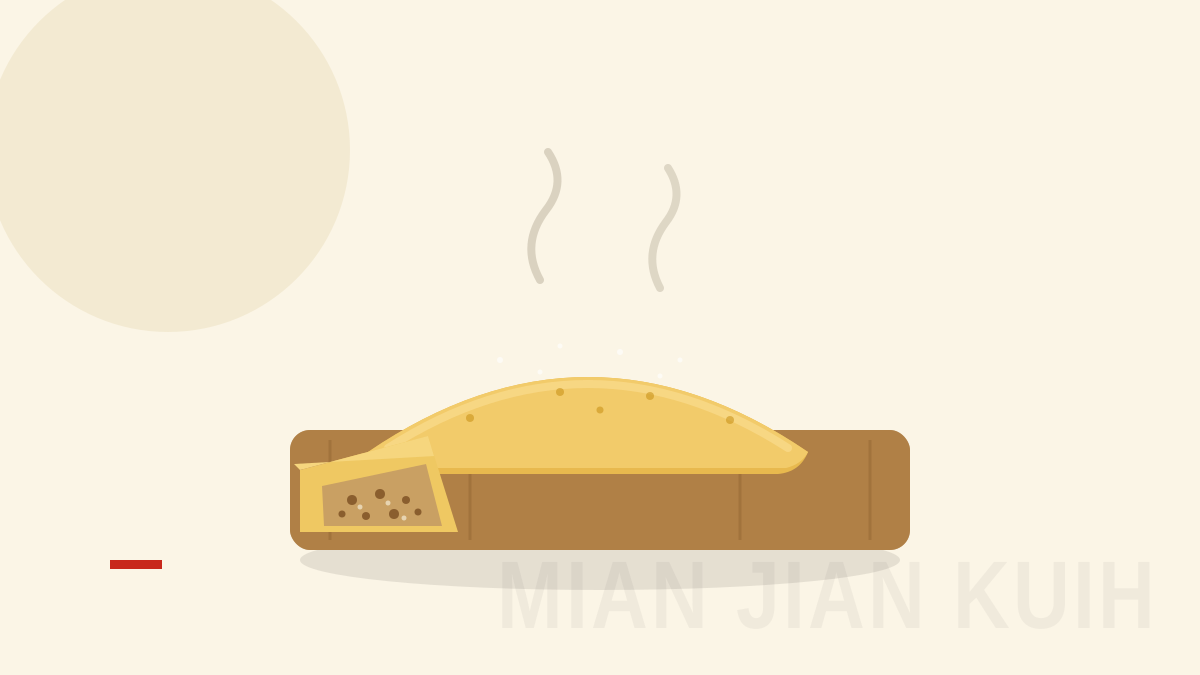
A thick, honeycombed griddle pancake folded over a heap of crushed sugared peanuts — the unhurried morning-market kueh that rewards a slow batter and a patient pan.
By The Singaporean Recipes Kitchen · World Cookbook Series · July 11, 2026
Tiong BahruStreet hawkers & the kampong, 1900s–1942
 08
08- Prep
- 90 min
- Cook
- 20 min
- Serves
- 6
- Level
- Intermediate
Min jiang kueh is a patient dish in a hurried city, which is probably why it belongs to the morning markets and not the lunch rush. It is a thick, spongy griddle pancake — its surface a moonscape of tiny holes, its crumb soft enough to fold — heaped with crushed sugared peanuts and folded into a half-moon while still warm. The name translates, roughly and unhelpfully, to something like "noodle-fried-kueh," a piece of etymology that time has quietly worn smooth; nobody at the stall can tell you why, and it doesn't much matter once you're eating one.
The whole thing hinges on leavening, and specifically on two of them working in sequence. First the yeast, which ferments the batter over an unhurried hour into something bubbly and faintly sour and full of trapped air — this is where both the flavor and the airy crumb come from, and it cannot be rushed. Then, right at the end, a pinch of baking soda whisked in just before cooking, which reacts with that fermented tang on contact and blows the surface open into its signature honeycomb the moment it hits the pan. Add the soda too early and it spends its lift before you need it; skip the ferment and you get a flat, tight disc. The kueh punishes impatience at both ends.
The filling asks for the opposite discipline — restraint with the grinder. Crushed peanuts, sugar, a little sesame, a pinch of salt, and the trick is to stop while the peanuts are still gravel, not dust. That coarse, crunchy rubble against the pillowy pancake is the entire textural argument of the dish, and the old-school swipe of butter and thread of condensed milk under the fold is what tips it from good to the thing you remember from a Tiong Bahru morning. Eat it warm, before the peanuts settle and the butter stops running. It waited an hour for you; the least you can do is not let it go cold.
A pancake you sink into rather than crunch through — the reward for a batter you didn't rush and a pan you didn't hurry.
Shiok (when it's exactly right) · A word from the kitchen
Ingredientsbahan-bahan
Serves
The batter
- 200 gplain flour (1 2/3 cups)
- 30 grice flour (3 tbsp)a little rice flour keeps the crumb tender and the edges lightly crisp; all-wheat batter goes tough
- 40 gsugar (3 tbsp)
- 5 ginstant yeast (1 1/2 tsp)
- 1egg
- 300 mllukewarm water or coconut milk (1 1/4 cups)coconut milk makes a richer, more fragrant kueh; water keeps it lighter — both are traditional
- 1/4 tspsalt
- 1/2 tspbaking sodawhisked in only at the very end, just before cooking — this is what opens the honeycomb of holes
The peanut filling
- 200 groasted unsalted peanuts, skins rubbed off (1 1/2 cups)
- 80 gsugar (1/3 cup)some stalls go half caster, half soft brown for a caramel note; your call
- 1 tbsptoasted white sesame seeds
- 1pinch of saltsalt against the sugar is the difference between candy and craving
To finish
- 30 gbutter, softened, for brushing (2 tbsp)the old-school move is a swipe of butter and a thin drizzle of sweetened condensed milk before folding
- sweetened condensed milk, optional
Methodcara masak
Step 1: Wake the batter and let it work
Whisk the plain flour, rice flour, sugar, and yeast, then beat in the egg and the lukewarm water to a smooth, pourable batter with no lumps. Cover and leave in a warm spot 60 to 90 minutes until it's risen, loosened, and covered in bubbles that pop lazily on the surface. This ferment is the flavor and the airy crumb — a rushed batter gives a flat, tight pancake, so give the yeast its hour.
Step 2: Crush the peanuts coarse, not to dust
Pulse or pound the roasted peanuts with the sugar, sesame, and salt to a rough, gravelly rubble — you want distinct crunchy bits, not smooth peanut flour. A lesung does this best in a few controlled strokes; a blender works if you pulse and stop before it turns to paste. The texture contrast against the soft pancake is the whole pleasure of the kueh, so err coarse.
Step 3: Stir in the soda just before cooking
When the batter is bubbly and you're ready to cook, whisk the salt and baking soda into it. The soda reacts with the fermented batter's acidity right away, so add it last — this is the burst of lift that blows the surface into that signature moonscape of tiny holes as it cooks. Don't let the batter sit long after this point.
Step 4: Cook thick over gentle heat
Heat a small, deep nonstick or well-seasoned pan over medium-low and pour in a thick ladle of batter — 1.5 to 2 cm deep, not a thin crepe. Almost immediately the surface begins to bubble and set into holes. Cover and cook 4 to 6 minutes without flipping; it's done when the top is set and dry-looking but still tender and the underside is golden. Too high a heat browns the base before the honeycomb centre cooks through, so keep it patient and low.
Step 5: Butter, fill, fold, and cut
While it's still in the pan, brush the surface with softened butter, drizzle a little condensed milk if using, and pile a generous line of the peanut rubble over one half. Fold it over into a half-moon, slide it out, and let it sit a minute before cutting into wedges — the crumb firms as it cools from molten to pillowy. Eat warm, while the peanuts are still loose and the butter is still melting into the holes.
Perkakas · The tools
Equipment
Granite mortar & pestle
lesung batuThe rempah tool. Pounding bruises and bleeds the aromatics in a way blades never do — the lesung is the sound of a Singapore kitchen starting dinner.
Shop on Amazon →Flat cast-iron griddle
tawaPrata wants wide, even, patient heat and room to flip. A tawa or any flat cast iron plate beats every frying pan at this one job.
Shop on Amazon →
Equipment links are Amazon affiliate links. As an Amazon Associate we earn from qualifying purchases, at no cost to you. Disclosure.
Rate this recipe
Questions from the kitchen
Is min jiang kueh the same as the thin apam balik you see elsewhere?
They're cousins with a family argument. The Malay and mamak apam balik and the Hokkien min jiang kueh (literally noodle-fried-kueh, a name whose logic time has mostly swallowed) share a batter, a peanut filling, and a griddle. But min jiang kueh is traditionally the thick, soft, honeycombed one — a pancake you sink into — while the crispy paper-thin folded version is a different texture entirely. Both are morning-market food across the region, and both are correct; just know which one you're aiming for before you ladle.
My pancake came out flat and dense with no holes. What went wrong?
Almost always the leavening. Either the yeast batter didn't ferment long enough to build up bubbles, or the baking soda was stirred in too early and had spent its lift before the batter hit the pan. Give the batter a full hour to get genuinely bubbly, add the soda at the last moment, and cook thick over gentle heat — a thin pour or a hot pan both kill the honeycomb before it can form.
Can I use shop-bought peanut butter or pre-ground peanuts to save time?
Peanut butter is the wrong texture entirely — the joy here is loose, crunchy, sugary peanut rubble, and a smooth spread gives you none of that contrast against the soft crumb. Pre-ground peanuts are fine as a starting point, but check they're coarse and not flour-fine, and always mix in your own sugar, sesame, and salt so it isn't cloying. The one honest shortcut is buying peanuts already roasted and skinned; the crushing takes two minutes and is worth doing yourself.
Makan lagi · Cook next
Keep the burner on
 08
08Kueh & Sweets·55 min·Intermediate
Ondeh Ondehondeh ondeh · onde-onde
Pandan-green glutinous balls rolled in fresh coconut, each hiding a core of gula melaka that bursts across the tongue — the reason the kueh exists.
 08
08Kueh & Sweets·115 min·Advanced
Kueh Salatkueh salat · seri muka
Seri muka, the beautiful face — a firm layer of coconut glutinous rice under a smooth pandan custard, the two-tone kueh that Malay and Nyonya kitchens claim.
 08
08Kueh & Sweets·70 min·Beginner
Ice Kacangais kacang · 红豆冰
A shaved-ice mountain built over red beans, attap chee and jelly, drenched in rose syrup and gula melaka — the machine age of Singapore dessert.